
Heritage in East Asia
Explore heritage sites and cultural practices from East Asia.
Sites in this Region
Showing 6 documented sites
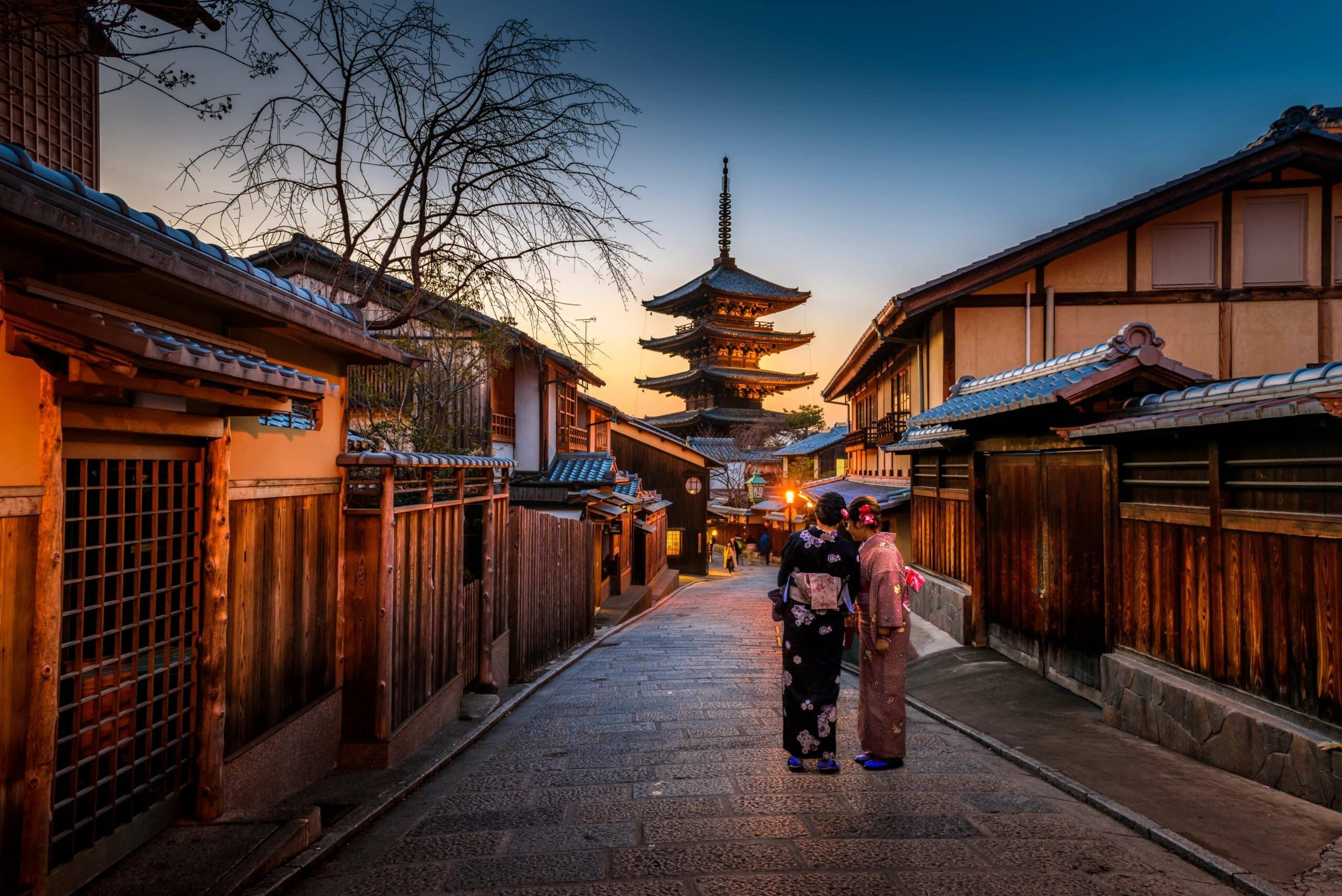
Ancient Kyoto
Ancient Kyoto encompasses seventeen historic monuments across three cities — temples, shrines, palaces, and gardens that constitute Japan's most complete surviving expression of imperial court culture. Japan's imperial capital for over a thousand years, it received 50 million visitors in 2019 — ten times its resident population. The machiya, traditional wooden townhouses that once formed the domestic fabric of the city, are disappearing at approximately 2% per year, taking with them the living trades — textile dyeing, lacquerwork, confectionery — that give the monuments their cultural context.

Great Wall of China
The Great Wall of China is not a single wall but a 21,196-kilometre system of walls, fortifications, watchtowers, and garrison stations built over more than two millennia. It is one of the greatest construction projects in human history, built at incalculable human cost. A 2012 government survey found that 74% of its Ming-era sections have been damaged or destroyed — most through the quiet, centuries-long process of rural communities using its bricks as a quarry.

Gyeongbokgung Palace
Gyeongbokgung Palace (景福宮, 'Greatly Blessed by Heaven') was the primary palace of the Joseon dynasty (1395–1910) — the largest, most architecturally significant, and most historically resonant of Seoul's five royal palaces. At its height in the 16th century, the complex covered approximately 400,000 square metres and contained more than 500 buildings connected by elevated corridors and arranged according to strict Confucian spatial hierarchies: the state throne hall (Geunjeongjeon) for royal audiences, the private royal living quarters (Gangnyeongjeon and Gyotaejeon), the government offices, the royal ancestral shrines, and the extraordinary Gyeonghoeru Pavilion — a 48-pillar stone-based pleasure pavilion built on an artificial island in a lotus pond. Japanese colonial demolition (1895–1910) reduced the complex from more than 500 buildings to 36; the ongoing restoration programme begun in 1990 aims to return the complex to its pre-colonial completeness.

Himeji Castle
Himeji Castle (姫路城, Himejijō) is the largest and most complete surviving example of Japanese feudal castle architecture — a complex of 83 buildings connected by covered corridors and earthen ramparts, centred on a six-storey white-plastered main tower (daitenshukaku) that rises 46 metres above the hilltop. Known as Shirasagi-jō (White Heron Castle) for its brilliant white lime-plastered walls, Himeji represents the peak of Japanese castle engineering: the complex defensive systems (irregular stone walls, mazelike approach paths designed to slow attackers, arrow and gun loopholes at optimised angles, trapdoors for dropping stones), the sophisticated timber frame construction of the main tower, and the extraordinary aesthetic unity of white walls against the sky make it the most celebrated work of Japanese military architecture. Unlike most Japanese castles, which were destroyed either in the Meiji period's dismantling of feudal symbols or in the Second World War's firebombing, Himeji has survived intact from its early 17th-century construction to the present.
Mount Wutai
Mount Wutai is a sacred mountain complex in Shanxi Province, China, venerated as the earthly abode of the Bodhisattva Manjushri, the embodiment of wisdom in Mahayana Buddhism. It is the most important Buddhist pilgrimage site in China and one of the four sacred Buddhist mountains of East Asia. The site encompasses 53 monasteries, temples, and cultural monuments set within a landscape of five flat-topped peaks, an exceptional combination of natural and sacred geography. It has been a centre of Buddhist learning, art, and pilgrimage for 1,500 years and was a destination for pilgrims from Tibet, Mongolia, Japan, Korea, and India long before the modern concept of international tourism existed.

Terracotta Army
The Terracotta Army (兵马俑, Bīngmǎ Yǒng) is a collection of more than 8,000 life-sized clay figures of soldiers, horses, chariots, and officials buried in three large pit complexes adjacent to the mausoleum of Qin Shi Huang (259–210 BCE), the first emperor of a unified China. Each soldier figure was individually crafted with a distinct facial expression, hairstyle, rank-indicating uniform, and original polychrome paint — the figures were brightly painted in greens, reds, purples, and blacks when buried, though this pigment deteriorates within minutes of excavation as it desiccates on contact with air. The army was constructed to serve the emperor in the afterlife, arranged in precise military formations mirroring the structure of the Qin army: infantry, cavalry, archers, officers, and general's chariots are positioned in tactical formations as if prepared for battle. The burial complex represents not only the greatest work of funerary art in history but a physical document of the military organisation, craft technology, and cosmological beliefs of the Qin dynasty.