
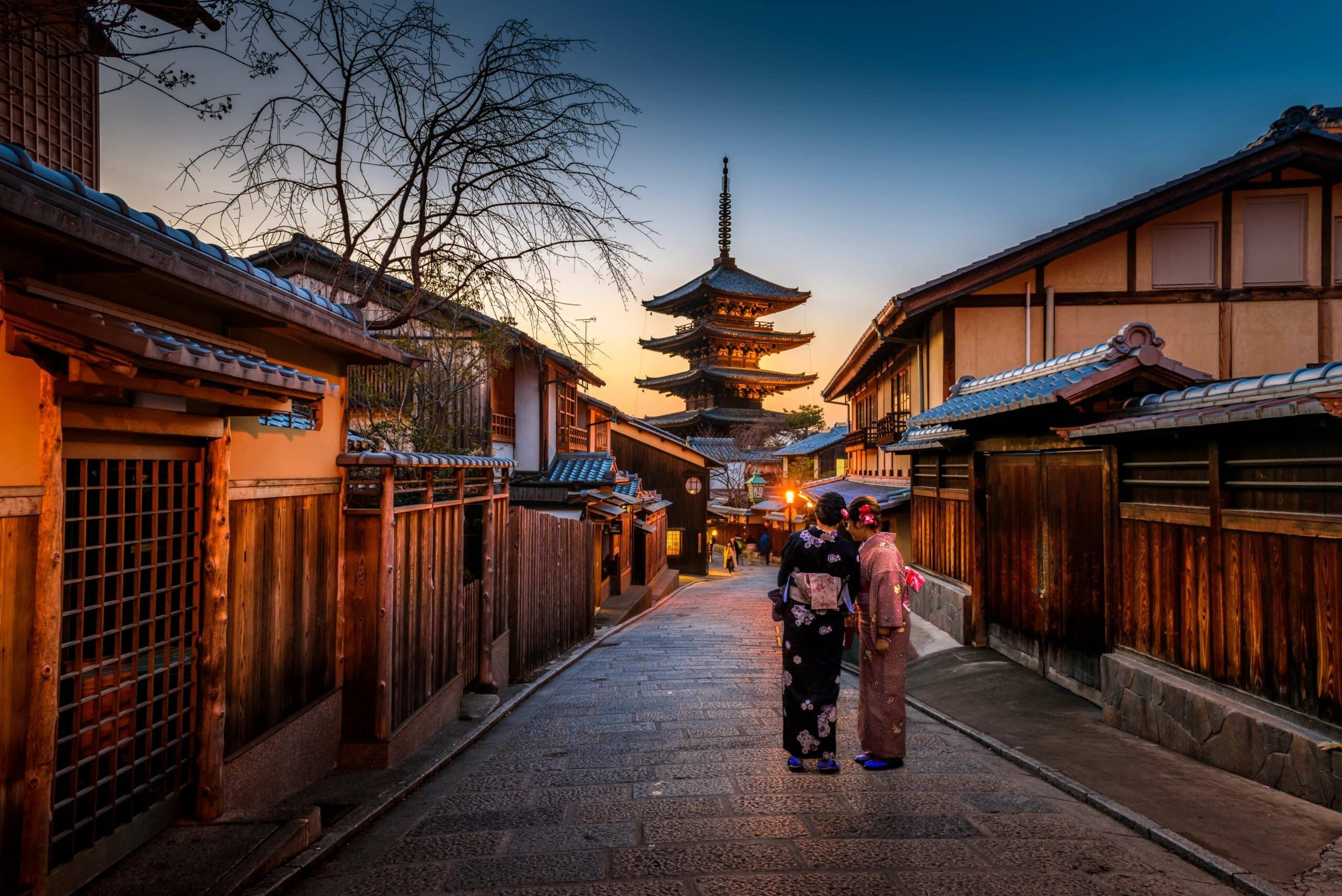
Ancient Kyoto
Interactive 3D Scan
Explore 3D Model
Click to load interactive scan
ANCIENT KYOTO Kyoto, Uji, and Otsu, Japan · 794 CE to present · Imperial Japan VULNERABLE
SITE AT A GLANCE Location: Kyoto, Uji, and Otsu, Japan Country: Japan Region: East Asia Coordinates: 35.0116° N, 135.7681° E Type: Built Heritage Sub-types: Imperial Architecture, Buddhist Temples, Shinto Shrines, Historic Gardens Period: 794 CE (Heian-kyo founded) to present; UNESCO covering 17 monuments Risk Level: Vulnerable Risks: Overtourism, Machiya loss, Commercialisation, Development pressure, Climate change, Ageing craft communities UNESCO Status: Inscribed 1994
3D DOCUMENTATION A reconstruction of Fushimi Inari-taisha shrine from 4K drone footage (produced by 333DDD, 1.8 million triangles) is available on Sketchfab. A photogrammetry scan of the Nijo Castle Karamon Gate is also available on Sketchfab (Miguel Bandera). The Ryoan-ji Zen rock garden has been documented by Koto3D and is available on Sketchfab as a free model. Japan's Agency for Cultural Affairs maintains the National Heritage Database at kunishitei.bunka.go.jp with records for all designated cultural properties. Europeana hosts digitised Kyoto cultural heritage records. Sketchfab — Fushimi Inari-taisha (333DDD, 1.8M triangles): https://sketchfab.com/3d-models/kyoto-fushimi-inari-taisha-temple-9ffeb809766c477dbbed30e0e0b0c7b4 Sketchfab — Nijo Castle Karamon Gate: https://sketchfab.com/3d-models/kyoto-nijo-castle-karamon-gate-scan-b8bc86c26e6b4d2ab31a94a393a5944d Sketchfab — Ryoan-ji rock garden (Koto3D, free): https://sketchfab.com/3d-models/ryoanji-zen-rock-garden-kyoto-japan-34435ade42aa4280a6ab5f68cd567d23 National Heritage Database: https://kunishitei.bunka.go.jp UNESCO dossier: https://whc.unesco.org/en/list/688
SITE DESCRIPTION UNESCO's inscription covers seventeen monuments across three cities. In Kyoto itself: Kinkaku-ji (the gold-leaf covered Golden Pavilion reflected in a mirror pond), Ginkaku-ji (the Silver Pavilion with its famous sand garden), Ryoan-ji (home to the world's most analysed dry garden), Nijo Castle (the Tokugawa shogunate's Kyoto residence, with its famous nightingale floors that squeak under footsteps to prevent ninja), Kiyomizu-dera (a wooden stage platform cantilevered over a forested hillside), Fushimi Inari-taisha (10,000 vermillion torii gates ascending Mount Inari), and Toji (whose five-storey pagoda is Japan's tallest surviving wooden structure). In Uji: Byodo-in, whose Phoenix Hall is depicted on the Japanese 10-yen coin, and the Ujigami Shrine, the oldest surviving Shinto shrine building in Japan. In Otsu: Enryaku-ji, the head temple of Tendai Buddhism on Mount Hiei. Kyoto's gardens are among its most philosophically significant contributions to world culture. Developed over a thousand years, they constitute a distinct art form in which stone is the primary medium, water (real or implied by raked gravel) represents impermanence, and every element of the composition — the placement of moss, the angle of a lantern, the species of tree — carries meaning developed through centuries of practice. The dry garden of Ryoan-ji — fifteen stones in five groups on a rectangle of raked white gravel — is arranged so that from any ground-level viewpoint, at least one stone is hidden. Its designer is unknown.
HISTORICAL SIGNIFICANCE In 794 CE, Emperor Kanmu established Heian-kyo on the model of Tang Dynasty Chang'an: a planned city of grid streets, palace complexes, and aristocratic residences. The court remained for 1,075 years. In those centuries, everything that defines classical Japanese civilisation was developed here: The Tale of Genji, written by court lady Murasaki Shikibu around 1000 CE and the world's first novel; the tea ceremony; the art of ikebana; Noh theatre; the kaiseki culinary tradition; the garden design vocabulary that has influenced landscape architecture worldwide. US Secretary of War Henry Stimson removed Kyoto from the atomic bomb target list in 1945, citing its cultural importance. The city survived World War II intact while much of Japan burned. This single decision preserved an accumulation of one thousand years of imperial culture that no amount of conservation funding could reconstruct.
THE STORY OF THE SITE
794 CE: Foundation of Heian-kyo Emperor Kanmu establishes Heian-kyo as Japan's new capital, modelled on the Tang Dynasty capital of Chang'an. The city is laid out on a strict grid, with the Imperial Palace at the north and the major Buddhist temples at the city's edges. It will serve as Japan's imperial capital for over a thousand years.
10th to 12th Century: The Heian Cultural Flowering The Heian period produces Japan's classical literary and aesthetic culture. The court becomes the centre of an extraordinarily refined civilisation in which the composition of poetry, the arrangement of flowers, and the blending of incense are regarded as serious arts. Murasaki Shikibu writes The Tale of Genji around 1000 CE. Lady Sei Shonagon writes The Pillow Book. The aesthetic of mono no aware — the pathos of impermanent things — takes the form it will hold for a thousand years.
1338 to 1573: The Muromachi Period The Ashikaga shogunate rules from Kyoto. Kinkaku-ji is built in 1397, Ginkaku-ji in 1482, Ryoan-ji's famous garden in the late 15th century. The tea ceremony develops as a distinct aesthetic practice under the influence of Zen Buddhism. Noh theatre reaches its classical form. The city is devastated by the Onin War (1467–1477) and subsequently rebuilt, establishing the urban fabric that survives today.
1945: Spared from Bombing US Secretary of War Henry Stimson removes Kyoto from the atomic bomb target list. The city survives the war that destroys much of Japan's urban heritage intact. This is not an accident of history but a decision taken by a specific individual who understood the irreplaceability of what Kyoto contains. The decision is not universally celebrated at the time; it is, retrospectively, one of the most consequential acts of cultural heritage preservation in history.
1994 to Present: Recognition and Overtourism UNESCO inscription in 1994 recognises the seventeen monuments. Visitor numbers grow steadily through the 1990s and 2000s, accelerating with the rise of international tourism and the availability of cheap flights to Osaka. By 2019, Kyoto receives 50 million visitors annually — ten times its resident population. The Arashiyama bamboo grove is crowded beyond the capacity for the contemplative experience that is supposedly its purpose. Fushimi Inari requires hours of waiting or night visits to photograph without crowds. Gion district has restricted photography to protect the geiko and maiko from tourist harassment. The city government has introduced tourist taxes and restricted bus access. The machiya continue to disappear at approximately 2% per year.
THREATS AND RISK ASSESSMENT Overtourism Fifty million annual visitors for a city of five million residents. The mathematics of this ratio generate consequences that are both visible and subtle: the Starbucks in a restored machiya facade, the souvenir shop where the hardware store was, the wedding photo shoot occupying the bridge that tourists had come to see. The authentic historic city and the consumed tourist city are increasingly difficult to distinguish.
The Machiya Crisis The machiya — long, narrow wooden townhouses that evolved to meet Kyoto's historic property taxation system — are the domestic fabric of the city. They disappear at approximately 2% per year to demolition and conversion. With each machiya goes not only an architectural element but the trade it housed: the textile dyer, the lacquerware maker, the specialist confectioner. These trades are not merely cultural curiosities; they are the living connection between the historic monuments and the society that built them.
RESEARCH AND SCHOLARLY CONTEXT The 3D documentation available through Sketchfab — Fushimi Inari-taisha (333DDD), the Nijo Castle Karamon Gate (Miguel Bandera), and the Ryoan-ji garden (Koto3D) — provides accessible models for research and education. Japan's Agency for Cultural Affairs National Heritage Database is the authoritative register of designated properties. The machiya crisis has generated substantial academic literature in Japanese and increasingly in English. Europeana hosts digitised records relating to Kyoto's imperial and artistic history.
IF NOTHING CHANGES Kyoto will not disappear. Its monuments will be maintained, its temples will be visited, its gardens will be raked every morning. What will disappear is the city as a living entity: the machiya will be converted or demolished, the traditional trades will age out without successors, and the gap between the monument Kyoto that exists for tourists and the neighbourhood Kyoto that exists for nobody will widen. A city that was the centre of Japanese civilisation for a thousand years will become a theme park of itself. That is not a physical emergency. But it may be, in its own way, an irreversible loss.
Knowledge Vault
UNESCO World Heritage — Historic Monuments of Ancient Kyoto
Sketchfab — Fushimi Inari-taisha 3D (333DDD, 1.8M triangles)
Sketchfab — Nijo Castle Karamon Gate Photogrammetry
Sketchfab — Ryoan-ji Zen Rock Garden (Koto3D, free)
Japan Agency for Cultural Affairs — National Heritage Database
Screening Room

Kyoto: Japan's Ancient Capital
Historical Timeline
Heian-kyo Founded
Emperor Kanmu establishes Heian-kyo as Japan's new capital, beginning over a thousand years of imperial residence.
The Tale of Genji
Court lady Murasaki Shikibu writes The Tale of Genji — the world's first novel.
Muromachi Period
Kinkaku-ji, Ginkaku-ji, and Ryoan-ji's garden are built; the tea ceremony and Noh theatre reach their classical forms.
Capital Moves to Tokyo
Emperor Meiji moves the imperial court to Tokyo. Kyoto retains its cultural and religious primacy.
Spared from Bombing
US Secretary of War Stimson removes Kyoto from the atomic bomb target list. The city survives World War II intact.
UNESCO Inscription
Seventeen Historic Monuments of Ancient Kyoto are inscribed on UNESCO's World Heritage List.
50 Million Visitors
Kyoto receives 50 million visitors — ten times its resident population — before the pandemic disruption.
Related Heritage Sites

Great Wall of China
The Great Wall of China is not a single wall but a 21,196-kilometre system of walls, fortifications, watchtowers, and garrison stations built over more than two millennia. It is one of the greatest construction projects in human history, built at incalculable human cost. A 2012 government survey found that 74% of its Ming-era sections have been damaged or destroyed — most through the quiet, centuries-long process of rural communities using its bricks as a quarry.

Gyeongbokgung Palace
Gyeongbokgung Palace (景福宮, 'Greatly Blessed by Heaven') was the primary palace of the Joseon dynasty (1395–1910) — the largest, most architecturally significant, and most historically resonant of Seoul's five royal palaces. At its height in the 16th century, the complex covered approximately 400,000 square metres and contained more than 500 buildings connected by elevated corridors and arranged according to strict Confucian spatial hierarchies: the state throne hall (Geunjeongjeon) for royal audiences, the private royal living quarters (Gangnyeongjeon and Gyotaejeon), the government offices, the royal ancestral shrines, and the extraordinary Gyeonghoeru Pavilion — a 48-pillar stone-based pleasure pavilion built on an artificial island in a lotus pond. Japanese colonial demolition (1895–1910) reduced the complex from more than 500 buildings to 36; the ongoing restoration programme begun in 1990 aims to return the complex to its pre-colonial completeness.

Himeji Castle
Himeji Castle (姫路城, Himejijō) is the largest and most complete surviving example of Japanese feudal castle architecture — a complex of 83 buildings connected by covered corridors and earthen ramparts, centred on a six-storey white-plastered main tower (daitenshukaku) that rises 46 metres above the hilltop. Known as Shirasagi-jō (White Heron Castle) for its brilliant white lime-plastered walls, Himeji represents the peak of Japanese castle engineering: the complex defensive systems (irregular stone walls, mazelike approach paths designed to slow attackers, arrow and gun loopholes at optimised angles, trapdoors for dropping stones), the sophisticated timber frame construction of the main tower, and the extraordinary aesthetic unity of white walls against the sky make it the most celebrated work of Japanese military architecture. Unlike most Japanese castles, which were destroyed either in the Meiji period's dismantling of feudal symbols or in the Second World War's firebombing, Himeji has survived intact from its early 17th-century construction to the present.