

Gyeongbokgung Palace
Interactive 3D Scan
Explore 3D Model
Click to load interactive scan
GYEONGBOKGUNG PALACE Jongno-gu, Seoul, South Korea · Founded 1395 CE; major reconstruction 1867–1868; ongoing restoration from 1990 · Joseon Dynasty Royal Palace STABLE
SITE AT A GLANCE Location: Jongno-gu district, Seoul, South Korea Country: South Korea Region: East Asia Coordinates: 37.5796° N, 126.9770° E Type: Tangible Cultural Heritage — Royal Palace Complex Sub-types: Royal Architecture, Built Heritage, Colonial Recovery Project Period: Founded 1395 CE; current buildings primarily 1867–1868 reconstruction; ongoing restoration Risk Level: Stable Risks: Incomplete restoration, Authenticity tensions, Urban encroachment, Tourism volume UNESCO Status: Korean Historic and Cultural Site No. 117; UNESCO World Heritage Tentative List consideration ongoing
DESCRIPTION The palace's spatial organisation embeds Confucian cosmological and political philosophy in architectural form. The central north-south axis — from the Gwanghwamun (the main south gate) through Heungnyemun and Geunjeongmun to Geunjeongjeon (the throne hall) and northward to the royal living quarters — is the spinal cord of the complex. Moving along this axis, a visitor passes through ascending thresholds of spatial formality, from the public ceremonial spaces at the south through the increasingly private royal spaces toward the north. Mountains frame the view to the north; the palace faces south toward the city. This orientation is not arbitrary: it follows the principles of pungsu (Korean geomancy, related to Chinese feng shui) in which the ideal site is backed by mountains and opens southward toward water. Geunjeongjeon, the throne hall, is the architectural centrepiece. Raised on a two-level stone platform (woldae) decorated with carved animals and approached by three parallel stairways (the central one for the king's exclusive use), the hall is a double-roofed structure of outstanding quality, its interior filled with the throne dais, a decorative screen, and the accumulated symbolism of Joseon royal authority. The ceiling's painted dragon decorations, the throne's canopy, and the surrounding carved wooden details represent the full vocabulary of Joseon palace interior decoration. Gyeonghoeru Pavilion — the pleasure pavilion — is the palace's most visually striking element and arguably the finest example of Korean traditional architecture. Built on 48 stone pillars above the surface of a rectangular lotus pond, its two-storey timber structure is reflected in the water below; the effect, especially with the Bugaksan mountains behind, is one of the most beautiful architectural compositions in East Asian heritage.
HISTORICAL SIGNIFICANCE The founding of Gyeongbokgung in 1395 was the first act of cultural formation of the Joseon state — the new dynasty's declaration that it was creating not just a political entity but a civilisation. The palace's construction was designed according to the Confucian principles of governance that the Joseon founders were committed to: the spatial hierarchy of the complex mirrors the social hierarchy of Confucian governance, with every spatial relationship encoding a political and ethical principle. The most historically significant event to occur within these walls was the creation of Hangeul — the Korean phonetic script — by King Sejong (r. 1418–1450) and his scholars at the Hall of Worthies (Jiphyeonjeon) within the palace complex in 1443. Hangeul is among the most elegantly designed writing systems ever created, specifically engineered to represent the phonological structure of the Korean language with maximal efficiency. Its creation transformed Korean literacy and its announcement from within Gyeongbokgung makes the palace the birthplace of the Korean written language. The Japanese Government-General Building, constructed between 1916 and 1926 directly on the central axis of the palace — blocking the view from the throne hall to the Gwanghwamun gate — was designed to symbolise the replacement of Korean sovereignty with Japanese colonial authority. Its 1995 demolition, despite fierce debate about whether to preserve it as a reminder of colonial history, was experienced by most Koreans as the removal of a deliberate architectural insult.
THE STORY OF THE MONUMENT
1392–1395: Joseon Foundation and Palace Construction Yi Seonggye founds the Joseon dynasty and selects the site at the foot of Bugaksan for the new capital, Hanseong (Seoul). Gyeongbokgung is completed in 1395 as the primary royal residence.
1443: Creation of Hangeul King Sejong and the scholars of the Hall of Worthies within the palace complex develop Hangeul, the Korean phonetic alphabet.
1592–1593: Japanese Invasion and Destruction Japanese forces under Toyotomi Hideyoshi invade Korea; Gyeongbokgung is burned and destroyed at the outbreak of the conflict. The palace remains in ruins for 273 years.
1865–1868: Heungseon Daewongun's Reconstruction The Heungseon Daewongun, regent for his son King Gojong, orders the reconstruction of Gyeongbokgung as an assertion of royal authority. More than 500 buildings are reconstructed at great expense.
1895–1910: Japanese Colonial Demolition Japanese colonial authorities systematically demolish the palace buildings, reducing over 500 structures to 36. The Government-General Building (1916–1926) is constructed on the central axis.
1990–Present: Restoration Programme The South Korean government begins a systematic restoration programme aiming to rebuild the original palace complex. Approximately 40% of the original buildings have been reconstructed to date. The programme is expected to continue for several more decades.
1995: Government-General Building Demolished After decades of political debate, South Korea demolishes the Japanese Government-General Building, restoring the visual axis of the palace.
THREATS AND RISK ASSESSMENT The restoration programme's primary challenge is authenticity. The buildings being constructed today are replicas — constructed with modern materials using historical plans and techniques — rather than restored originals. UNESCO's authenticity standards for World Heritage inscription distinguish between authentic historical fabric and reconstruction; Gyeongbokgung's ongoing reconstruction creates complications for any World Heritage nomination. The palace is nevertheless among the best-maintained royal palace complexes in East Asia. The resources devoted to the restoration programme, the craft skills being developed by the Korean government's programme, and the strong public support for the project all point toward a long-term future of continued recovery.
IF NOTHING CHANGES The restoration programme will continue for decades, progressively rebuilding the 300+ structures that remain unreconstructed. The palace will increasingly approximate its 1868 completeness. The craft skills developed in the restoration programme will become a living tradition of Korean traditional architecture — an unintended but valuable consequence of the reconstruction project. Whether the fully reconstructed palace will achieve UNESCO World Heritage status is a question that turns on how UNESCO evolves its thinking about restoration and reconstruction authenticity.
Screening Room

Gyeongbokgung Palace — The Heart of Joseon Korea

Gyeongbokgung — Korea's Grand Royal Palace Restored
Historical Timeline
Palace Founded
Yi Seonggye founds the Joseon dynasty; Gyeongbokgung is completed as the primary royal residence.
Hangeul Created
King Sejong and the Hall of Worthies scholars develop the Korean phonetic script within the palace complex.
Japanese Invasion Destruction
Gyeongbokgung is burned during the Japanese invasion; ruins stand for 273 years.
Heungseon Daewongun's Reconstruction
More than 500 buildings reconstructed as an assertion of royal authority.
Japanese Colonial Demolition
Systematic demolition reduces over 500 buildings to 36; Government-General Building blocks the central axis.
Ongoing Restoration
South Korea's restoration programme progressively rebuilds the original complex; approximately 40% complete.
Government-General Building Demolished
The colonial-era building is demolished, restoring the visual axis of the palace.
Quick Facts
Location
Jongno-gu, Seoul, South Korea; at the base of Bugaksan mountain, at the northern end of Sejong-daero, the city's central axis
Country
South Korea
Region
East Asia
Period
Founded 1395 CE by Taejo of Joseon, the first king of the Joseon dynasty; destroyed during Japanese invasion 1592; reconstructed 1867–1868 by the Heungseon Daewongun; Japanese colonial demolition from 1895; ongoing restoration since 1990
Type
Built Heritage
Risk Level
Safe
Related Heritage Sites
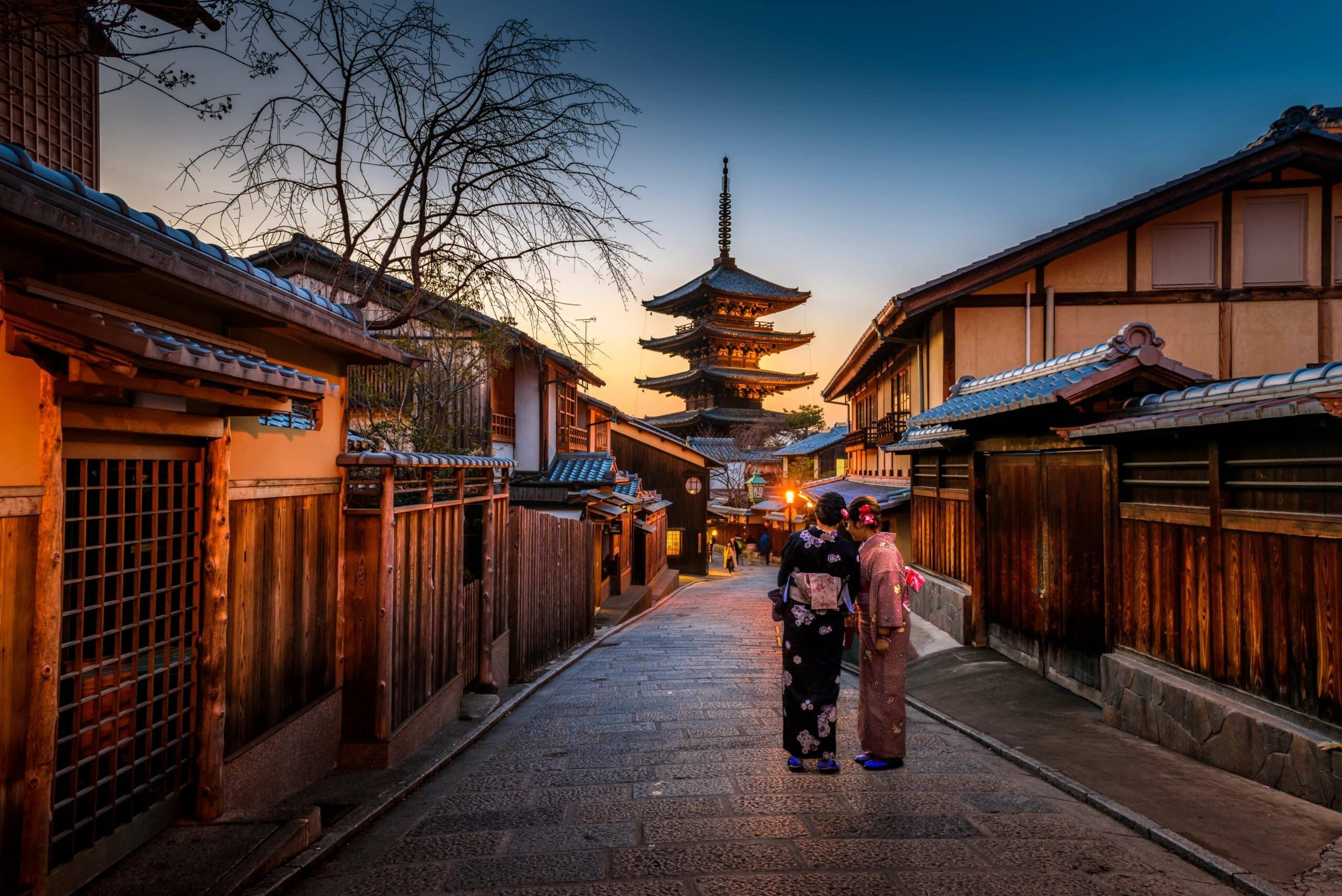
Ancient Kyoto
Ancient Kyoto encompasses seventeen historic monuments across three cities — temples, shrines, palaces, and gardens that constitute Japan's most complete surviving expression of imperial court culture. Japan's imperial capital for over a thousand years, it received 50 million visitors in 2019 — ten times its resident population. The machiya, traditional wooden townhouses that once formed the domestic fabric of the city, are disappearing at approximately 2% per year, taking with them the living trades — textile dyeing, lacquerwork, confectionery — that give the monuments their cultural context.

Great Wall of China
The Great Wall of China is not a single wall but a 21,196-kilometre system of walls, fortifications, watchtowers, and garrison stations built over more than two millennia. It is one of the greatest construction projects in human history, built at incalculable human cost. A 2012 government survey found that 74% of its Ming-era sections have been damaged or destroyed — most through the quiet, centuries-long process of rural communities using its bricks as a quarry.

Himeji Castle
Himeji Castle (姫路城, Himejijō) is the largest and most complete surviving example of Japanese feudal castle architecture — a complex of 83 buildings connected by covered corridors and earthen ramparts, centred on a six-storey white-plastered main tower (daitenshukaku) that rises 46 metres above the hilltop. Known as Shirasagi-jō (White Heron Castle) for its brilliant white lime-plastered walls, Himeji represents the peak of Japanese castle engineering: the complex defensive systems (irregular stone walls, mazelike approach paths designed to slow attackers, arrow and gun loopholes at optimised angles, trapdoors for dropping stones), the sophisticated timber frame construction of the main tower, and the extraordinary aesthetic unity of white walls against the sky make it the most celebrated work of Japanese military architecture. Unlike most Japanese castles, which were destroyed either in the Meiji period's dismantling of feudal symbols or in the Second World War's firebombing, Himeji has survived intact from its early 17th-century construction to the present.