
Preserving the World'sDigital Memory
A global digital-first platform for documentation, analysis, and preservation of humanity's built, natural, and intangible cultural heritage.
57
Heritage Sites
7
Cultural Practices
32
Regions
2
Games
Global Heritage
Map
Explore heritage sites across six continents. Markers are color-coded by conservation risk level — click any site for details.
Loading map…
Markers are color-coded by conservation risk level. Click any site for details.
Heritage at Risk
Monitor
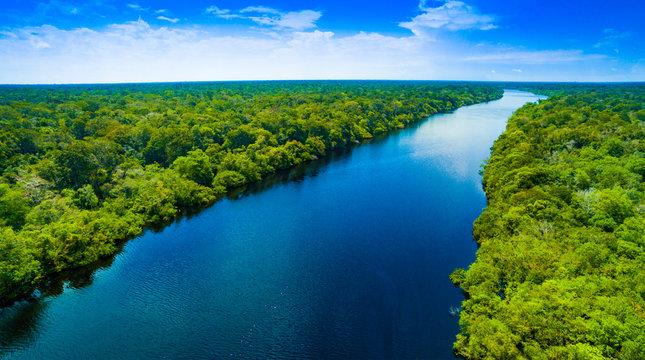
Amazon Rainforest
The most complex and biodiverse terrestrial ecosystem on earth, containing approximately 10 percent of all species on the planet within 5.5 million square kilometres of living forest, home to approximately 400 Indigenous nations speaking around 300 languages, holding an estimated 150 to 200 billion tonnes of carbon in its biomass and soils, and currently approaching a scientifically projected tipping point beyond which large areas may transition irreversibly toward savannah.
Ancestral Pueblo Cliff Dwellings
The cliff dwellings of the American Southwest are the architectural achievement of the Ancestral Pueblo people, who built multi-storey stone communities into the vertical faces of canyon walls and under the overhanging ledges of sandstone mesas between approximately 1100 and 1300 CE. Mesa Verde's Cliff Palace, with its 150 rooms and 23 kivas, is the largest cliff dwelling in North America. These were not refuges or temporary shelters. They were planned, permanent communities with sophisticated water management, specialised ritual spaces, astronomical alignments, and long-distance trade connections stretching from the Gulf of Mexico to the Pacific coast. Their builders did not vanish. They are the ancestors of the modern Pueblo peoples of New Mexico and Arizona.

Angkor
The most extensive low-density urban complex of the pre-industrial world — a religious and administrative capital of the Khmer Empire that at its twelfth-century peak may have supported a population of up to one million people across an urban footprint of roughly 1,000 square kilometres. At its core stands Angkor Wat, the largest religious monument on earth, alongside hundreds of temples, reservoirs, hydraulic works, and urban infrastructure distributed across a landscape that has only recently been mapped to its full extent by aerial LiDAR survey. The hydraulic systems that sustained the city's population are simultaneously its greatest engineering achievement and the focus of its most urgent conservation science.
Latest Field
Investigations
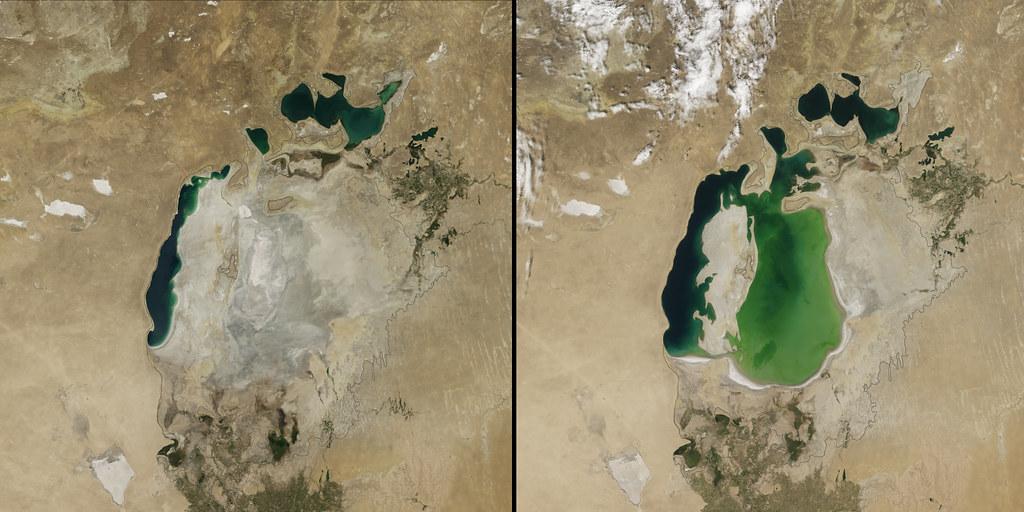
The Aral Sea: What Does It Mean When a Disaster Becomes History?
In 1960 the Aral Sea was the fourth largest lake in the world. It covered 68,000 square kilometres of Central Asia, straddling what is now Kazakhstan and Uzbekistan. It supported a fishing industry that employed 60,000 people. It had port cities. It had processing plants and canneries. It had beaches. It had a climate-moderating effect on the surrounding region that made agriculture viable in areas that would otherwise be too hot and dry. By 2007 it had lost 90 percent of its volume. The southern basin, on the Uzbek side, is now essentially a desert called the Aralkum. Ships that once sailed its waters sit rusting in sand, dozens of kilometres from any water. The fishing industry is gone. The port cities are ruins or ghost towns. The exposed lakebed carries salt and pesticide residue that blows across the region in toxic dust storms, contributing to some of the highest rates of respiratory disease, infant mortality, and throat cancer in the former Soviet Union. This is not an ancient catastrophe. The people who fished the Aral Sea are still alive. Many of them still live in the towns around it. This happened within a single human lifetime, and it happened entirely because of decisions made in Moscow.
The Mughal Women History Forgot to Tell You About
A queen who hunted tigers with six bullets. A princess who owned an entire marketplace still packed with shoppers today. A mother who ran an empire while her husband was too drunk to govern. And none of them made it into the chapter titles. Here's what the textbooks left out.
Ani: The City of 1,001 Churches That the World Forgot
There is a plateau in northeastern Turkey, right on the border with Armenia, where a city of 100,000 people once stood. It had palaces and cathedrals and bustling bazaars. It sat at the crossroads of the Silk Road and collected the architectural ambitions of every empire that passed through it. Merchants, pilgrims, scholars, and soldiers all moved through its gates. Today there are no gates. There is no city. There is wind, and grass, and the crumbling remains of walls and churches standing in an empty landscape so quiet you can hear the river far below. Ani is one of the most astonishing ruins in the world, and almost nobody has heard of it.
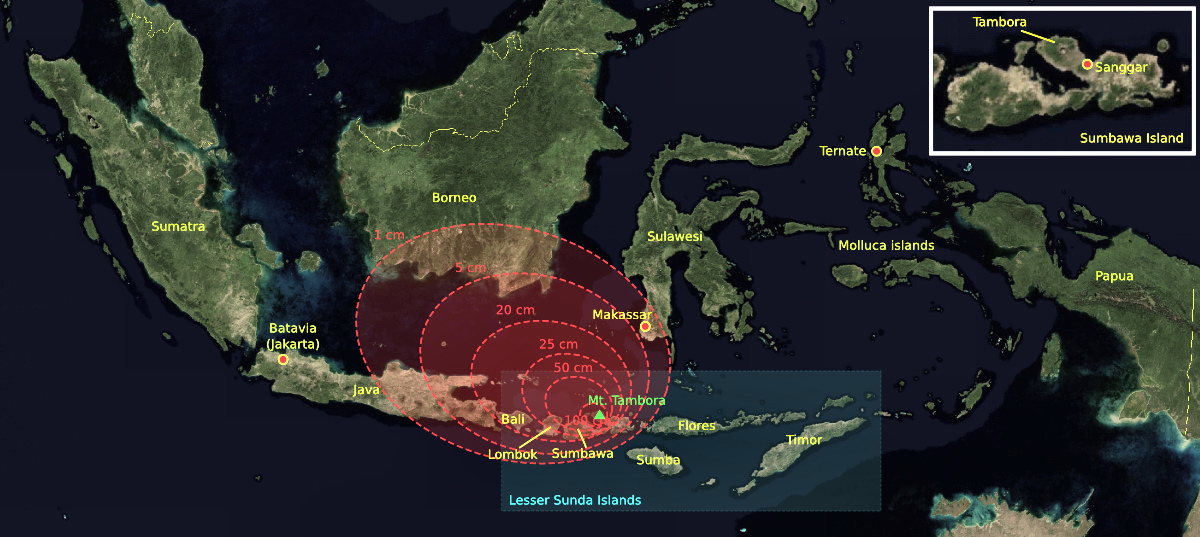
Mount Tambora: The Volcano That Erased a Summer and Changed the World
Most people, if they know one famous volcanic eruption, know Krakatoa. The name has a dramatic ring to it, and the 1883 eruption left a record that spread across contemporary newspapers and telegraph networks in a way that earlier catastrophes could not. But Krakatoa was not the largest volcanic eruption in recorded history. That was Tambora, on the island of Sumbawa in what is now Indonesia, in April 1815. And Tambora did not just destroy a mountain. It changed the climate of the entire planet for two years, killed tens of thousands of people, triggered famines across three continents, forced the migration of hundreds of thousands more, and may have influenced the invention of the bicycle, the writing of Frankenstein, and the composition of some of the most haunting landscape paintings in European art history. Not bad for something most people have never heard of.