Heritage in South America
Explore heritage sites and cultural practices from South America.
Sites in this Region
Showing 4 documented sites
Amazon Rainforest
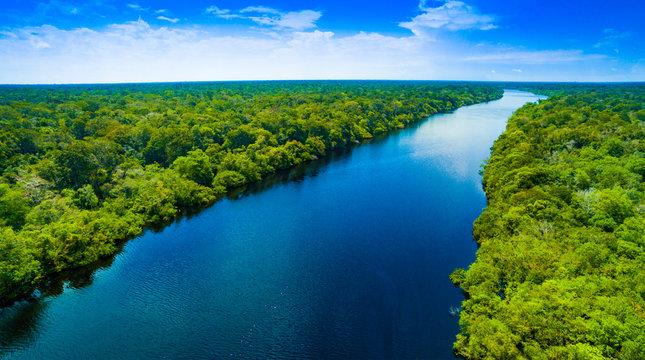
The most complex and biodiverse terrestrial ecosystem on earth, containing approximately 10 percent of all species on the planet within 5.5 million square kilometres of living forest, home to approximately 400 Indigenous nations speaking around 300 languages, holding an estimated 150 to 200 billion tonnes of carbon in its biomass and soils, and currently approaching a scientifically projected tipping point beyond which large areas may transition irreversibly toward savannah.

Galápagos Islands
An archipelago of 19 major islands and dozens of smaller ones, rising from three converging oceanic currents at the intersection of the Pacific, Nazca, and Cocos tectonic plates, isolated from the South American mainland by nearly 1,000 kilometres of open ocean. The islands contain one of the world's highest concentrations of endemic species — animals and plants found nowhere else on earth — including marine iguanas, flightless cormorants, Galápagos penguins, giant tortoises, and Darwin's finches, whose adaptive radiation across the archipelago provided Charles Darwin with the observational foundation for the theory of natural selection. The ecological integrity that makes these species possible is under accelerating pressure from invasive species, climate change-driven ocean warming, and the tourism and fishing economies whose growth has outpaced the management capacity of the institutions responsible for protecting the islands.

Machu Picchu
A fifteenth-century Inca royal estate and ceremonial centre set dramatically upon granite outcrops at the crest of a cloud-forested mountain ridge in the Peruvian Andes, defined by sophisticated dry-stone masonry, terraced agricultural platforms, temples, plazas, and an extraordinary ancient water management system — positioned within a sacred landscape of mountains, rivers, and celestial alignments of profound cosmological significance to the Inca civilisation.

Rapa Nui
A small triangular volcanic island in the middle of the Southeast Pacific, the most isolated inhabited place on earth — 3,700 kilometres from the Chilean mainland and 2,000 kilometres from the nearest inhabited land. Famous for approximately 300 ahu ceremonial stone platforms and the moai ancestor figures they once carried, some reaching over 10 metres in height and 80 tonnes in weight, distributed across the island in a landscape-scale political and territorial system of extraordinary sophistication. The easternmost point of Polynesian settlement and the final destination of one of the most remarkable episodes of human navigation in prehistory.