
Mount Wutai
Documentary Video
Mount Wutai (Wutai Shan)
Shanxi Province, China · 1st Century CE to Present · Buddhist Sacred Mountain Risk Level: At-Risk
Site at a Glance
Location: Xinzhou Prefecture, Shanxi Province, China Coordinates: 39.0000° N, 113.5667° E Type: Natural and Built Heritage (Mixed) Sub-types: Sacred Landscape, Buddhist Monasteries, Pilgrimage Site, Timber Architecture Period: Buddhist significance from 1st century CE; major construction from Northern Wei (386–534 CE); UNESCO inscribed 2009 Risk Level: At-Risk UNESCO Status: Inscribed 2009 (Cultural Landscape)
3D Documentation
The Dunhuang Academy, which manages Chinese Buddhist heritage documentation, has produced photogrammetric surveys of Wutai's major temple complexes. The China National Cultural Heritage Administration maintains digital records of the inscribed property at ncha.gov.cn. The East Asian Buddhism Archive at the University of California maintains scholarly digital resources. A Sketchfab model of the major temple complex provides accessible 3D documentation for educators and researchers.
- China National Cultural Heritage Administration: http://www.ncha.gov.cn/
- UNESCO dossier: https://whc.unesco.org/en/list/1279
Site Description
Mount Wutai is not a single peak but a cluster of five terrace-like summits — the highest, Beitai (North Terrace), reaches 3,058 metres — rising above the surrounding Shanxi plateau. The five peaks give the mountain its name: Wutai means Five Terraces. The summits are connected by ridges and the valleys between them contain the major monastery complexes: Taihuai, the administrative and pilgrimage centre, holds dozens of temples in a concentrated valley setting; the outlying monasteries are distributed across the mountain's slopes and terraces in relationships between natural geography and sacred significance that have been continuously inhabited for 1,500 years.
The architecture spans an extraordinary range. The Nanchan Temple contains the oldest surviving timber-frame building in China, built in 782 CE during the Tang Dynasty, its wooden structure preserved for over 1,200 years. The Foguang Temple, built in 857 CE, is the second oldest surviving timber-frame building and one of the most technically sophisticated wooden structures of the Tang period. Both buildings survived the wholesale destruction of Buddhist institutions during the Tang Emperor Huizong's persecution of 842–845 CE because their remoteness on a mountain kept them from the attention of the authorities. The Tayuan Temple's white pagoda, one of the most recognisable religious structures in northern China, rises 56 metres above the valley floor and serves as the visual anchor of the Taihuai complex.
Historical Significance
The Eastern Han Dynasty texts from the 1st century CE contain early references to Mount Wutai's Buddhist significance, but the site's systematic development as a major pilgrimage centre begins under the Northern Wei Dynasty (386–534 CE), when Buddhist patronage at the imperial level first transforms the mountain. The Tang Dynasty (618–907 CE) represents the peak of Wutai's cultural influence: in 643 CE, the Indian monk Xuanzang returned from his famous journey to India and brought back knowledge that would be transmitted across the Tang Buddhist cultural world, of which Wutai was a major node. Pilgrims came from the Tibetan empire, from Korea, from Japan, from Central Asia, in a pattern of international religious movement that makes Wutai one of the most cosmopolitan sites in medieval Asia.
The Qing Dynasty (1644–1912) added a Tibetan Buddhist dimension that makes Wutai unique among Chinese sacred mountains. The Manchu emperors, who sought to consolidate their rule over both Chinese and Tibetan Buddhist traditions, invested heavily in Tibetan-style monastery construction at Wutai. The Pusa Ding monastery at the mountain's summit and several temples in the Taihuai valley are built in Tibetan architectural styles, creating a rare spatial coexistence of Chinese and Tibetan Buddhist architectural traditions within the same sacred complex.
The Story
1st Century CE — Early Buddhist Association Eastern Han Dynasty texts establish the earliest association between Mount Wutai and the Bodhisattva Manjushri. The mountain's five flat peaks are identified with the five-peaked lotus throne on which Manjushri is traditionally depicted.
386–534 CE — Northern Wei Development The Northern Wei Dynasty, whose rulers converted to Buddhism, begins systematic development of Mount Wutai as a major religious centre. Monasteries are built and the mountain's status as a primary pilgrimage site is established.
7th–9th Century CE — Tang Peak The Tang Dynasty represents the peak of Wutai's cultural influence. The mountain hosts pilgrims from Korea, Japan, Tibet, India, and Central Asia. The Nanchan Temple (782 CE) and Foguang Temple (857 CE) are built; both survive to the present as the oldest standing timber-frame structures in China.
842–845 CE — Huizong Persecution Emperor Huizong's systematic persecution of Buddhism results in the destruction of thousands of monasteries across China. The remote Nanchan and Foguang temples on Wutai survive because of their inaccessibility.
1644–1912 CE — Qing Tibetan Integration The Manchu Qing emperors, seeking to bridge Chinese and Tibetan Buddhist traditions, invest heavily in Tibetan-style monastery construction at Wutai. The mountain becomes a site of genuine cross-cultural Buddhist encounter.
2009 — UNESCO Inscription Mount Wutai is inscribed on UNESCO's World Heritage List as a cultural landscape, recognising the integration of natural and sacred significance that defines the site.
Threats and Risk Assessment
Tourism Pressure Millions of visitors annually, including both pilgrims and secular tourists, place significant pressure on a monastery complex whose infrastructure was designed for a much smaller population. The Taihuai valley, where the major temples are concentrated, has experienced rapid commercial development to service visitors, with hotels, restaurants, and souvenir markets encroaching on the buffer zone of the sacred complex. The contemplative environment that makes the monasteries meaningful is eroding under the weight of its own popularity.
Living Community The monasteries at Wutai are not museums. They are active religious institutions with resident monastic communities. The health of the site depends on the continued vitality of those communities, which in turn depends on ordination rates that reflect broader trends in Buddhist practice in contemporary China. If the monastic population ages without adequate young successors, the living heritage dimension of the site declines even as the physical structures are maintained.
Research and Scholarly Context
The scholarship on Mount Wutai is substantial in both Chinese and international academic literature. The architectural documentation of the Nanchan and Foguang temples is among the most thorough in Chinese architectural history, beginning with the work of Liang Sicheng and Lin Huiyin in the 1930s, who discovered and documented the Foguang Temple. The East Asian Buddhism Archive and the Dunhuang Academy contribute digital documentation. The UNESCO inscription dossier provides comprehensive assessment of the site's Outstanding Universal Value.
If Nothing Changes
The oldest timber-frame buildings in China sit on this mountain. The Nanchan Temple, built in 782 CE, has survived 1,243 years of earthquakes, wars, persecutions, fires, and weather because nobody who knew it was there wanted to destroy it and because its remoteness protected it from those who did. What it has not previously had to survive is the particular pressure of mass tourism and commercial development: the gradual encroachment of souvenir markets and hotel construction on the valley floor, the noise and bustle that is changing the sensory character of a place whose significance depends partly on silence and altitude. The buildings will be maintained. The question is whether the sacred landscape that gives them their meaning will be.
Screening Room

China's Ancient Wooden Temples — Nanchan and Foguang
Historical Timeline
Early Buddhist Association
Eastern Han texts establish the association between Mount Wutai and the Bodhisattva Manjushri.
Northern Wei Development
Systematic development of the mountain as a major Buddhist pilgrimage centre begins.
Nanchan Temple Built
The Nanchan Temple is built; it survives as the oldest existing timber-frame building in China.
Foguang Temple Built
The Foguang Temple is constructed, the second oldest surviving timber-frame structure in China.
Huizong Persecution
Emperor Huizong destroys thousands of Buddhist monasteries across China. Wutai's remote temples survive.
Qing Tibetan Integration
Manchu Qing emperors invest in Tibetan-style construction at Wutai, creating a unique cross-cultural Buddhist landscape.
UNESCO Inscription
Mount Wutai is inscribed as a UNESCO World Heritage Cultural Landscape.
Related Heritage Sites
Ancient Kyoto
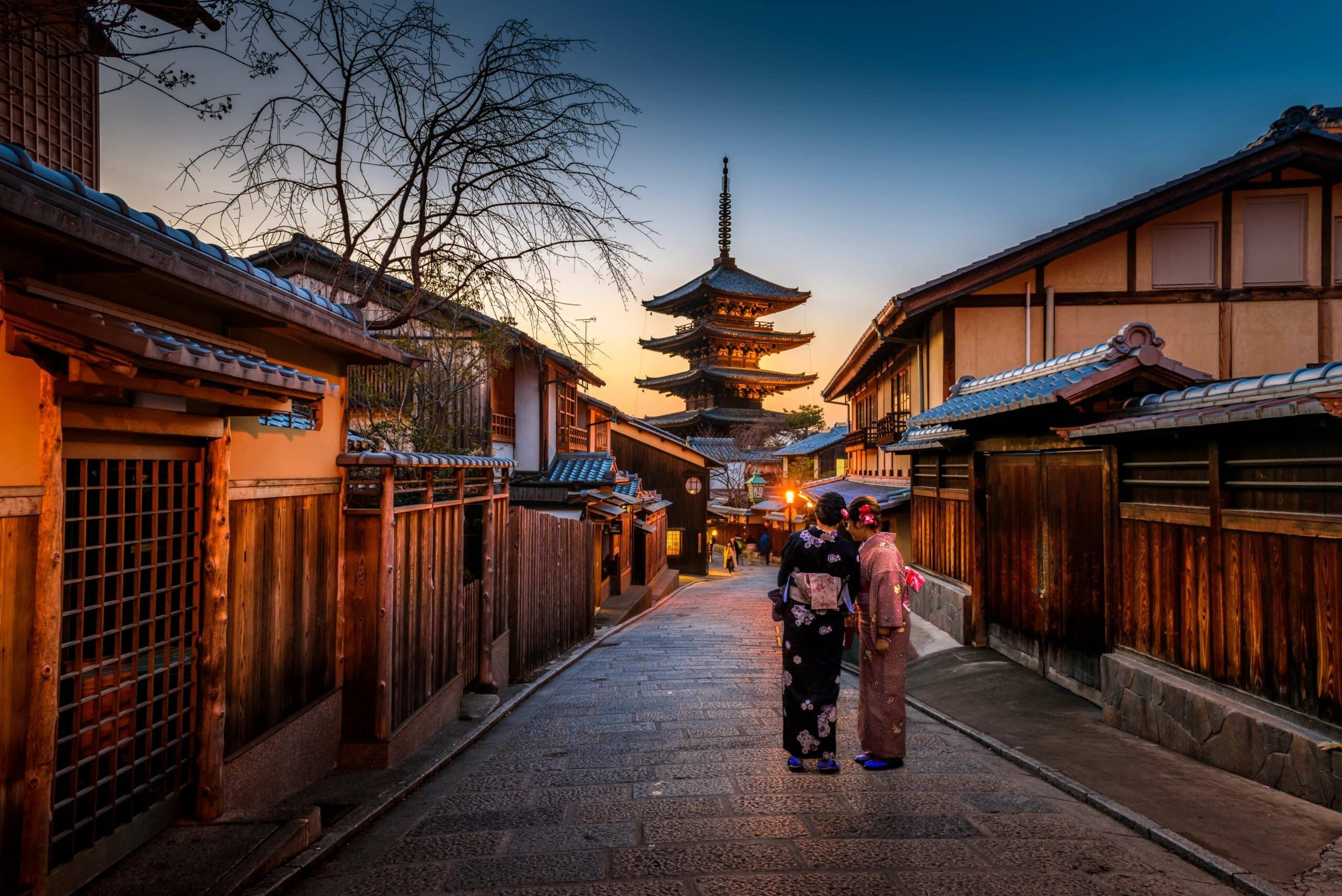
Ancient Kyoto encompasses seventeen historic monuments across three cities — temples, shrines, palaces, and gardens that constitute Japan's most complete surviving expression of imperial court culture. Japan's imperial capital for over a thousand years, it received 50 million visitors in 2019 — ten times its resident population. The machiya, traditional wooden townhouses that once formed the domestic fabric of the city, are disappearing at approximately 2% per year, taking with them the living trades — textile dyeing, lacquerwork, confectionery — that give the monuments their cultural context.

Great Wall of China
The Great Wall of China is not a single wall but a 21,196-kilometre system of walls, fortifications, watchtowers, and garrison stations built over more than two millennia. It is one of the greatest construction projects in human history, built at incalculable human cost. A 2012 government survey found that 74% of its Ming-era sections have been damaged or destroyed — most through the quiet, centuries-long process of rural communities using its bricks as a quarry.

Gyeongbokgung Palace
Gyeongbokgung Palace (景福宮, 'Greatly Blessed by Heaven') was the primary palace of the Joseon dynasty (1395–1910) — the largest, most architecturally significant, and most historically resonant of Seoul's five royal palaces. At its height in the 16th century, the complex covered approximately 400,000 square metres and contained more than 500 buildings connected by elevated corridors and arranged according to strict Confucian spatial hierarchies: the state throne hall (Geunjeongjeon) for royal audiences, the private royal living quarters (Gangnyeongjeon and Gyotaejeon), the government offices, the royal ancestral shrines, and the extraordinary Gyeonghoeru Pavilion — a 48-pillar stone-based pleasure pavilion built on an artificial island in a lotus pond. Japanese colonial demolition (1895–1910) reduced the complex from more than 500 buildings to 36; the ongoing restoration programme begun in 1990 aims to return the complex to its pre-colonial completeness.