

Terracotta Army
Interactive 3D Scan
Explore 3D Model
Click to load interactive scan
TERRACOTTA ARMY Lintong District, Xi'an, Shaanxi Province, China · c. 246–210 BCE · Qin Dynasty Imperial Funerary Complex STABLE
SITE AT A GLANCE Location: Lintong District, Xi'an, Shaanxi Province, China Country: China Region: East Asia Coordinates: 34.3845° N, 109.2783° E Type: Tangible Cultural Heritage — Archaeological Site Sub-types: Funerary Complex, Military Art, Imperial Architecture Period: c. 246–210 BCE construction; discovered 1974; ongoing excavation Risk Level: Stable Risks: Polychrome preservation, Humidity and groundwater, Tourism volume, Mercury contamination of central mausoleum, Ongoing excavation challenges UNESCO Status: World Heritage Site (1987), as part of Mausoleum of the First Qin Emperor
DESCRIPTION Pit 1 — the largest of the three major excavated pits — is 230 metres long and 62 metres wide, containing an estimated 6,000 figures arranged in eleven columns separated by earthen walls. The figures stand in formation: rows of infantry, flanking cavalry, leading chariots. The military logic of the arrangement is precise — archaeologists have identified the vanguard, flanks, rear guard, and command positions of a deployed Qin army. The soldiers vary in height by rank (officers are taller), and the variety of facial features — high cheekbones, narrow jaws, round faces, aquiline noses — suggests that the figures may have been individually modelled on real soldiers, though the extent of true portraiture remains debated. The polychrome paint crisis is the most acute conservation problem. When the figures were created, they were painted in vivid colours: purple tunics, green armour, red sashes. The paint was applied in a lacquer base that adheres to the clay surface. After more than two millennia underground in a stable, anaerobic, humid environment, the paint and its lacquer base form a system that is in equilibrium with the soil conditions. Excavation destroys this equilibrium instantly: as the surface dries, the lacquer curls and detaches within minutes, taking the polychrome layer with it. Current conservation technology can slow this process but cannot prevent it. The result is that every figure excavated today emerges grey-white — the original colours visible for a few minutes before irreversible loss. The mausoleum itself — the burial mount under which Qin Shi Huang lies — has not been excavated. Historical texts describe its interior: rivers of mercury representing the rivers of China, jade suits, crossbow traps, a night sky ceiling studded with pearls. Soil analysis has confirmed unusually high mercury levels beneath the mound. The decision not to excavate is both a conservation judgement (current technology cannot preserve what would be found) and a political one (the mausoleum is too culturally significant to risk on inadequate technology).
HISTORICAL SIGNIFICANCE The Qin dynasty lasted only fifteen years after Qin Shi Huang's death (210 BCE) — the empire he unified collapsed almost immediately under the combined weight of the First Emperor's totalitarian infrastructure, peasant rebellions, and the incompetence of his successors. But the political structure he created — a centralised imperial bureaucracy governing a unified Chinese state — was inherited by the Han dynasty (206 BCE–220 CE) and became the template for Chinese governance for the next 2,000 years. The Terracotta Army is the burial complex of the man who, more than any other single figure, created the political entity we call China. The discovery in 1974 by farmer Yang Zhifa and his brothers, digging a water well in a drought, is one of the great accidental archaeological discoveries of the 20th century. Yang Zhifa spent the rest of his working life signing books for tourists at the museum; he died in 2021. The figures he found are now among the most recognised archaeological objects in the world.
THE STORY OF THE MONUMENT
246 BCE: Construction Begins Qin Shi Huang, then thirteen years old and recently crowned king of the Qin state, begins construction of his mausoleum. Work on the Terracotta Army begins as part of the larger mausoleum complex, employing both skilled artisans and conscripted labour.
221 BCE: Unification of China Qin Shi Huang completes the conquest of the six competing kingdoms, unifying China under a single ruler for the first time. He declares himself Shi Huangdi — First Emperor — and work on the mausoleum intensifies.
210 BCE: Emperor's Death Qin Shi Huang dies on a tour of the eastern provinces. The mausoleum is sealed; the entrances to the pit complexes are closed. The 8,000+ figures begin their two-millennia wait in the dark.
206 BCE: Pit Destruction Rebel forces led by Xiang Yu reportedly loot and burn the pit complexes shortly after the fall of the Qin dynasty. The wooden roof structures of the pits collapse and burn, crushing many of the figures. Most of the bronze weapons are removed.
1974: Discovery Farmer Yang Zhifa and his brothers accidentally discover the first terracotta fragments while digging a well. Archaeologists are summoned; the scale of the find becomes apparent. Excavation begins.
1987: UNESCO World Heritage Inscription The mausoleum complex, including the Terracotta Army pits, is inscribed as a UNESCO World Heritage Site.
1998–Present: Ongoing Excavation Excavation of Pit 1 continues with new techniques focused on in-situ polychrome preservation. New sections reveal figures in unprecedented states of completion. The central mausoleum remains sealed.
THREATS AND RISK ASSESSMENT The site is well-funded, well-managed, and not at immediate risk of physical destruction or institutional neglect. China's investment in the site — both as a national symbol of cultural pride and as a major tourism asset — ensures a level of resource commitment that most heritage sites globally cannot approach. The technical challenges are real and unsolved. The polychrome preservation problem has improved with polymer consolidant treatments that can slow but not stop pigment loss; the development of a reliable in-situ preservation technology would transform the excavation possibilities. The groundwater and humidity management challenges are ongoing engineering problems with significant resources devoted to them. The unexcavated portions of the complex — estimated to include hundreds of additional pits, the central mausoleum chamber, and enormous quantities of additional finds — represent the most significant unexcavated archaeological deposit in the world. The decision about when and how to excavate the mausoleum is one of the most consequential pending decisions in global archaeology.
IF NOTHING CHANGES The currently excavated portions of the site will be carefully maintained. Tourism will continue at high volume. Excavation will proceed cautiously in the pit complexes. The polychrome problem will remain partially unsolved. The central mausoleum will remain sealed until a combination of political will and conservation technology makes its excavation responsible. The Terracotta Army will remain what it currently is: one of the most visited and most significant archaeological sites in the world, and one where the most significant portion of what was buried remains, deliberately, in the ground.
Screening Room

China's Terracotta Warriors — National Geographic

The Terracotta Army — Secret of the First Emperor
Historical Timeline
Construction Begins
The thirteen-year-old King of Qin begins construction of his mausoleum; work on the Terracotta Army commences.
Unification of China
Qin Shi Huang completes conquest of the six kingdoms and declares himself First Emperor; mausoleum construction intensifies.
Emperor's Death and Sealing
Qin Shi Huang dies; the mausoleum complex is sealed with the 8,000+ figures in the pit complexes.
Pit Destruction
Rebel forces reportedly loot and burn the pit complexes; wooden roof structures collapse, crushing many figures.
Accidental Discovery
Farmer Yang Zhifa discovers terracotta fragments while digging a well; archaeologists begin excavation.
UNESCO World Heritage Inscription
Mausoleum complex inscribed as a UNESCO World Heritage Site.
Quick Facts
Location
Lintong District, Xi'an, Shaanxi Province, China; 1.5 kilometres east of the burial mound of Qin Shi Huang, the first Emperor of a unified China
Country
China
Region
East Asia
Period
Constructed c. 246–210 BCE during the reign of Qin Shi Huang; undiscovered until March 1974 when farmers digging a well found the first fragments; UNESCO World Heritage Site since 1987
Type
Built Heritage
Risk Level
Safe
Related Heritage Sites
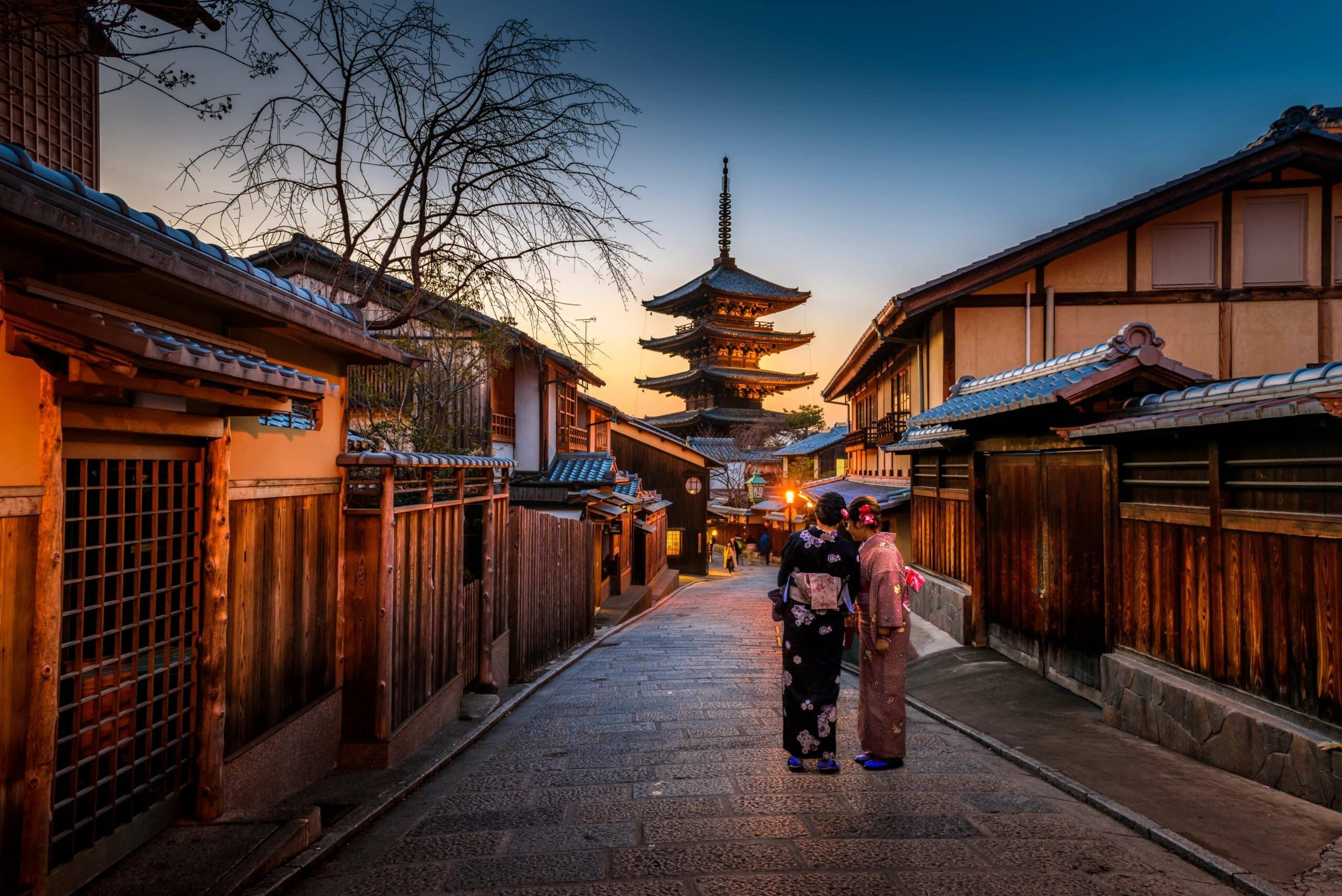
Ancient Kyoto
Ancient Kyoto encompasses seventeen historic monuments across three cities — temples, shrines, palaces, and gardens that constitute Japan's most complete surviving expression of imperial court culture. Japan's imperial capital for over a thousand years, it received 50 million visitors in 2019 — ten times its resident population. The machiya, traditional wooden townhouses that once formed the domestic fabric of the city, are disappearing at approximately 2% per year, taking with them the living trades — textile dyeing, lacquerwork, confectionery — that give the monuments their cultural context.

Great Wall of China
The Great Wall of China is not a single wall but a 21,196-kilometre system of walls, fortifications, watchtowers, and garrison stations built over more than two millennia. It is one of the greatest construction projects in human history, built at incalculable human cost. A 2012 government survey found that 74% of its Ming-era sections have been damaged or destroyed — most through the quiet, centuries-long process of rural communities using its bricks as a quarry.

Gyeongbokgung Palace
Gyeongbokgung Palace (景福宮, 'Greatly Blessed by Heaven') was the primary palace of the Joseon dynasty (1395–1910) — the largest, most architecturally significant, and most historically resonant of Seoul's five royal palaces. At its height in the 16th century, the complex covered approximately 400,000 square metres and contained more than 500 buildings connected by elevated corridors and arranged according to strict Confucian spatial hierarchies: the state throne hall (Geunjeongjeon) for royal audiences, the private royal living quarters (Gangnyeongjeon and Gyotaejeon), the government offices, the royal ancestral shrines, and the extraordinary Gyeonghoeru Pavilion — a 48-pillar stone-based pleasure pavilion built on an artificial island in a lotus pond. Japanese colonial demolition (1895–1910) reduced the complex from more than 500 buildings to 36; the ongoing restoration programme begun in 1990 aims to return the complex to its pre-colonial completeness.