

Great Wall of China
Interactive 3D Scan
Explore 3D Model
Click to load interactive scan
GREAT WALL OF CHINA Northern China · 7th century BCE to 17th century CE · Multi-Dynasty AT-RISK
SITE AT A GLANCE Location: Northern China, spanning 15 provinces from Liaoning in the east to Gansu in the west Country: China Region: East Asia Coordinates: 40.4319° N, 116.5704° E (Jinshanling reference point) Type: Built Heritage Sub-types: Military Architecture, Imperial Infrastructure Period: 7th century BCE to 17th century CE; Ming sections (1368–1644) predominate Risk Level: At-Risk Risks: Rural quarrying, Erosion, Mass tourism, Graffiti, Vegetation damage, Climate change UNESCO Status: Inscribed 1987
3D DOCUMENTATION A photogrammetric model of the Jinshanling section of the Ming-era Wall, produced by LibanCiel, is available on Sketchfab under a CC-BY licence. The model captures the brick-faced battlemented form characteristic of the Ming construction. Open Context at opencontext.org hosts the Chinese Archaeological Heritage Database with open-access records for Wall-related excavation data. Europeana hosts historical maps, photographs, and archival material relating to the Wall across its full length. Sketchfab model (Jinshanling section): https://sketchfab.com/3d-models/the-great-wall-of-china-3d085397bf904e649ce97eb6c4bd9c7a Open Context: https://opencontext.org UNESCO dossier: https://whc.unesco.org/en/list/438
SITE DESCRIPTION The Great Wall of China is not one wall. It is a system — a 21,196-kilometre network of walls, ditches, natural barriers, watchtowers, signal towers, garrison stations, and fortified passes built piecemeal over more than two thousand years by states ranging from the Warring States kingdoms of the 7th century BCE to the Ming emperors of the 17th century CE. If you walked it end to end at a reasonable pace, it would take two and a half years. The sections that most visitors see and most photographs show — brick-faced, battlemented, punctuated by square watchtowers, climbing and descending the ridges of northern China's mountains — are overwhelmingly the product of the Ming Dynasty (1368–1644), which spent nearly three centuries rebuilding and extending earlier earthen walls in fired grey brick and lime mortar. Each brick was stamped with the kiln and production date, creating a vast archival record in stone. The mortar was mixed with sticky rice, a combination that modern analysis has shown produces a durability that synthetic mortars struggle to match. Most of the Wall is none of this. Most of the Wall is earthen, or has returned to earth, or has been incorporated into the farmhouses and terraces of the villages that have lived alongside it for centuries. A 2012 government survey found that only 8.2% of the Ming-era Wall is in good condition and approximately 1,961 kilometres have completely disappeared.
HISTORICAL SIGNIFICANCE The Wall was never primarily a military barrier. It was a communication network and a statement of political will. Watchtowers were positioned so each was visible to the next, allowing a warning of enemy approach to relay from the eastern terminus near the Bohai Sea to the capital Beijing in hours through a system of smoke and fire signals — faster than any mounted messenger could travel the same distance. Garrisons stationed in the towers maintained supply depots, coordinated patrols, and monitored the flow of people and goods through the controlled passes that were the only legal crossing points. The human cost of building it is incalculable. Conscripted soldiers, convicted criminals, and forced civilian labourers died in the construction in numbers that cannot be reliably established but that give the Wall its folk name in Chinese tradition: the longest cemetery on earth. The legend of Lady Meng Jiang, who wept so hard at her husband's death building the Wall that a section collapsed to reveal his bones, is among the most beloved in Chinese folklore, a story about grief and state power that has survived two thousand years because it tells a truth that official histories prefer not to record.
THE STORY OF THE SITE
7th Century BCE to 221 BCE: The State Walls The earliest walls are built by individual Warring States kingdoms — Qi, Wei, Zhao, Yan, and others — to defend against each other as much as against northern nomads. When Qin Shi Huang unifies China in 221 BCE, he orders these walls connected and extended northward, creating the first imperial northern boundary using an estimated 300,000 to 500,000 labourers, many of whom died in the process and were buried within the earthen cores of the walls themselves.
206 BCE to 220 CE: The Han Extensions The Han emperors extend the Wall westward into the deserts of Gansu and beyond, creating the defended corridor along which the Silk Road flows. Han beacons and watchtowers extend as far as the Dunhuang oasis, 2,000 kilometres west of the Yellow Sea, marking one of the longest continuous defensive systems in antiquity.
1449: The Humiliation at Tumu Emperor Yingzong leads a military expedition against the Oirat Mongols and is captured at the Battle of Tumu. The humiliation of an imperial captive galvanises the Ming court and triggers three centuries of intensive Wall reconstruction and extension in brick and stone. The Wall that most people mean when they say the Great Wall of China is the direct product of this embarrassment.
1368 to 1644: The Ming Construction The Ming Dynasty undertakes the most ambitious Wall construction in history over nearly three centuries, creating the brick-faced, battlemented form recognisable today. In 1644, Manchu forces that will establish the Qing Dynasty enter China not by breaching the Wall but through the Shanhai Pass gate, opened by a Chinese general. The Wall never serves as an effective military barrier again.
1987 to Present: Recognition and Ongoing Loss UNESCO inscription in 1987 brings international recognition but limited practical protection for the remote sections that most need it. The 2012 government survey quantifies what local communities have known for decades: that the Wall is disappearing at rates and in ways that tourism infrastructure and conservation investment concentrated on the famous sections at Badaling and Mutianyu cannot address.
THREATS AND RISK ASSESSMENT Rural Quarrying The primary cause of the Wall's loss is not dramatic. It is quiet and incremental. Rural villages have been using the Wall as a quarry for centuries, incorporating its bricks into farmhouses, animal enclosures, and terraces. In some areas, entire sections have been dismantled and their materials redistributed across the landscape. This process continues in areas without permanent monitoring, and it is driven by practical needs that simple prohibition cannot address without the provision of alternative building materials.
The Tourism Paradox The sections that receive conservation investment — Badaling, Mutianyu, Jinshanling — receive it precisely because they generate tourism revenue. The remote sections that may be archaeologically more significant, where the Wall crosses unmapped ridges and descends into valleys inaccessible by road, receive little protection. Graffiti, brick removal as souvenirs, and footfall damage are ongoing problems at all accessible sections.
Vegetation Trees and shrubs growing in Wall crevices extend root systems that physically displace brickwork over decades. Removal of vegetation risks immediate erosion of the earthen cores; leaving it risks structural collapse of the brick facing. Neither option is without cost.
RESEARCH AND SCHOLARLY CONTEXT The State Administration of Cultural Heritage's 2012 comprehensive survey remains the definitive condition assessment of the Ming-era Wall, providing the data that makes the scale of loss legible. The photogrammetric model of the Jinshanling section on Sketchfab, available under CC-BY licence, allows researchers to study a well-preserved section of the Wall without being physically present. Open Context's Chinese archaeological heritage database provides open-access data from Wall-related excavations. The UNESCO World Heritage dossier contains the most authoritative historical documentation.
IF NOTHING CHANGES The Great Wall of China will not disappear suddenly. It will continue its current trajectory of gradual, incremental loss: earthen sections returning to the hillside, brick sections dismantled brick by brick, the famous sections sustaining damage from the millions of visitors who come to see what remains. The 74% already gone establishes the baseline. The question is how much of the remaining 26% can be preserved, and at what cost, and with what degree of political will from a government that has historically treated the Wall's famous sections as an icon and its obscure sections as an irrelevance. The Wall represents two thousand years of human labour, ingenuity, and suffering. That is worth protecting even where it cannot be photographed.
Screening Room

The Great Wall of China: An Aerial View
Historical Timeline
First State Walls
Individual Chinese states begin constructing defensive walls during the Warring States period.
Qin Unification
Qin Shi Huang orders the walls connected and extended northward using hundreds of thousands of labourers.
Han Extensions
Han emperors extend the Wall westward 2,000 kilometres, creating the defended Silk Road corridor.
Battle of Tumu
Emperor Yingzong is captured by the Oirat Mongols, triggering the Ming Dynasty's intensive reconstruction.
Wall Bypassed
Manchu forces enter through the Shanhai Pass gate. The Wall never serves as an effective military barrier again.
UNESCO Inscription
The Great Wall of China is inscribed on UNESCO's World Heritage List.
State Survey
Government survey reveals 74% of the Ming-era Wall has been damaged or destroyed; only 8.2% in good condition.
Related Heritage Sites
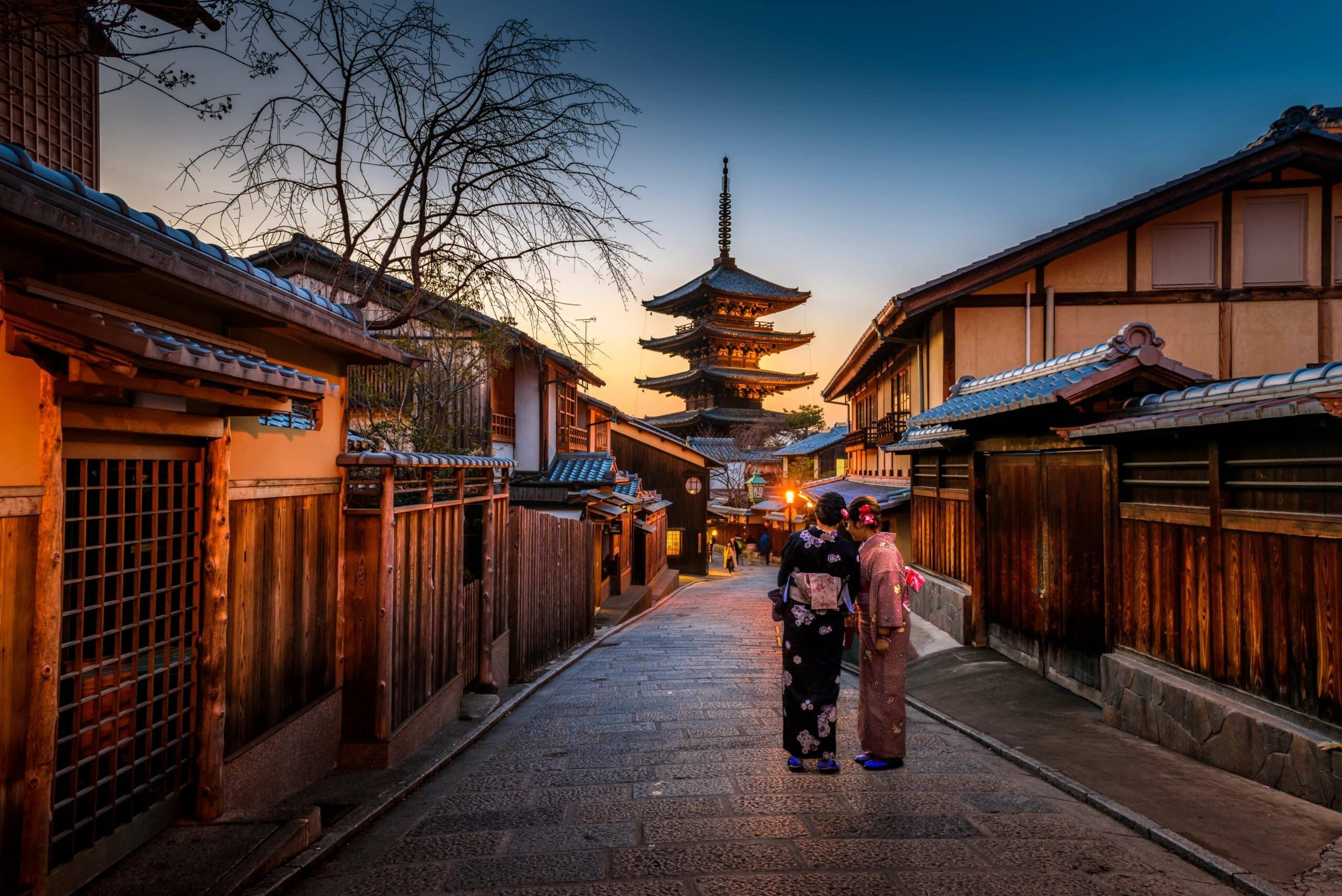
Ancient Kyoto
Ancient Kyoto encompasses seventeen historic monuments across three cities — temples, shrines, palaces, and gardens that constitute Japan's most complete surviving expression of imperial court culture. Japan's imperial capital for over a thousand years, it received 50 million visitors in 2019 — ten times its resident population. The machiya, traditional wooden townhouses that once formed the domestic fabric of the city, are disappearing at approximately 2% per year, taking with them the living trades — textile dyeing, lacquerwork, confectionery — that give the monuments their cultural context.

Gyeongbokgung Palace
Gyeongbokgung Palace (景福宮, 'Greatly Blessed by Heaven') was the primary palace of the Joseon dynasty (1395–1910) — the largest, most architecturally significant, and most historically resonant of Seoul's five royal palaces. At its height in the 16th century, the complex covered approximately 400,000 square metres and contained more than 500 buildings connected by elevated corridors and arranged according to strict Confucian spatial hierarchies: the state throne hall (Geunjeongjeon) for royal audiences, the private royal living quarters (Gangnyeongjeon and Gyotaejeon), the government offices, the royal ancestral shrines, and the extraordinary Gyeonghoeru Pavilion — a 48-pillar stone-based pleasure pavilion built on an artificial island in a lotus pond. Japanese colonial demolition (1895–1910) reduced the complex from more than 500 buildings to 36; the ongoing restoration programme begun in 1990 aims to return the complex to its pre-colonial completeness.

Himeji Castle
Himeji Castle (姫路城, Himejijō) is the largest and most complete surviving example of Japanese feudal castle architecture — a complex of 83 buildings connected by covered corridors and earthen ramparts, centred on a six-storey white-plastered main tower (daitenshukaku) that rises 46 metres above the hilltop. Known as Shirasagi-jō (White Heron Castle) for its brilliant white lime-plastered walls, Himeji represents the peak of Japanese castle engineering: the complex defensive systems (irregular stone walls, mazelike approach paths designed to slow attackers, arrow and gun loopholes at optimised angles, trapdoors for dropping stones), the sophisticated timber frame construction of the main tower, and the extraordinary aesthetic unity of white walls against the sky make it the most celebrated work of Japanese military architecture. Unlike most Japanese castles, which were destroyed either in the Meiji period's dismantling of feudal symbols or in the Second World War's firebombing, Himeji has survived intact from its early 17th-century construction to the present.