

Rapa Nui
Interactive 3D Scan
Explore 3D Model
Click to load interactive scan
Overview
Rapa Nui sits in the middle of nowhere, and that is not a casual observation. The nearest inhabited land is Pitcairn Island, over 2,000 kilometres to the west. The Chilean mainland lies 3,700 kilometres to the east. No inhabited place on earth is more comprehensively surrounded by open ocean, and the people who settled here — who built their society, their monuments, and their entire world on this speck of volcanic rock in the Pacific — did so with the knowledge that the sea in every direction was essentially without end. That context is essential for understanding Rapa Nui, because everything about the island — its culture, its achievements, and its current vulnerability — flows from that profound isolation.
The island itself is small, roughly triangular, formed by three extinct volcanoes whose slopes run down to a coastline of dramatic cliffs, lava shelves, and occasional sandy beaches. The interior is largely open grassland, windswept and treeless now, though the ecological history of the island is considerably more complex than that bare landscape suggests. What the island is most famous for — the approximately 300 ahu and the moai they once carried — are distributed across this landscape in a pattern that was anything but random.
The ahu are ceremonial stone platforms, the foundational architectural unit of Rapanui culture, functioning as far more than religious structures. Researchers have described them as the fixed sacred and secular anchors of the landscape — the spatial centres around which the social, political, economic, and ceremonial life of the island's communities was organised. Each ahu marked territory, housed ancestral remains, and supported the moai, the enormous stone ancestor figures whose eyeless gaze, once fitted with coral and obsidian eyes, looked inland over the living rather than out to sea.
The Story of Rapa Nui
c. 800 to 1200 CE — First Settlement
Polynesian navigators, almost certainly from the Marquesas or the Society Islands, make landfall on Rapa Nui after crossing thousands of kilometres of open ocean. They bring with them the plants, animals, and cultural practices of eastern Polynesia, and they find an island covered in forest, rich in seabirds, and entirely uninhabited. The settlement that follows is the beginning of one of the most isolated human societies in history — a community that will develop its own language, its own artistic tradition, its own script, and its own monumental architecture over the centuries that follow, with no sustained contact with the outside world.
c. 1000 to 1500 CE — The Ahu and Moai Tradition
The distinctive Rapanui tradition of ahu construction and moai carving develops and reaches its most intensive phase. Quarrying operations at Rano Raraku produce hundreds of moai in various stages of completion — some still attached to the quarry face, others in transit across the island, others erected on ahu platforms around the coastline. The scale of this enterprise reflects a society with sophisticated political organisation, surplus agricultural production sufficient to support specialist craftspeople, and a religious ideology that made ancestor commemoration through monumental stone figures a central priority. The ahu network creates the political landscape through which chiefly elites monitor and manage their territories and populations.
c. 1500 CE — Internal Conflict and Transition
Archaeological evidence suggests a period of significant social stress in the centuries before European contact, with evidence of increasing conflict between competing groups, resource pressure in some parts of the island, and changes in land use patterns that vary considerably by region. The moai on their ahu platforms are systematically toppled during this period, apparently as an act of inter-group warfare targeting the ancestral power of rival lineages. By the time Europeans arrive, most of the standing moai have been thrown down.
1722 — First European Contact
Dutch explorer Jacob Roggeveen arrives on Easter Sunday 1722, giving the island the name by which much of the world still knows it — a name that has no connection to the island, its people, or its culture. His crew spend a single day ashore and produce the first European description of the island and its monuments.
1770 and 1774 — Spanish and British Visits
A Spanish expedition claims the island for the Spanish Crown in 1770, a claim that proves entirely academic. James Cook arrives in 1774 and spends four days ashore, producing accounts that describe a population visibly reduced from earlier estimates and many moai already toppled. His naturalist Johann Reinhold Forster provides some of the earliest scientific descriptions of the island's ecology and archaeology.
1862 to 1863 — The Slave Raids
Peruvian slave raiders make multiple landings on Rapa Nui and abduct approximately 1,500 people — including most of the island's chiefly leadership and the individuals who held knowledge of the rongorongo script, the only writing system developed in Oceania. International pressure eventually forces Peru to repatriate survivors, but smallpox kills most of them before or shortly after their return. The raids and subsequent disease epidemics reduce the island's population to fewer than 200 people by the late 1860s. This demographic catastrophe is the single largest factor in the loss of traditional Rapanui knowledge systems.
1888 — Chilean Annexation
Chile annexes Rapa Nui, and the island's remaining population are confined to the settlement of Hanga Roa while the rest of the island is leased to a sheep farming company. The Rapanui people are effectively imprisoned on their own island for most of the following century, with movement restrictions not fully lifted until the 1960s. The sheep operation causes significant ecological damage to the island's already stressed landscape.
1914 and 1935 — Early Archaeological Expeditions
British anthropologist Katherine Routledge conducts the first systematic archaeological survey of the island in 1914, producing the earliest comprehensive documentation of the ahu and moai. The Franco-Belgian mission led by Alfred Metraux and Henri Lavachery follows in 1935, further advancing the archaeological record and producing ethnographic documentation of Rapanui traditions.
1955 to 1956 — Heyerdahl's Expedition
Norwegian explorer Thor Heyerdahl conducts excavations on the island as part of his argument that the island was settled from South America rather than Polynesia — a theory that genetic and linguistic evidence has firmly disproved. His expedition nevertheless produces significant archaeological data and, through the popular books that follow, introduces Rapa Nui to a mass global audience in the mid-twentieth century.
1995 — UNESCO World Heritage Inscription
Rapa Nui National Park is inscribed on the World Heritage List, recognised for the outstanding universal value of its archaeological monuments and the cultural landscape they define. The inscription brings international attention and access to conservation resources but also intensifies the tourism pressure that has become the island's primary economic driver and one of its most significant heritage management challenges.
2000s to Present — Climate Threat Recognised
Research programmes including the UCL Rapa Nui Landscapes of Construction Project begin systematic monitoring of erosion and weathering across the island's heritage sites, producing the first comprehensive baseline data on the rate and character of coastal deterioration. Studies published in the 2020s identify extreme sea level events as occurring far more frequently than previously understood, driven by atmospheric rivers that generate large wave events capable of causing immediate damage to coastal ahu. Climate projections suggest that by 2100, all harbour infrastructure will be at regular risk of tidal inundation and at least one of the island's two beaches will be permanently lost.
Threats and Risk Assessment
Rapa Nui carries a Critically Threatened classification, reflecting a convergence of environmental risks that are active, accelerating, and in some cases poorly understood even by the researchers monitoring them.
Coastal Erosion and Weathering is the most persistent and continuously active threat. The UCL Rapa Nui Landscapes of Construction Project has been monitoring erosion rates and weathering patterns across the monument inventory for years, and the picture is one of steady, measurable loss of surface detail and structural integrity at coastal ahu sites. The combination of salt spray, wave action, wind erosion, and biological weathering from lichens and vegetation is relentless, and the pace of loss accelerates with each storm event.
Extreme Sea Level Events — research published in 2021 established that these events at Rapa Nui occur far more frequently than had previously been recognised. These events result from the constructive combination of seiches, storm surges, and high tides, all driven by large breaking waves near the coastline. The two most extreme events recorded in a 17-month monitoring period both occurred in 2020, generated by intense atmospheric rivers. The critical finding is that the intensity of atmospheric rivers and background sea level are both projected to increase as climate change progresses, meaning this threat will become more severe over the coming decades, not less.
Sea Level Rise and Long-Term Inundation — climate projections for 2100 are stark. All harbour infrastructure faces regular tidal inundation within the century. One of the island's two beaches is projected to be permanently inundated. Significant heritage sites in coastal locations are at serious risk of permanent loss.
Tsunami Hazard — field research has identified tsunami inundation as a greater risk to the island's heritage sites than extreme ocean storms. Rapa Nui's position in the Pacific exposes it to tsunamis generated by large earthquakes anywhere around the Pacific Rim, and the flat coastal areas where many of the most significant ahu are located offer little natural protection.
Water Security — the island's freshwater supply, already precarious due to its volcanic geology and reliance on coastal springs, faces serious risk from shifts in precipitation patterns, increased evaporation rates, and the salinisation of coastal freshwater sources through sea level rise.
Tourism Pressure and Economic Dependency — tourism is the only significant industry on the island, which means the heritage sites that attract visitors are simultaneously the foundation of the local economy and the resource most at risk from the visitor pressure that economy generates. Research has documented a significant gap between conservation principles established in Chilean state law and international commitments on one hand, and the actual management of the island on the other.
Research and Scholarly Context
The scholarly understanding of Rapa Nui has undergone a fundamental transformation over the past three decades, driven by new archaeological methods, more rigorous environmental science, and a willingness to subject the island's most famous narratives to serious empirical scrutiny.
The collapse narrative that dominated popular and academic discussion of Rapa Nui for much of the late twentieth century — the idea that the island's people destroyed their own environment through the unsustainable demands of moai construction and suffered a catastrophic population collapse before European arrival — has not survived contact with the archaeological evidence. Research using obsidian hydration dating of artefacts from habitation sites across the island has demonstrated that the patterns of change were far more regionally varied than a simple collapse story allows. Areas with poorer soil quality and lower rainfall showed declining land use earlier and more severely than better-endowed areas — which is exactly what you would expect from a society making rational adaptive responses to environmental variation rather than one in terminal free fall. The research has established clearly that European contact, with its diseases, its slave raids, and the complete disruption of traditional social structures, was the primary driver of the demographic catastrophe that reduced the island's population to near extinction in the nineteenth century.
Archaeological investigation of individual ahu has revealed monuments of considerable architectural sophistication. Excavations at sites including Ahu Motu Toremo Hiva on the Poike Peninsula have documented multiple phases of construction and modification, demonstrating that these were not static structures but living architectural expressions of social and political change over time.
Research into the political landscape of prehistoric Rapa Nui has used GIS analysis of ahu distribution and intervisibility to demonstrate how the monument network functioned as a surveillance and control system for chiefly elites. The spatial logic of ahu placement — positioned to maximise sightlines across agricultural and coastal resource areas — reveals a society with sophisticated territorial organisation and the institutional capacity to build and maintain a landscape-scale political infrastructure over centuries.
The climate and environmental science conducted on and around the island has produced findings of significant urgency for heritage management. The identification of atmospheric rivers as the primary driver of extreme sea level events was a major advance in understanding the specific mechanisms through which climate change will affect the island's coastal heritage, and it has direct implications for early warning systems and emergency response planning.
If Nothing Changes
The moai have already fallen once. Between internal conflict and the upheavals of the post-contact period, virtually every standing figure on the island was toppled by the nineteenth century. The international conservation effort of the twentieth century — re-erecting selected figures on restored ahu platforms — gave the world back something of what had been lost. The climate trajectory the island is now on threatens to complete what that earlier history began, this time through sea levels and storm surge rather than human hands, and without the possibility of reconstruction afterward.
The coastal ahu are the most immediately vulnerable. Several sit within metres of shorelines already experiencing accelerating erosion, and the extreme sea level events that research has now established as far more frequent than previously understood are capable of causing direct structural damage in a single event. By 2100, on current projections, significant heritage sites will face regular inundation. That is not a distant or theoretical prospect. It is a planning horizon within the lifetime of children alive today.
The island's total dependence on tourism for economic survival means that the degradation of its heritage is also the degradation of its economy, and that the communities who live there carry a disproportionate share of a conservation burden that is global in its causes. The emissions driving the sea level rise threatening Rapa Nui's ahu are not produced on Rapa Nui. The people who built those monuments and whose descendants still live among them are paying the price for decisions made on the other side of the world.
Rapa Nui has survived isolation, epidemic, slavery, and colonial dispossession. What it cannot survive without active intervention is the combination of accelerating climate impacts and inadequate international support. The island's World Heritage status is a recognition of a global responsibility — not just a Chilean one.
Screening Room

Easter Island Origins

The Moai Mysteries
Historical Timeline
First Settlement
Polynesian navigators make landfall and begin developing local culture.
Peak Moai Construction
The era with the highest rate of ahu construction and moai carving.
Slave Raids
Peruvian raiders abduct roughly 1,500 people, collapsing the societal structure.
UNESCO Inscription
Rapa Nui National Park is recognized as a World Heritage Site.
Quick Facts
Location
Volcanic island in the Southeast Pacific Ocean, Chile's easternmost territory
Country
Chile
Region
South America
Period
Pre-contact Polynesian settlement (c. 800–1200 CE) through European contact 1722 CE to present; UNESCO inscription 1995
Type
Built Heritage
Risk Level
Critically Endangered
Related Heritage Sites
Amazon Rainforest
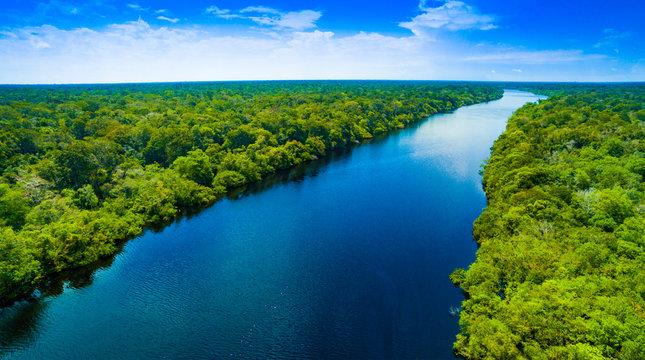
The most complex and biodiverse terrestrial ecosystem on earth, containing approximately 10 percent of all species on the planet within 5.5 million square kilometres of living forest, home to approximately 400 Indigenous nations speaking around 300 languages, holding an estimated 150 to 200 billion tonnes of carbon in its biomass and soils, and currently approaching a scientifically projected tipping point beyond which large areas may transition irreversibly toward savannah.

Galápagos Islands
An archipelago of 19 major islands and dozens of smaller ones, rising from three converging oceanic currents at the intersection of the Pacific, Nazca, and Cocos tectonic plates, isolated from the South American mainland by nearly 1,000 kilometres of open ocean. The islands contain one of the world's highest concentrations of endemic species — animals and plants found nowhere else on earth — including marine iguanas, flightless cormorants, Galápagos penguins, giant tortoises, and Darwin's finches, whose adaptive radiation across the archipelago provided Charles Darwin with the observational foundation for the theory of natural selection. The ecological integrity that makes these species possible is under accelerating pressure from invasive species, climate change-driven ocean warming, and the tourism and fishing economies whose growth has outpaced the management capacity of the institutions responsible for protecting the islands.

Machu Picchu
A fifteenth-century Inca royal estate and ceremonial centre set dramatically upon granite outcrops at the crest of a cloud-forested mountain ridge in the Peruvian Andes, defined by sophisticated dry-stone masonry, terraced agricultural platforms, temples, plazas, and an extraordinary ancient water management system — positioned within a sacred landscape of mountains, rivers, and celestial alignments of profound cosmological significance to the Inca civilisation.