

Machu Picchu
Interactive 3D Scan
Explore 3D Model
Click to load interactive scan
Overview
Machu Picchu is one of the most remarkable architectural achievements of the pre-Columbian world — a fifteenth-century Inca palace complex set dramatically upon granite outcrops and natural boulder formations at the crest of a cloud-forested mountain ridge in the Peruvian Andes. The site is defined by its sophisticated dry-stone masonry, in which massive ashlar blocks were shaped and fitted together without mortar with extraordinary precision, a technique known as fine Inca stonework.
Terraced agricultural platforms cascade down the mountain slopes, integrated seamlessly into the natural topography, while residential quarters, plazas, temples, and water channels are arranged within a carefully planned urban fabric. The complex sits within a dramatic natural amphitheatre formed by the surrounding peaks of Huayna Picchu and Machu Picchu mountain, with the Urubamba River curving around its base 500 metres below.
This positioning was not incidental. It was a deliberate cosmological choice, situating the site within a sacred landscape of mountains, rivers, and celestial alignments that held profound religious meaning for the Inca civilisation.
The Story of Machu Picchu
c. 1438 — An Emperor Builds His Heaven
Pachacuti had just pulled off one of the ancient world's most dramatic reversals of fortune, transforming a regional Andean kingdom into a continent-spanning empire within a single reign. He commissioned a private royal city on a granite ridge above the Urubamba River, at the edge of the known world and the beginning of the Amazon. Thousands of workers arrived to fulfill their labour tax to the Inca state and began the work of cutting the mountain open using nothing but harder stone, skilled hands, and an understanding of engineering that we are still working to fully explain.
c. 1450–1470 — The City Comes to Life
Within a few decades, something extraordinary existed on that ridge. Temples were oriented to catch the winter solstice sunrise through a single precisely placed window. Sixteen fountains ran in sequence from a single channelled spring, distributed by rank, with the finest jet reserved for the emperor alone. The Intihuatana stone was carved directly from the living bedrock at the city's highest point to track the sun's movement through the year.
The population was never large — perhaps five hundred to a thousand people at its peak — and they were not warriors or high priests but farmers, weavers, potters, herders, and domestic staff drawn from across the empire to maintain a living royal world that was built, in every sense, to last.
c. 1537 — The City Goes Quiet
Smallpox moved through the Andes faster than any Spanish soldier could march, killing the emperor Huayna Capac and most of the royal succession before Pizarro had even reached the coast. The two surviving sons went to war over the throne, and by the time the Spanish arrived at Cajamarca with their horses and steel, the empire was already tearing itself apart.
Machu Picchu was quietly abandoned in the years that followed — not burned or looted or destroyed, simply left as the community that sustained it scattered or died. The cloud forest began its slow and patient reclamation. Local Quechua-speaking families knew the ruins were there and grazed their cattle on the terraces for generations. Nobody told the Spanish, and the Spanish never thought to ask.
1911 — A Yale Historian Climbs the Ridge
Hiram Bingham III was a Yale academic following local tips about lost Inca cities when his guide, Melchor Arteaga, led him up the ridge on a cold and misty July morning. At the top, a young boy from a farming family living near the ruins took him through the undergrowth to the terraces. The account Bingham wrote of that morning is notably understated for a man who had just walked into one of the great archaeological discoveries of the twentieth century.
To be precise about it, Bingham did not discover Machu Picchu at all — local people had never lost it — but his photographs published in National Geographic the following year introduced it to a global audience and made it the most recognised ruin on earth almost overnight.
1912–1915 — The Collection Leaves Peru
Bingham returned with funding from Yale and National Geographic and conducted several seasons of excavation, shipping approximately 40,000 objects back to New Haven — ceramics, human remains, jewellery, bronze tools, and textiles among them. Peru granted access on the understanding that the objects were a temporary loan for academic study. Yale came to understand that arrangement quite differently, and the disagreement between them would last the better part of a century.
1983 — UNESCO Inscription
Machu Picchu was designated a World Heritage Site, recognised both for its cultural significance and for the remarkable biodiversity of the surrounding Historical Sanctuary — 32,592 hectares of cloud forest sheltering spectacled bears, mountain tapirs, and more than 300 orchid species alongside the ruins.
2001 — The Sacred Stone Is Damaged
A film crew shooting a beer commercial on site brought a crane onto the Intihuatana plaza. The crane fell, and a section broke from the Intihuatana stone — which had been carved from the living bedrock of the mountain and is irreplaceable in the most literal sense that word has. The production company was fined. The stone could not be restored. It remains the most cited example of what commercial access to the site has cost.
2004 — The Mountain Moves
A major landslide blocked the only rail line connecting Machu Picchu to Cusco, stranding thousands of tourists who had to be evacuated by helicopter. It was the most visible demonstration yet of something geologists had been documenting for years: the mountain the city sits on is geologically active, riddled with fault lines, and soaked by annual rainfall that can exceed 2,400 millimetres. The instability had always been there. It simply took a landslide on international news to make people pay attention to it.
2012 — The Objects Come Home
After nearly a century of dispute and years of sustained legal and diplomatic pressure from the Peruvian government, Yale returned the full collection of 40,000 objects to Peru. They are now housed at the Museo Machu Picchu in Cusco's Casa Concha. It stands as one of the most significant heritage repatriation cases in modern history, and a precedent that institutions around the world have been watching carefully ever since.
2019 — A Formal Warning
An ICOMOS international monitoring mission published findings that painted an uncomfortable picture. Governance was fragmented across national, regional, and municipal authorities that frequently conflicted with one another. Visitor numbers were exceeding what the site could absorb. Conservation work was under-resourced and poorly coordinated. The report was careful in its language, but the underlying message was clear enough to anyone reading between the lines.
2020 — The Silence
When COVID-19 closed the site entirely, it became the most instructive conservation experiment Machu Picchu had seen in decades — and nobody planned it. Researchers documented what zero visitors actually looked like: vegetation recovering in high-traffic areas, soils stabilising, wildlife returning to pathways that had been crowded for years. The site, given a single year of quiet, visibly began to breathe again. It was an uncomfortable thing to witness, because nobody could argue with what it showed.
Today — An Unresolved Argument
Visitor numbers have returned to near pre-pandemic levels, and the fundamental tensions that existed before 2020 have returned with them. Daily caps and timed entry circuits are in place but enforcement remains inconsistent. A proposed international airport at Chinchero that would dramatically expand regional capacity for international tourism is still under review, with UNESCO formally requesting an environmental and heritage impact assessment before construction proceeds. Four separate governing authorities continue to disagree about who has the power to make binding decisions for the site. Meanwhile, the mountain keeps moving, the drainage keeps deteriorating, and the question of how many visitors is too many remains, after decades of debate, officially unanswered.
Threats and Risk Assessment
Machu Picchu is not collapsing. That is exactly what makes the threats here so difficult to communicate and so easy to defer. The dangers are structural, slow, and cumulative — the kind that look manageable year by year and catastrophic in retrospect.
The Mountain Is Unstable. Machu Picchu was built on a ridge of fractured granite, shot through with geological fault lines, soaked by some of the heaviest rainfall in the Andes. Landslides are a recurring feature of the site's recent history. Beneath the terraces, geologists have identified zones of deep-seated gravitational deformation — slow, large-scale movements of the entire hillside that no engineering intervention can simply fix.
The Earthquake Risk Is Constant. The Cusco region sits at the collision of the Nazca and South American tectonic plates. Structural analyses of Machu Picchu's masonry confirm that while Inca building technique is genuinely seismic-resistant — the mortarless fitted joints flex rather than crack, the trapezoidal forms distribute load effectively — the accumulated stress of centuries of seismic events is measurable, and the margins are narrowing.
The Drainage Is Failing. The Inca built one of the ancient world's most sophisticated drainage systems into this site. Centuries of deferred maintenance have degraded it. Water that should flow away now seeps into foundations, carrying dissolved minerals, expanding in freeze-thaw cycles, undermining the compacted fill that the terraces depend on for stability. The deterioration is gradual and largely invisible until sections begin to fail.
There Are Too Many People. At its pre-pandemic peak, Machu Picchu received close to 900,000 visitors annually, concentrated on a ridge designed to support a few hundred. Polished stone surfaces worn smooth by foot traffic, compacted soils that no longer absorb water correctly, vegetation retreating from high-traffic areas, micro-erosion patterns on plaza paving — the physical evidence of that pressure is visible everywhere if you know what to look for.
The Governance Is Fragmented. The tourism infrastructure — the train line, the bus route, the hotels in Aguas Calientes — is built to maximise access, not regulate it. The economic incentives of surrounding communities, the regional government, and the national tourism industry all point toward more visitors and more revenue. Conservation logic points the other way. That conflict has not been resolved, and the longer it remains unresolved, the more the site absorbs the cost.
Research and Scholarly Context
Scholarly understanding of Machu Picchu has shifted dramatically even within living memory. The site Hiram Bingham thought he had found — a secret city of the Virgins of the Sun, a last refuge of Inca royalty — bears little resemblance to the site modern archaeology has revealed.
Richard Burger and Lucy Salazar's work was foundational. Through careful examination of Bingham's original field records, archival research in Spanish colonial documents, and isotopic analysis of skeletal remains, they established that Machu Picchu was a royal estate of the emperor Pachacuti — a palace and ceremonial centre functioning within the well-documented Inca system of royal land tenure. The isotopic analysis was particularly revelatory: by examining chemical signatures in teeth and bones, researchers established that the site's inhabitants came from across the empire — coastal regions, highland zones far from Cusco, and locally. The population was diverse, largely non-elite, and organised around maintaining the royal estate and its agricultural systems.
Johan Reinhard's work on sacred geography reframed how the physical placement of Machu Picchu is understood. Rather than treating the location as primarily a defensive or practical choice, Reinhard demonstrated through extensive fieldwork that Inca ceremonial sites were positioned according to a sophisticated cosmological logic — aligned with sacred mountain peaks, oriented toward astronomical events, situated at confluences of hydrological and geological significance. Machu Picchu, in this reading, is not a city that happens to be in a beautiful location. It is a city whose location is its primary statement.
Geological and engineering research has added another dimension. Studies of the site's subsurface hydrology revealed that the Inca drainage system is one of the most sophisticated ancient water management systems ever documented. The terracing is not just agriculture — it is slope stabilisation engineering. The drainage fill beneath it is a calculated permeable matrix designed to move water at specific rates through specific layers. The Inca did not just build on a difficult site; they built a system that actively managed the geological risks of that site — and built it well enough that it remained effective for five centuries.
If Nothing Changes
The stone won't collapse overnight. The danger here is slower and in some ways harder to stop. The drainage fails quietly beneath the terraces. The slopes shift a little more each wet season. A million shoes a year grind ancient paving that has survived five centuries of earthquakes but is visibly losing ground to foot traffic. The cloud forest buffer shrinks. The Andean climate grows more volatile.
Meanwhile, four separate authorities — national, regional, municipal, and commercial — continue to disagree about who is actually in charge. Every year without a coherent plan is a year the site absorbs the cost of that argument.
The knowledge to protect this place exists. The techniques exist. What has been missing is the will to act before the window closes, not after.
Screening Room

Lost City of the Incas
Historical Timeline
Pachacuti's Estate
Construction of the royal estate begins under the Inca emperor Pachacuti.
Quiet Abandonment
The city is abandoned following the Spanish conquest of the Inca Empire.
Bingham Expedition
Hiram Bingham brings international attention to the site.
UNESCO Inscription
Designated as a mixed Cultural and Natural World Heritage Site.
Repatriation of Artifacts
Yale University returns tens of thousands of excavated artifacts to Peru.
Related Heritage Sites
Amazon Rainforest
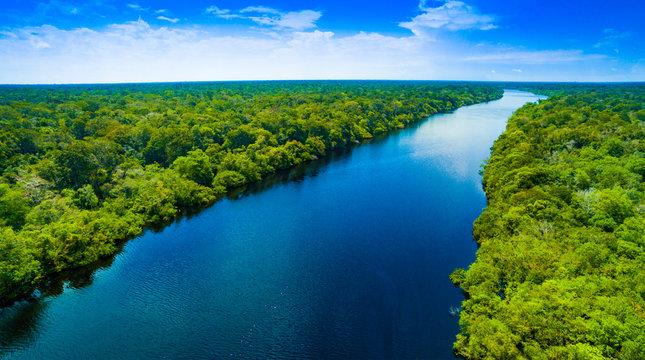
The most complex and biodiverse terrestrial ecosystem on earth, containing approximately 10 percent of all species on the planet within 5.5 million square kilometres of living forest, home to approximately 400 Indigenous nations speaking around 300 languages, holding an estimated 150 to 200 billion tonnes of carbon in its biomass and soils, and currently approaching a scientifically projected tipping point beyond which large areas may transition irreversibly toward savannah.

Galápagos Islands
An archipelago of 19 major islands and dozens of smaller ones, rising from three converging oceanic currents at the intersection of the Pacific, Nazca, and Cocos tectonic plates, isolated from the South American mainland by nearly 1,000 kilometres of open ocean. The islands contain one of the world's highest concentrations of endemic species — animals and plants found nowhere else on earth — including marine iguanas, flightless cormorants, Galápagos penguins, giant tortoises, and Darwin's finches, whose adaptive radiation across the archipelago provided Charles Darwin with the observational foundation for the theory of natural selection. The ecological integrity that makes these species possible is under accelerating pressure from invasive species, climate change-driven ocean warming, and the tourism and fishing economies whose growth has outpaced the management capacity of the institutions responsible for protecting the islands.

Rapa Nui
A small triangular volcanic island in the middle of the Southeast Pacific, the most isolated inhabited place on earth — 3,700 kilometres from the Chilean mainland and 2,000 kilometres from the nearest inhabited land. Famous for approximately 300 ahu ceremonial stone platforms and the moai ancestor figures they once carried, some reaching over 10 metres in height and 80 tonnes in weight, distributed across the island in a landscape-scale political and territorial system of extraordinary sophistication. The easternmost point of Polynesian settlement and the final destination of one of the most remarkable episodes of human navigation in prehistory.