

Taj Mahal
Interactive 3D Scan
Explore 3D Model
Click to load interactive scan
TAJ MAHAL Agra, India · 1632–1653 CE · Mughal Empire AT-RISK
SITE AT A GLANCE Location: Agra, Uttar Pradesh, India Country: India Region: South Asia Coordinates: 27.1751° N, 78.0421° E Type: Built Heritage Sub-types: Funerary Architecture, Mughal Architecture, Islamic Art and Architecture Period: Constructed 1632–1653 CE; Mughal Empire Risk Level: At-Risk Risks: Industrial air pollution, Midge staining, Foundation deterioration, Mass tourism, Seismic vulnerability, Climate change UNESCO Status: Inscribed 1983
3D DOCUMENTATION A free CC-BY 3D model of the Taj Mahal (315,000 triangles) produced by THE CUBE GUY is available on Sketchfab with over 1,500 downloads — one of the most accessed heritage models on the platform. CyArk's Open Heritage programme has documented the site in 3D as part of its broader India documentation campaign, with materials available at openheritage3d.org. The Archaeological Survey of India publishes conservation reports at asi.nic.in. Europeana hosts digitised Mughal architectural records and historical photographs. Sketchfab — Taj Mahal 3D model (free, CC-BY, 315k triangles): https://sketchfab.com/3d-models/taj-mahal-c8eb2e89098746898b94f0b556ecdefe CyArk Open Heritage: https://openheritage3d.org Archaeological Survey of India: https://asi.nic.in/taj-mahal/ UNESCO dossier: https://whc.unesco.org/en/list/252
SITE DESCRIPTION The Taj Mahal complex covers approximately 17 hectares and consists of five principal elements: the great gateway (Darwaza-i-rauza) that frames the first view down the water channel; the formal Persian four-part garden (charbagh) divided by water channels representing the four rivers of paradise; the mosque in red sandstone to the west, still in active use for Friday prayers; its mirror-image guest house to the east; and the central mausoleum — white Makrana marble on an octagonal plan, topped by a double-shell dome rising 73 metres, surrounded by four chattris and flanked by four minarets deliberately inclined slightly outward so that in an earthquake they would fall away from the tomb rather than onto it. The marble surfaces carry pietra dura inlay — intricate semi-precious stone work using jade (green stems and leaves), lapis lazuli (blue flowers), turquoise (accents), coral, carnelian, jasper, and onyx. Some panels contain as many as 60 different stone types in a single composition. The craftsmen who produced this work were imported from Persia, Central Asia, and Europe, making the Taj Mahal a product of genuinely global artistic production. The building does not look the same twice. At sunrise the white Makrana marble turns rose. At midday it is blinding and crystalline. At sunset it is gold and amber. Under the full moon it is silver, the dome floating above its own reflection. This was not accidental. The architect understood the optical properties of the marble and designed a building that would grieve differently across every hour of every day.
HISTORICAL SIGNIFICANCE In 1631, Arjumand Banu Begum — Mumtaz Mahal, Jewel of the Palace — died giving birth to her fourteenth child. She had been Shah Jahan's inseparable companion for nineteen years of marriage. When she died, the emperor reportedly went into seclusion for a week. When he emerged, his hair had turned white. Within a year, construction had begun. The Taj Mahal is the product of twenty-two years of labour by 20,000 workers drawn from across the Mughal Empire and beyond. Its architect, Ustad Ahmad Lahauri, achieved a formal perfection that has generated two centuries of analysis without full explanation. The building appears to be the same size from the gateway as from the plinth at its base — an optical illusion produced by calculated variations in scale. The minarets lean slightly outward; seen from the base, they appear perfectly vertical. The dome is slightly larger than the chamber it encloses. Nothing is as simple as it looks. Shah Jahan was deposed by his son Aurangzeb in 1658 and imprisoned in Agra Fort, where he spent his last eight years. He could see the Taj Mahal across the river from his window. He was buried beside Mumtaz Mahal when he died in 1666 — the only departure from the original symmetrical plan of the tomb.
THE STORY OF THE SITE
1631: The Death of Mumtaz Mahal Arjumand Banu Begum dies in childbirth in Burhanpur while accompanying Shah Jahan on a military campaign. She is temporarily buried there while Shah Jahan arranges for her body to be returned to Agra and for the construction of the mausoleum that will make her immortal.
1632 to 1653: Construction Construction of the complex begins in Agra under the direction of Ustad Ahmad Lahauri. The main mausoleum is substantially complete by 1643; the entire complex, including the gateway, garden, mosque, and guest house, is completed in 1653, twenty-two years after construction began. The materials come from across the Mughal Empire and beyond: white Makrana marble from Rajasthan, jade from China, lapis lazuli from Afghanistan, crystal from Central Asia.
1658 to 1666: Shah Jahan's Imprisonment Shah Jahan's son Aurangzeb deposes his father and imprisons him in Agra Fort. Shah Jahan can see the Taj Mahal from his window. He spends eight years as a prisoner looking at the building he built for his dead wife. When he dies in 1666, he is buried beside her — a departure from the symmetrical plan, because no second tomb had been planned, but one that Shah Jahan is said to have requested.
1983: UNESCO Inscription and the Beginning of Formal Conservation The Taj Mahal is inscribed on UNESCO's World Heritage List. Systematic documentation of the building's condition begins, providing the baseline against which subsequent deterioration can be measured.
1996 to Present: The Pollution Crisis India's Supreme Court orders emission controls in the Taj Trapezium Zone — a 10,400 square kilometre area surrounding the monument — following alarming reports of marble discolouration from industrial pollution. Enforcement has been incomplete. The marble continues to yellow. Midge staining appears in the 1990s and worsens. The water table in Agra drops. The Supreme Court orders a daily visitor cap of 40,000 in 2018. Eight million people a year still visit.
THREATS AND RISK ASSESSMENT Pollution Vehicle exhaust, particulate matter, and sulphur dioxide from Agra's industries deposit on the marble surface. Sections that were white thirty years ago are now distinctly yellowish. In severe cases, the marble has begun to pit as pollution reacts with the calcium carbonate of the stone. The Archaeological Survey of India periodically applies multani mitti — a fuller's earth paste — to the marble to absorb pollutants. The treatment is effective but entirely temporary, and pollution resumes immediately after each cleaning.
The Insect Problem Since the 1990s, the marble has been stained by green and black patches caused by the excreta of Goeldichironomus midges — insects that breed in the polluted, algae-rich waters of the Yamuna River. Their waste, rich in pigmented compounds, stains the marble in ways that are difficult to clean without risk of surface abrasion. The midges are a consequence of the river's pollution; cleaning the marble without addressing the river source is a continuous holding action rather than a solution.
Foundation Deterioration The Taj Mahal's minarets stand on wooden foundations — timber piles driven into the riverbank soil that remain structurally sound as long as they are saturated with groundwater. Decades of water extraction from the Yamuna basin have lowered the water table in Agra. Dried timber rots. If the foundations fail, the minarets may lean or fall. This is not an imminent emergency but it is a trajectory that is moving in one direction without correction.
RESEARCH AND SCHOLARLY CONTEXT The free CC-BY 3D model on Sketchfab (315,000 triangles) provides global access to a baseline geometric representation of the monument. CyArk's Open Heritage documentation is more comprehensive and suited to professional conservation analysis. The Archaeological Survey of India's conservation reports, available at asi.nic.in, provide the most detailed condition assessments. Research into the pietra dura inlay techniques, the optical properties of Makrana marble, and the structural behaviour of the foundation system under changed hydrological conditions has been published by Indian and international researchers across multiple disciplines.
IF NOTHING CHANGES The Taj Mahal will not fall down. What it will do is continue its slow transformation from white to yellow, from pristine to pitted, from the building that Shah Jahan built to a version of itself that has been compromised by two centuries of industrial pollution, midge infestation, and declining groundwater. The Supreme Court interventions have helped at the margins. The Taj Trapezium Zone has reduced, not eliminated, industrial emissions. The multani mitti treatments keep the surface from getting worse faster than it otherwise would. But the marble is losing itself, grain by grain and year by year, to the air of a city that no longer needs to respect it in order to profit from it. The building was designed to last forever. The question is what forever means when the river it was built beside is dying.
Screening Room

Taj Mahal: Secrets of the Marble Palace
Historical Timeline
Death of Mumtaz Mahal
Arjumand Banu Begum dies in childbirth. Shah Jahan's hair turns white. Construction begins within a year.
Construction Begins
Under architect Ustad Ahmad Lahauri, 20,000 workers begin construction of the complex.
Complex Completed
The entire complex is completed after 22 years at a cost of approximately 32 million rupees.
Shah Jahan Imprisoned
Shah Jahan is deposed and imprisoned in Agra Fort with a view of the Taj Mahal across the river.
UNESCO Inscription
The Taj Mahal is inscribed on UNESCO's World Heritage List.
Supreme Court Intervention
India's Supreme Court orders emission controls in the Taj Trapezium Zone.
Visitor Cap Ordered
The Supreme Court orders a daily visitor cap of 40,000 people.
Related Heritage Sites
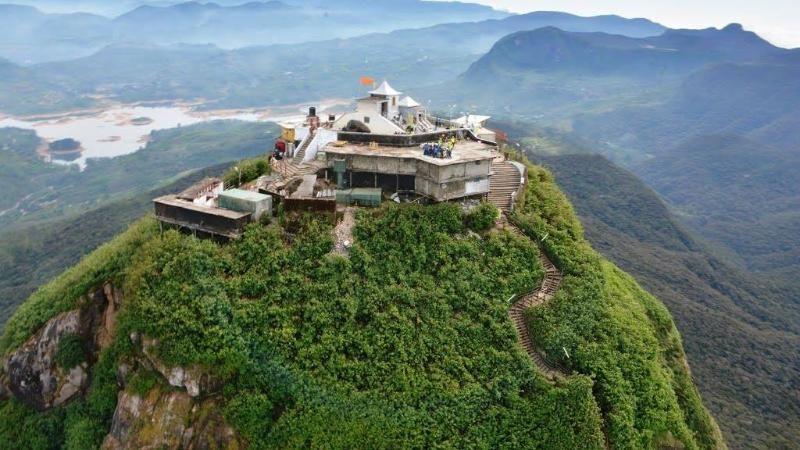
Adam's Peak (Sri Pada)
Adam's Peak — Sri Pada, the Sacred Footprint — is a 2,243-metre conical mountain in the Sri Lankan highlands whose summit rock formation is venerated as a sacred footprint by four of the world's major religions simultaneously. For over a thousand years, pilgrims of all these faiths have climbed 5,500 steps through the night to reach the same summit at the same dawn, making it one of the oldest continuously shared sacred sites in the world. The mountain's surrounding cloud forest is a biodiversity hotspot containing over 150 endemic plant species found nowhere else on earth.
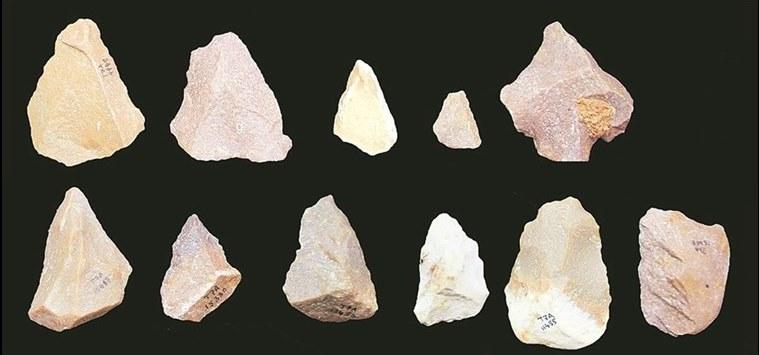
Attirampakkam
A stratified sequence of stone tool assemblages spanning approximately 1.5 million years, from the earliest known Acheulean handaxe technology in peninsular India through a transition to Middle Palaeolithic technology that appears — according to radiometric dating published in 2018 — significantly earlier than the same transition in Africa and Europe, potentially before the dispersal of anatomically modern humans out of Africa and challenging fundamental assumptions about the cognitive and demographic history of early humans in South Asia.

Hampi
A 26-square-kilometre open landscape of approximately 550 monuments distributed across an extraordinary terrain of stacked granite boulders along the Tungabhadra River — once the capital of the Vijayanagara Empire, one of the wealthiest and most populous cities on earth in the fifteenth and sixteenth centuries. Temples, bazaars, royal pavilions, elephant stables, and sacred tanks appear across ridgelines and around corners in a landscape that feels less like a heritage site and more like a civilisation that forgot to fully disappear. Large sections remain in active religious use, as they have been for over a thousand years.