
Attirampakkam
Attirampakkam
Site Description
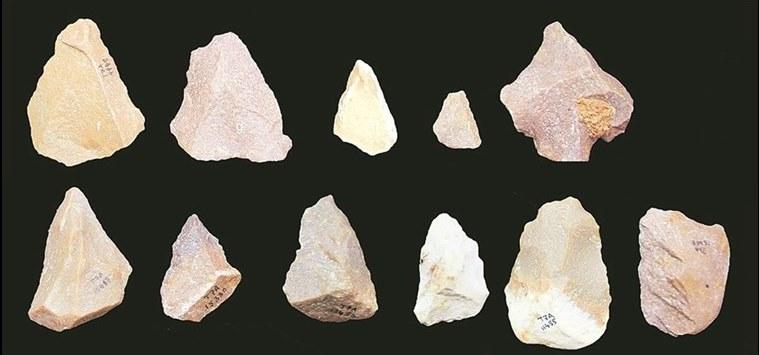
Attirampakkam is not a site that announces its significance visually. There are no standing structures, no visible monuments, no features that distinguish it to an untrained eye from the surrounding agricultural landscape of the Kortallaiyar River valley in Tamil Nadu. What it contains is considerably more significant than anything visible on its surface: a stratified sequence of stone tool assemblages spanning approximately 1.5 million years, from the earliest known Acheulean handaxe technology in peninsular India through the transition to Middle Palaeolithic technology that has challenged fundamental assumptions about the cognitive and demographic history of early humans in South Asia.
The site was first excavated in the 1860s by Robert Bruce Foote, the founding figure of Indian prehistoric archaeology, who recognised the handaxes found in the river gravels as evidence of a Stone Age occupation of the Indian subcontinent. What makes Attirampakkam globally significant in contemporary terms is the research published in 2018 by Shanti Pappu and colleagues, which used radiometric dating to establish that the Middle Palaeolithic technology at the site appears significantly earlier than the same transition in Africa and Europe, and potentially before the dispersal of anatomically modern humans out of Africa as conventionally understood.
Historical Significance
Attirampakkam is significant because it sits at the intersection of some of the most contested questions in palaeoanthropology: when did Middle Palaeolithic technology develop, who developed it, and what does the timing of that development tell us about the cognitive capacities of the hominins involved and the routes by which modern human behaviour spread across the world?
The standard model, developed primarily from African and European evidence, places the transition from Acheulean to Middle Palaeolithic technology at approximately 300,000 years ago in Africa and associates its spread to other regions with the dispersal of anatomically modern humans. Attirampakkam's evidence, with Middle Palaeolithic technology apparently in place by around 385,000 years ago, complicates that model in ways that are not yet fully resolved. Each of the possible explanations has significant implications for the human evolutionary story.
The site is also historically significant in the Indian context as the foundational site of Indian prehistoric archaeology, the place where Bruce Foote first established the antiquity of human occupation of the subcontinent, and as a site of continuous research significance across more than 150 years of investigation.
Threats and Risk Assessment
Urban and Agricultural Encroachment
Attirampakkam is located in an area of rapid urban growth on the periphery of the Chennai metropolitan region, and the development pressure on the surrounding landscape is intense and increasing. The boundaries of the protected archaeological zone are not adequate to protect the full extent of the site's archaeologically significant deposits from agricultural and construction activity in adjacent areas.
Flooding
The Kortallaiyar River, on whose banks the site is located, is subject to periodic flooding that poses risks to both excavated areas and unexcavated deposits. Flooding events can erode stratigraphic contexts, disturb artefact distributions, and damage the fragile sedimentary sequences from which the site's chronological evidence is derived.
Institutional and Financial Fragility
The research programme at Attirampakkam has been sustained largely through the commitment of a small team of researchers at the Sharma Centre for Heritage Education, whose resources are modest relative to the significance of the work. The continuity of research and site monitoring is dependent on the sustained availability of funding that has not always been reliable.
Research and Scholarly Context
The 2018 Nature paper by Pappu and colleagues reporting the dating of the Middle Palaeolithic transition at Attirampakkam generated significant interest and debate within palaeoanthropology, and the site has become central to ongoing discussions about the timing and geography of cognitive evolution and human dispersal. The paper's findings have been examined critically by researchers working with evidence from other regions, and the debate about their implications continues.
The site's importance for the broader understanding of South Asian prehistory, and specifically for the question of when and how the subcontinent was first peopled and how it participated in the global processes of human evolution and dispersal, makes it a research priority that is not yet matched by the resources and institutional support dedicated to it.
If Nothing Changes
Attirampakkam is a site where the most significant evidence lies underground, in the stratigraphic sequence that the 2018 research has demonstrated to be of global importance, and where that sequence is under continuous threat from the development pressure of a rapidly urbanising region. The loss of unexcavated archaeological context at this site is a loss of evidence about the earliest history of human presence in South Asia and about fundamental questions of human cognitive evolution that cannot be recovered once the deposits are destroyed.
The story of human presence in South Asia is one of the least understood chapters of the human story, and Attirampakkam is one of the most important sites for telling it. Its protection requires institutional commitment and resources commensurate with its significance, and the researchers who have sustained the work there with inadequate support for decades deserve the kind of backing that makes long-term prehistoric research possible.
Historical Timeline
The First Toolmakers
Hominins, almost certainly Homo erectus or a related species, are making Acheulean handaxes in the Kortallaiyar River valley. The Acheulean tradition, characterised by large bifacially worked flint and quartzite tools, is the dominant lithic technology of the Lower Palaeolithic across much of the Old World, and its presence at Attirampakkam at this early date places South Asia within the geographic range of the first major dispersal of stone tool-making hominins out of Africa.
Continuous Acheulean Occupation
The site accumulates a deep sequence of Acheulean tools over more than a million years of intermittent occupation, with tools recovered from multiple stratigraphic levels representing successive episodes of use by toolmaking hominins across an enormous span of time.
The Middle Palaeolithic Transition
The 2018 research by Pappu and colleagues establishes through radiometric dating that Middle Palaeolithic technology — characterised by the production of smaller, more standardised flake tools using prepared core techniques — appears at Attirampakkam by approximately 385,000 years before present. This date is significantly earlier than the Middle Palaeolithic transition as documented in Africa and Europe, and it predates the conventionally accepted date for the dispersal of anatomically modern humans out of Africa.
Bruce Foote Excavates
Robert Bruce Foote, a geologist with the Geological Survey of India, recovers handaxes from the Kortallaiyar River gravels at Attirampakkam and publishes the first account of Stone Age tools from the Indian subcontinent. His work over the following decades establishes Indian prehistoric archaeology as a field. Attirampakkam is where that foundational work begins.
The Sharma Centre Research
Shanti Pappu and colleagues at the Sharma Centre for Heritage Education, Chennai, undertake systematic long-term research at Attirampakkam, applying contemporary methods including detailed stratigraphic excavation, systematic lithic analysis, and radiometric dating. The research programme is one of the most sustained and methodologically rigorous in South Asian prehistoric archaeology and has produced findings of global significance from a site that operates with a fraction of the resources available to comparable research programmes in Europe and North America.
Related Heritage Sites
Adam's Peak (Sri Pada)
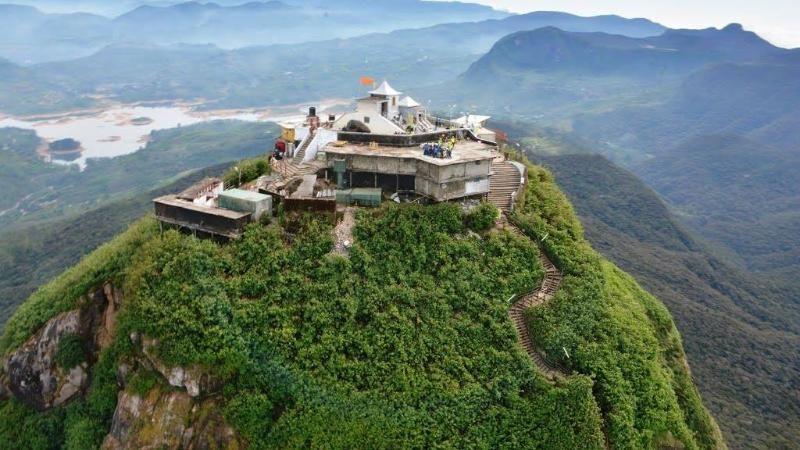
Adam's Peak — Sri Pada, the Sacred Footprint — is a 2,243-metre conical mountain in the Sri Lankan highlands whose summit rock formation is venerated as a sacred footprint by four of the world's major religions simultaneously. For over a thousand years, pilgrims of all these faiths have climbed 5,500 steps through the night to reach the same summit at the same dawn, making it one of the oldest continuously shared sacred sites in the world. The mountain's surrounding cloud forest is a biodiversity hotspot containing over 150 endemic plant species found nowhere else on earth.

Hampi
A 26-square-kilometre open landscape of approximately 550 monuments distributed across an extraordinary terrain of stacked granite boulders along the Tungabhadra River — once the capital of the Vijayanagara Empire, one of the wealthiest and most populous cities on earth in the fifteenth and sixteenth centuries. Temples, bazaars, royal pavilions, elephant stables, and sacred tanks appear across ridgelines and around corners in a landscape that feels less like a heritage site and more like a civilisation that forgot to fully disappear. Large sections remain in active religious use, as they have been for over a thousand years.
Harappa
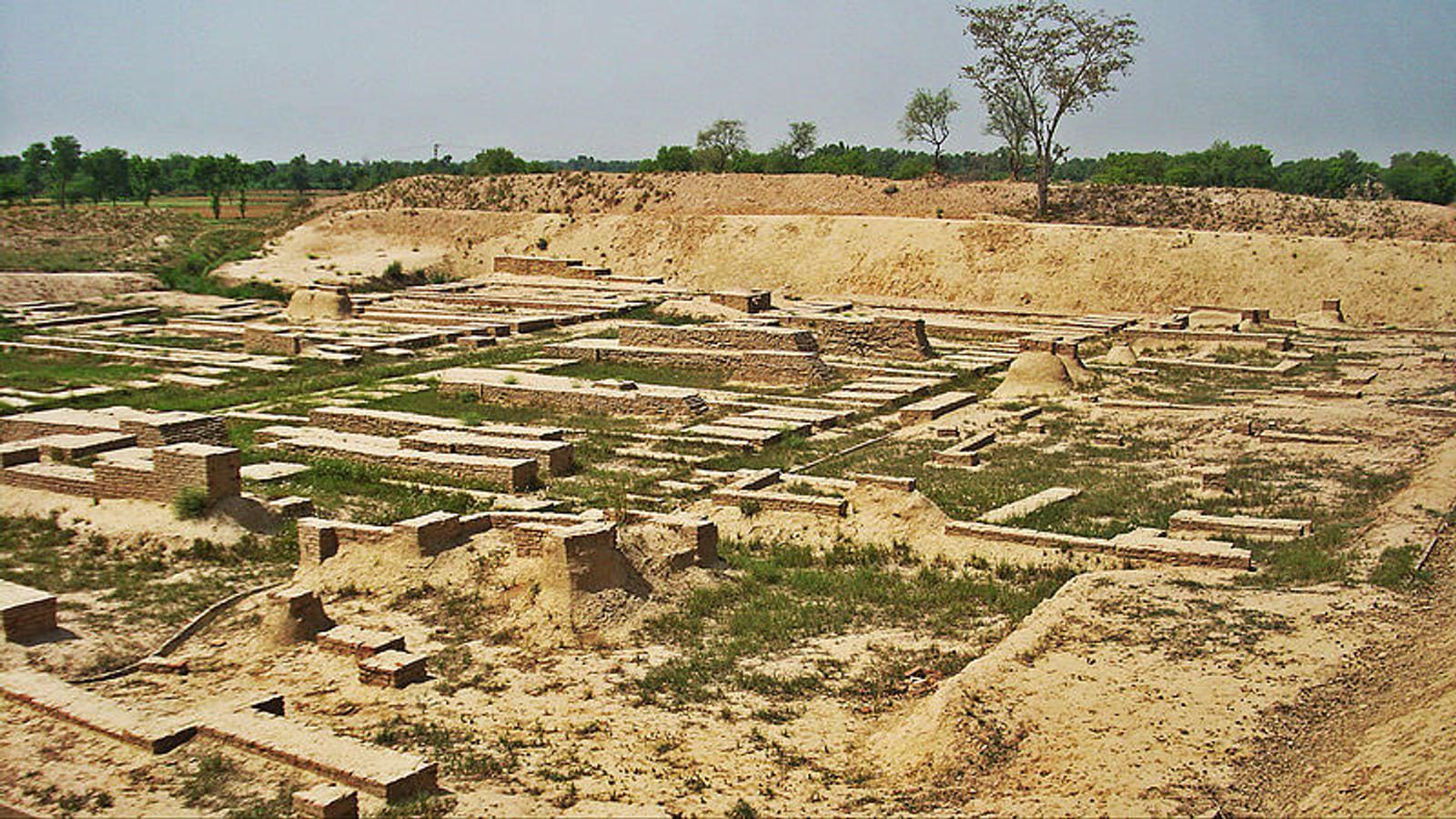
One of the two great cities of the Indus Valley Civilisation, a Bronze Age urban culture that at its height was probably the most populous civilisation on earth, organised around a level of urban planning sophistication — standardised brick dimensions, grid streets, elaborate drainage systems — that remains remarkable even in comparison with much later achievements, and whose undeciphered script represents one of the outstanding unsolved problems of ancient linguistics.