

Hampi
Interactive 3D Scan
Explore 3D Model
Click to load interactive scan
Overview
Hampi does not announce itself the way most great ruins do. There is no single monument, no one view, no obvious focal point from which everything makes sense at once. Instead, the site reveals itself gradually across 26 square kilometres of extraordinary boulder-strewn landscape, where granite outcrops the size of houses are stacked in formations that look more like deliberate sculpture than geology, and where temples, bazaars, royal pavilions, elephant stables, and sacred tanks appear around corners and over ridgelines in a way that feels almost inexhaustible. Walking Hampi is less like visiting a heritage site and more like moving through a civilisation that simply forgot to fully disappear.
Approximately 550 monuments are distributed across the site, concentrated most densely in the Sacred Centre along the south bank of the Tungabhadra River, where over 400 individual structures have been documented ranging from major temple complexes to small roadside shrines, carved mandapas, ornamental gateways, and elaborate water features. The Virupaksha Bazaar Street, which stretches 800 metres in length and nearly 14 metres in width, gives a vivid sense of what the commercial heart of an imperial capital looked like at its height. Large sections of the site are still in active religious use, and have been continuously for over a thousand years.
The landscape itself is as significant as the monuments within it. The Tungabhadra River curves through the site, its banks lined with temples and ghats, its waters considered sacred by the Hindu tradition that has animated this place since before the empire that made it famous. The builders of Hampi read the natural landscape as a pre-existing religious text and built their city as a kind of elaboration upon it.
The Story of Hampi
9th Century CE — A Sacred Place Before an Empire
Long before anyone thought to build an empire here, Hampi was already a place of religious significance. Shrines to Virupaksha, a form of Shiva, existed along the Tungabhadra's banks as early as the ninth century, drawing pilgrims to a landscape that Hindu tradition identified with episodes from the Ramayana. The ancient texts called this place Pampa Devi Tirtha Kshetra — a sacred crossing point — and the granite boulders and river confluence that define the terrain were read not as geological accident but as divine intention. The city that would come here later did not create the sanctity of this place. It inherited it.
1336 — The Empire Arrives
Two brothers, Harihara and Bukka Raya, establish the Vijayanagara Empire on the south bank of the Tungabhadra, founding a capital they call Vijayanagara — City of Victory. The choice of location is deliberate, anchoring a new political project to an existing sacred geography. The Sangama dynasty they establish begins developing the area around the Virupaksha sanctuary into something worthy of an imperial capital, and the transformation of the landscape begins in earnest.
1336 to 1500 — The City Takes Shape
Over the following century and a half, successive dynasties expand and elaborate the capital. The Sacred Centre grows into a dense complex of temples, mandapas, and processional streets. Royal quarters, elephant stables, treasury buildings, and audience halls rise in what is now known as the Royal Enclosure. Water is managed across the site through an extensive system of tanks, canals, and aqueducts. The architectural style being developed draws on earlier Chalukya and Hoysala traditions but evolves into something distinctively its own, characterised by elaborately decorated basement levels, towering gopurams, and the use of local granite in ways that work with the existing landscape rather than against it.
1509 to 1529 — The Empire at Its Height
The reign of Krishnadeva Raya represents the peak of Vijayanagara power and the most intensive phase of construction at Hampi. A poet, scholar, and military commander of considerable ability, Krishnadeva Raya expanded the empire to its greatest territorial extent while simultaneously commissioning major additions to existing temples and entirely new suburban quarters. Foreign visitors who come to his court during this period describe a ruler of extraordinary wealth and sophistication presiding over a city that rivals anything in the known world.
1565 — The Battle of Talikota
A coalition of the Deccan Sultanates defeats the Vijayanagara army at the Battle of Talikota. The Sultanate forces occupy Hampi and spend several months in systematic destruction — demolishing sculptures, defacing carvings, and dismantling structural elements across the city. The resident population flees. The wealthiest and most elaborate urban capital in South India is depopulated within a year of the battle. It is one of the most dramatic urban abandonments in South Asian history, and the ruins it left behind are what the World Heritage designation was inscribed to protect.
1565 to 1900 — Silence and Sacred Continuity
The political city dies at Talikota, but the sacred city does not. The Virupaksha Temple continues in worship through and beyond the destruction, its priests maintaining rituals that have not been interrupted since before the empire began. Pilgrims continue to arrive along routes that predate the capital and outlast it. Local communities settle among the ruins, farming the terraced land, grazing cattle between the granite boulders, living in structures built for an imperial city and repurposed for a village. The monuments deteriorate without maintenance, but they deteriorate slowly — because the builders of Hampi built well and the granite of the Deccan is not easily worn down.
1800s — Colonial Attention
British antiquarians and surveyors begin documenting the site in the nineteenth century, producing the first systematic records of the monument inventory. Colin Mackenzie, the first Surveyor General of India, conducts early surveys of the site. The work produced during this period, imperfect as it is by contemporary standards, established the foundation on which all subsequent scholarship has built. Colonel Alexander Greenlaw's wax paper photographs of 1856 — the earliest known photographic record of the site — lay undiscovered for over a century before surfacing in 1980.
1986 — UNESCO World Heritage Inscription
The Group of Monuments at Hampi is inscribed on the UNESCO World Heritage List, recognised for its outstanding universal value as the capital of the last great Hindu kingdom of medieval South India. The inscription brings international attention and a degree of institutional protection, but it also introduces new tensions between conservation requirements and the needs of the living communities who have made their homes among the monuments for generations.
1990s to 2000s — The Displacement Controversy
The implementation of World Heritage conservation standards requires the clearance of encroachments around and within protected monument zones. Residents who have lived in centuries-old stone mandapas lining the main bazaar street for generations are relocated — in some cases forcibly — creating a rupture between the conservation project and local communities that has not fully healed. The question it raises — about who heritage belongs to and who bears the cost of its protection — is one the site continues to grapple with.
2000s to Present — Research, Digital Documentation, and Ongoing Threats
Major research and documentation projects transform scholarly understanding of the site. The Hampi Archaeological Atlas and the Vijayanagara Metropolitan Survey provide comprehensive mapping. The Digital Hampi project, supported by the Government of India's Department of Science and Technology, creates detailed 2D drawings, 3D models, and narrative video walkthroughs of individual structures. Meanwhile, the Tungabhadra continues to flood its banks seasonally, the monuments continue to face vegetation pressure and deferred maintenance, and the governance question of who is ultimately responsible for the site's conservation remains imperfectly resolved.
Threats and Risk Assessment
Hampi is classified as Vulnerable to At Risk — a designation reflecting a site where significant threats are active and measurable but where the situation has not yet crossed into the irreversible damage that would warrant the most severe classification. Several of those threats are accelerating.
Flooding and the Tungabhadra River is the most immediate and structurally significant threat. Monuments along the river banks are inundated multiple times each year during the monsoon season, and the river's course shifts after significant flood events, bringing previously safe structures into the flood zone without warning. The silt deposited by floodwaters accumulates around and within structures, adding weight to compromised foundations, promoting the growth of moisture-retaining vegetation, and accelerating chemical and biological weathering of the stone surfaces. Addressing this threat requires river management interventions of a scale and complexity that fall outside the remit of the archaeological authorities responsible for the site.
Vegetation Overgrowth is causing ongoing structural damage across many of the site's 550 monuments. Root systems penetrate masonry joints, expanding as they grow and forcing apart stonework that has remained stable for centuries. Surface vegetation retains moisture against stone surfaces, accelerating biological weathering. Systematic vegetation management across a site of 26 square kilometres requires sustained resources and workforce that have not consistently been available.
Tourism Pressure and Infrastructure Imbalance reflects a structural gap between the fundamental attraction of the monuments and the visitor management infrastructure needed to absorb that interest without causing damage. Unmanaged visitor movement, inadequate pathway systems, and insufficient interpretive infrastructure combine to produce pressure on structures and landscape that is difficult to monitor or control at scale.
Governance Fragmentation across the Archaeological Survey of India, the Karnataka state government, the Hampi World Heritage Area Management Authority, and various local bodies creates coordination challenges that have been identified in successive management reviews as a structural obstacle to coherent conservation. Decisions that require action from multiple authorities tend to move slowly, and at a site where active threats are continuous, slow decisions have real costs.
Research and Scholarly Context
The scholarly literature on Hampi has grown considerably in depth and methodological sophistication over the past three decades. The work of George Michell and his colleagues on the architectural inventory of the site, representing more than twenty years of fieldwork by teams of architects and art historians, established the comprehensive catalogue of structures on which all subsequent conservation planning has been based. The Vijayanagara Metropolitan Survey extended that work into the broader landscape, mapping the relationship between the urban core and its agricultural and hydraulic hinterland.
Historical research drawing on the accounts of foreign visitors to the Vijayanagara court has been particularly valuable in reconstructing the city as it functioned at its height. The Persian, Portuguese, and Italian accounts of the fifteenth and sixteenth centuries describe a city whose wealth and scale clearly made a powerful impression on observers accustomed to the major cities of their own worlds.
Digital documentation has become an increasingly important strand of Hampi scholarship. The Digital Hampi project created a comprehensive digital record of the site that serves both conservation and interpretive purposes, producing 3D models of individual structures that allow the condition of architectural elements to be assessed and compared across time. Research into the hydraulic systems of the Vijayanagara capital has revealed an urban water management infrastructure of considerable sophistication — with tank systems, canal networks, and aqueducts that supplied both the practical needs of a large urban population and the ritual requirements of a landscape dense with temples and sacred tanks.
If Nothing Changes
The monuments at Hampi have survived five centuries of neglect, seasonal flooding, vegetation encroachment, and the particular indifference that falls on ruins after the civilisation that built them is gone. They are built of granite and they are built well, and they will not collapse next season or the one after. But the margin between surviving and being lost is narrower than the stone suggests, and it is narrowing.
Each flood season deposits more silt around foundations that were not designed to be permanently wet. Each monsoon pushes roots a little further into masonry joints that have been holding for five hundred years but will not hold indefinitely. Each year of deferred vegetation clearance is a year of additional biological and chemical weathering that conservation work becomes incrementally more expensive and technically difficult to reverse. The smaller monuments — the ones without the international recognition that brings resources and attention — are the most immediately vulnerable.
The governance problem compounds everything else. A site that requires coordinated action from multiple authorities, each with different incentives and timelines, will always move more slowly than its threats do. That gap between the pace of institutional decision-making and the pace of active deterioration is where heritage sites are quietly lost.
Hampi does not need to be rediscovered. It needs the sustained, coordinated, adequately resourced attention that its scale and its significance demand — and that it has not yet consistently received.
Screening Room

Hampi: Valley of the Kings
Historical Timeline
Empire Founded
Harihara and Bukka Raya establish the Vijayanagara Empire on the Tungabhadra river.
Peak of Power
Reign of Krishnadeva Raya begins; period of massive architectural expansion.
Battle of Talikota
The empire falls to the Deccan Sultanates, and the capital is systematically destroyed.
UNESCO Inscription
Hampi is inscribed on the World Heritage List.
Related Heritage Sites
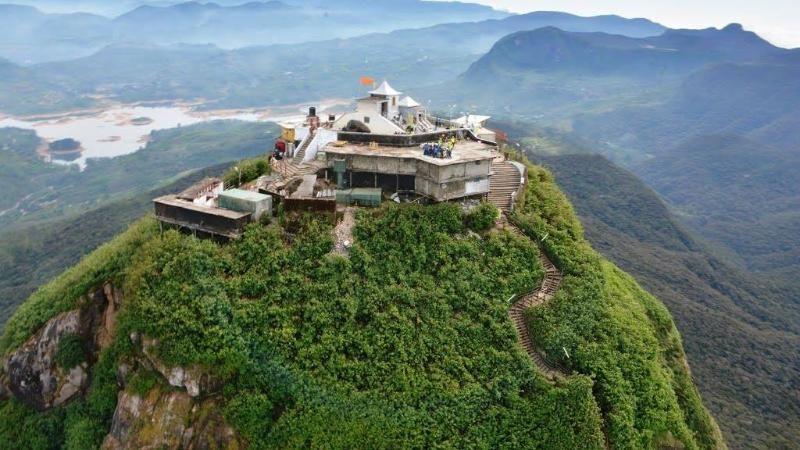
Adam's Peak (Sri Pada)
Adam's Peak — Sri Pada, the Sacred Footprint — is a 2,243-metre conical mountain in the Sri Lankan highlands whose summit rock formation is venerated as a sacred footprint by four of the world's major religions simultaneously. For over a thousand years, pilgrims of all these faiths have climbed 5,500 steps through the night to reach the same summit at the same dawn, making it one of the oldest continuously shared sacred sites in the world. The mountain's surrounding cloud forest is a biodiversity hotspot containing over 150 endemic plant species found nowhere else on earth.
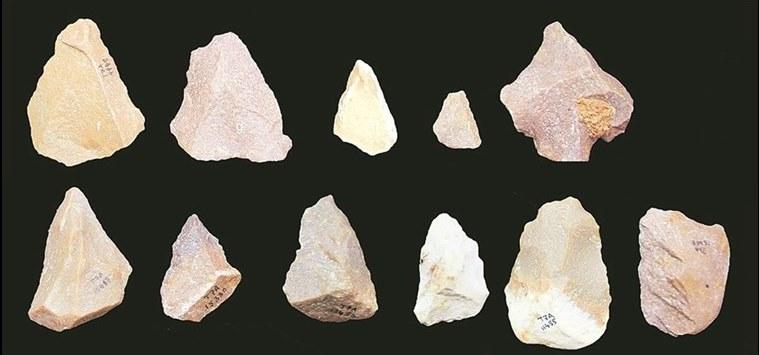
Attirampakkam
A stratified sequence of stone tool assemblages spanning approximately 1.5 million years, from the earliest known Acheulean handaxe technology in peninsular India through a transition to Middle Palaeolithic technology that appears — according to radiometric dating published in 2018 — significantly earlier than the same transition in Africa and Europe, potentially before the dispersal of anatomically modern humans out of Africa and challenging fundamental assumptions about the cognitive and demographic history of early humans in South Asia.
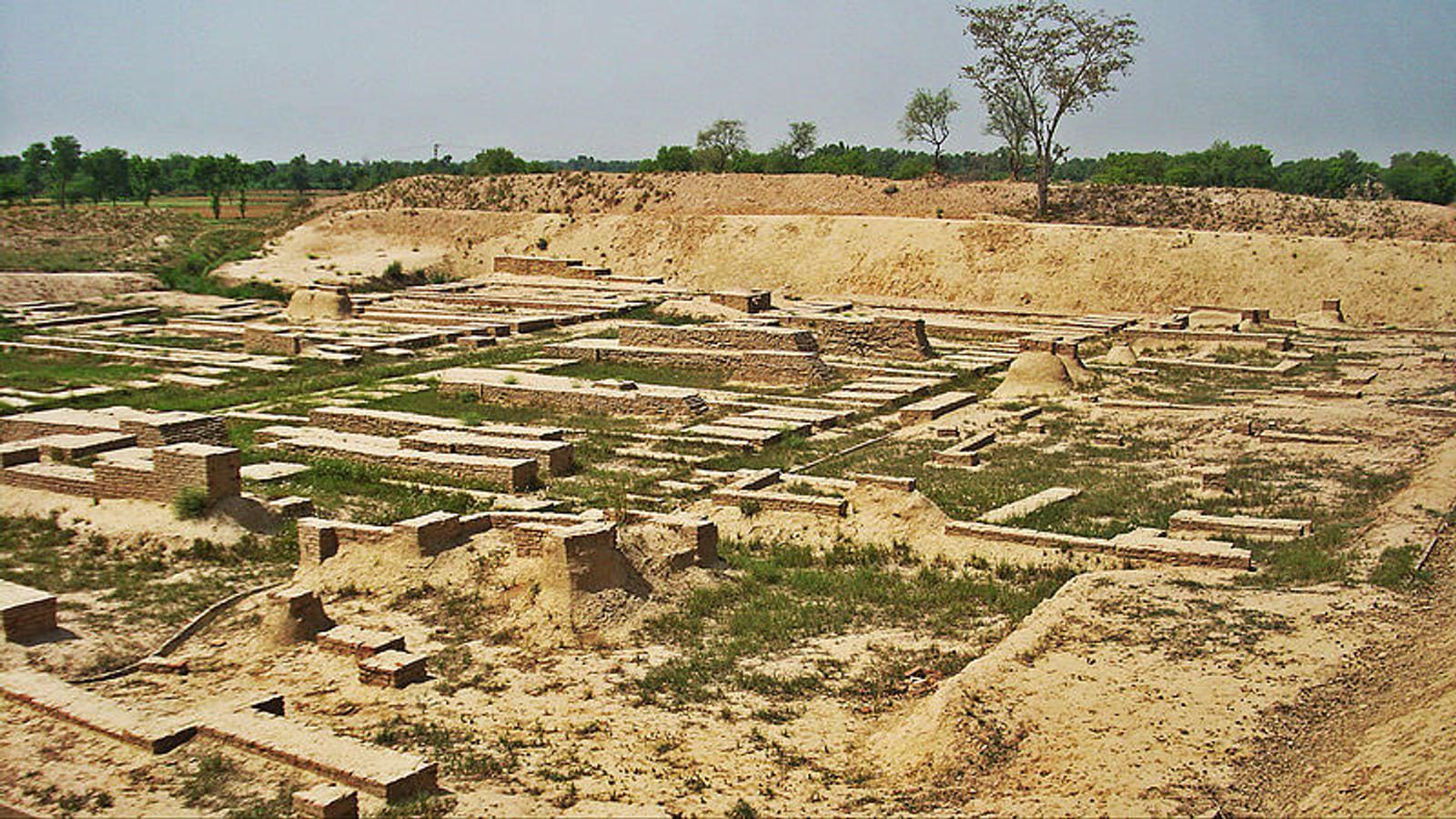
Harappa
One of the two great cities of the Indus Valley Civilisation, a Bronze Age urban culture that at its height was probably the most populous civilisation on earth, organised around a level of urban planning sophistication — standardised brick dimensions, grid streets, elaborate drainage systems — that remains remarkable even in comparison with much later achievements, and whose undeciphered script represents one of the outstanding unsolved problems of ancient linguistics.