
Adam's Peak (Sri Pada)
Documentary Video
ADAM'S PEAK (SRI PADA) Central Highlands, Sri Lanka · 10th century CE documented; multi-millennium tradition · Multi-faith pilgrimage VULNERABLE
SITE AT A GLANCE Location: Sabaragamuwa Province, Central Highlands, Sri Lanka Country: Sri Lanka Region: South Asia Coordinates: 6.8096° N, 80.4994° E Type: Natural and Intangible Heritage Sub-types: Sacred Mountain, Pilgrimage Site, Cloud Forest Biodiversity Period: Pilgrimage tradition documented from 10th century CE; Central Highlands UNESCO inscription 2010 Risk Level: Vulnerable Risks: Pilgrimage erosion, Waste accumulation, Deforestation of buffer zones, Climate change threatening cloud forest, Infrastructure development UNESCO Status: Adjacent (Central Highlands inscribed 2010); Adam's Peak itself not inscribed
3D DOCUMENTATION Adam's Peak has never been systematically documented in three dimensions. No dedicated Sketchfab model exists for the mountain or the summit shrine. This is itself a conservation gap: without a geometric baseline, deterioration of the pilgrimage infrastructure and natural landscape cannot be quantitatively tracked. The Department of Archaeology Sri Lanka maintains an official 3D heritage model collection on Sketchfab (username slarchaeology) covering other Sri Lankan monuments. The Zamani Project at the University of Cape Town has documented Sri Lankan heritage sites at zamaniproject.org. IUCN has published biodiversity assessments for Sri Lankan montane cloud forests. The UNESCO World Heritage dossier for the Central Highlands covers the surrounding ecosystem. Department of Archaeology Sri Lanka — Sketchfab collection: https://sketchfab.com/slarchaeology Zamani Project — Sri Lanka heritage 3D documentation: https://zamaniproject.org/ IUCN Red List: https://www.iucnredlist.org/ UNESCO dossier (Central Highlands): https://whc.unesco.org/en/list/1203
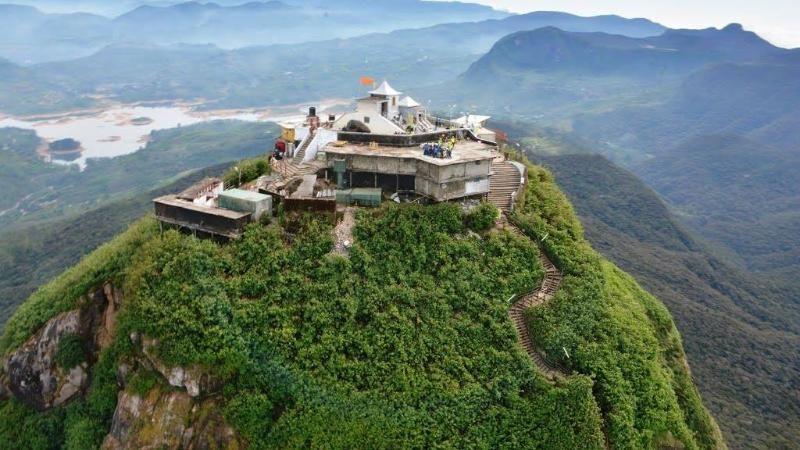
SITE DESCRIPTION Adam's Peak rises 2,243 metres above sea level in the Sabaragamuwa Province of Sri Lanka's central highlands. The pilgrimage route from the main trailhead at Dalhousie covers approximately 7 kilometres and 1,200 metres of elevation gain via approximately 5,500 steps, installed and maintained by the Sri Lanka Buddhist Cultural Department. Most pilgrims climb through the night to arrive at the summit for sunrise — a practice that has continued for over a thousand years, documented by travellers from Morocco, Italy, China, and Europe, each of whom found the same crowd of people from different traditions climbing the same steps in the same darkness toward the same dawn. At the summit, a small temple encloses the footprint shrine: a rock depression roughly foot-shaped, approximately 1.8 metres long, open to worshippers of all traditions without distinction. When the sun rises, the mountain casts a perfect triangular shadow across the misty valleys below. Within minutes, as the sun climbs, the shadow shortens and disappears. This has been happening, and being written about by travellers, for at least eight centuries. The slopes below the summit are part of the Sri Pada Wildlife Sanctuary and the broader Central Highlands UNESCO World Heritage Site — a cloud forest receiving over 5,000 millimetres of annual rainfall from cloud mist, containing over 150 endemic plant species and endemic fauna including the Sri Lanka leopard, several endemic bird species, and the purple-faced langur.
HISTORICAL SIGNIFICANCE Four of the world's great religions claim the same rock formation on the summit of this mountain, and they have done so simultaneously, without sustained conflict, for at least a thousand years. Buddhists venerate the depression in the rock as the footprint of the Buddha, left when he visited Sri Lanka in the tradition recorded in the Mahawansa. Hindus say it is the footprint of Shiva, whose presence on this mountain is consistent with the Hindu sacred geography of the subcontinent. Muslims say it is the footprint of Adam, who stood here on one leg for a thousand years as penance after his expulsion from Eden — which, in Islamic tradition, was located on this mountain. Portuguese colonisers who arrived in the 16th century interpreted it as the footprint of St Thomas the Apostle, adding a Christian dimension to the tradition. None of these traditions fights about it, at least not about this. The mountain belongs to all of them simultaneously, and this shared ownership — which is not really a formal agreement but a historical practice that has simply continued without disruption — is itself one of the most remarkable things about the site.
THE STORY OF THE SITE
c. 300 BCE: The Earliest References The Mahawansa, the chronicle of Sri Lankan Buddhist history, contains what scholars interpret as an early reference to the mountain as a place of sacred significance, though the systematic documentation of pilgrimage as an established practice dates from the 10th century CE.
1153 CE: Royal Infrastructure King Parakramabahu I of Polonnaruwa, one of the greatest rulers in Sri Lankan history, builds stairs and rest houses on the pilgrimage route, establishing the infrastructure tradition that has been maintained and rebuilt by successive rulers and governments ever since. The current 5,500 steps are the latest iteration of a continuously maintained pilgrimage route that has served climbers for nearly a thousand years.
13th Century: Marco Polo's Account Marco Polo describes Adam's Peak in his accounts of Ceylon, noting its significance to multiple religious traditions and its reputation across the trading world. He does not appear to have climbed it himself, but his account establishes that its multi-faith significance was known internationally by the late 13th century.
1344: Ibn Battuta Climbs The Moroccan traveller Ibn Battuta, one of the most widely travelled people of the medieval world, climbs Adam's Peak during his journey through Ceylon. He records detailed observations of the pilgrimage tradition and the footprint shrine from the perspective of a devout Muslim engaging with a site that his tradition regards as the footprint of Adam. He finds Buddhist and Hindu pilgrims on the same path, ascending the same steps toward the same dawn.
16th Century: Portuguese Encounter Portuguese colonisers encounter the mountain and interpret the footprint as that of St Thomas the Apostle. They do not displace the Buddhist, Hindu, or Muslim pilgrimage traditions; they add their own reading to a palimpsest that already contains three. The mountain accommodates them.
10th Century to Present: Continuous Pilgrimage The pilgrimage season runs from December to May, roughly coinciding with Poya (full moon) days and Hindu festival calendars. During peak months, several thousand pilgrims climb through darkness each night, their path lit by chains of lanterns that illuminate the steps from base to summit. Approximately 500,000 pilgrims make the ascent annually. The infrastructure built by King Parakramabahu in the 12th century has been maintained, expanded, and modernised continuously since then. The steps, the shrine, and the dawn view are the same as they were for Ibn Battuta in 1344.
THREATS AND RISK ASSESSMENT Erosion and Waste Five hundred thousand annual pilgrims climb 5,500 steps cut into steep mountain slopes. The erosion caused by this volume of foot traffic, combined with the solid waste — packaging, plastic bottles, food containers — generated by a pilgrimage that increasingly involves commercially supplied provisions rather than self-prepared food, is the primary management challenge at the site. The waste problem is not unique to Adam's Peak and is not caused by bad intentions; it is caused by a supply chain that provides goods in packaging that cannot be disposed of at altitude.
The Cloud Forest The cloud forest below the summit depends on cloud mist for moisture during dry seasons — a dependence that climate change is disrupting by altering the altitude and duration of the cloud belt. The 150-plus endemic plant species that depend on this moisture regime face a threat that no amount of visitor management can address. The Sri Lanka leopard, the purple-faced langur, and the endemic bird species that inhabit the forest face the additional pressure of deforestation at the forest margins as tea and rubber cultivation expand at lower elevations.
The Documentation Gap Adam's Peak has never been systematically documented in three dimensions. Without a geometric baseline, deterioration of the pilgrimage infrastructure and the natural landscape cannot be quantitatively tracked. This is a conservation gap that is straightforward to address technically but has not been prioritised.
RESEARCH AND SCHOLARLY CONTEXT The Department of Archaeology Sri Lanka's Sketchfab collection provides 3D documentation of other Sri Lankan monuments but not of Adam's Peak specifically. The Zamani Project's Sri Lanka work provides models of nearby heritage sites. IUCN's biodiversity assessments for Sri Lankan montane cloud forests are the most comprehensive scientific documentation of the ecosystem surrounding the mountain. The UNESCO World Heritage dossier for the Central Highlands covers the broader landscape of which Adam's Peak is the most sacred and most visited element. The pilgrimage tradition at Adam's Peak has been studied primarily by anthropologists and religious historians interested in the multi-faith dimension of the site. The practical conservation challenges — erosion management, waste infrastructure, cloud forest monitoring — have received less sustained research attention than their significance warrants.
IF NOTHING CHANGES The pilgrimage will continue. It has continued through colonial occupation, civil war, and every disruption of the past thousand years, and there is no reason to think it will not continue through climate change and tourism pressure as well. What may change is the cloud forest that surrounds it — the living landscape of endemism that is as much a heritage of the mountain as the shrine at its summit. If the cloud belt shifts upward under climate warming, the forest that has evolved over millions of years in its current moisture regime will be unable to migrate fast enough to survive. The 150-plus endemic plant species that live nowhere else on earth will have nowhere else to go. The leopards and the langurs and the endemic birds will lose the habitat that the mountain's isolation and the forest's moisture have sustained. The pilgrims will still climb the steps and ring the bell at the summit, and the triangular shadow will still form and dissolve at dawn. But the landscape that gives the mountain its sacred context will have been diminished in ways that no amount of step maintenance can repair.
Knowledge Vault
UNESCO World Heritage — Central Highlands of Sri Lanka
Department of Archaeology Sri Lanka — 3D Heritage Model Collection (Sketchfab)
Zamani Project — Sri Lanka Heritage 3D Documentation
IUCN — Sri Lanka Montane Cloud Forest Biodiversity Assessment
Europeana — Sri Lanka Buddhist Cultural Heritage Records
Historical Timeline
First Documented Pilgrimage
The Mahawansa records pilgrimage to Adam's Peak as an established Buddhist devotional practice.
Royal Infrastructure
King Parakramabahu I builds stairs and rest houses on the pilgrimage route — the founding of the continuously maintained infrastructure tradition.
Marco Polo's Account
Marco Polo describes the mountain's multi-faith significance as internationally known.
Ibn Battuta Climbs
The Moroccan traveller climbs Adam's Peak as a devout Muslim and records detailed observations of the multi-faith pilgrimage tradition.
Portuguese Encounter
Portuguese colonisers add a Christian interpretation to the already multi-faith pilgrimage tradition.
Central Highlands UNESCO Inscription
The Central Highlands of Sri Lanka, including the cloud forest surrounding Adam's Peak, are inscribed on UNESCO's World Heritage List.
Related Heritage Sites
Attirampakkam
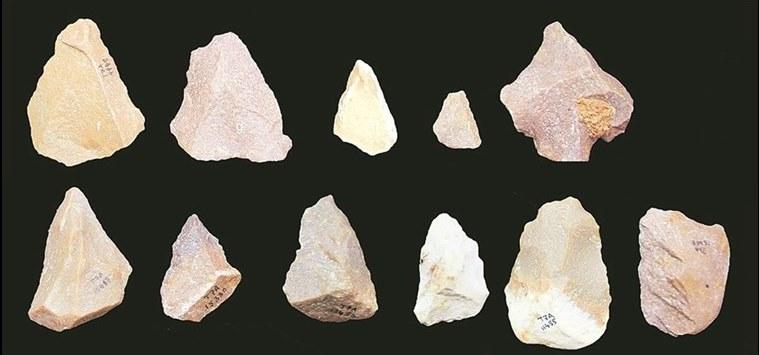
A stratified sequence of stone tool assemblages spanning approximately 1.5 million years, from the earliest known Acheulean handaxe technology in peninsular India through a transition to Middle Palaeolithic technology that appears — according to radiometric dating published in 2018 — significantly earlier than the same transition in Africa and Europe, potentially before the dispersal of anatomically modern humans out of Africa and challenging fundamental assumptions about the cognitive and demographic history of early humans in South Asia.

Hampi
A 26-square-kilometre open landscape of approximately 550 monuments distributed across an extraordinary terrain of stacked granite boulders along the Tungabhadra River — once the capital of the Vijayanagara Empire, one of the wealthiest and most populous cities on earth in the fifteenth and sixteenth centuries. Temples, bazaars, royal pavilions, elephant stables, and sacred tanks appear across ridgelines and around corners in a landscape that feels less like a heritage site and more like a civilisation that forgot to fully disappear. Large sections remain in active religious use, as they have been for over a thousand years.
Harappa
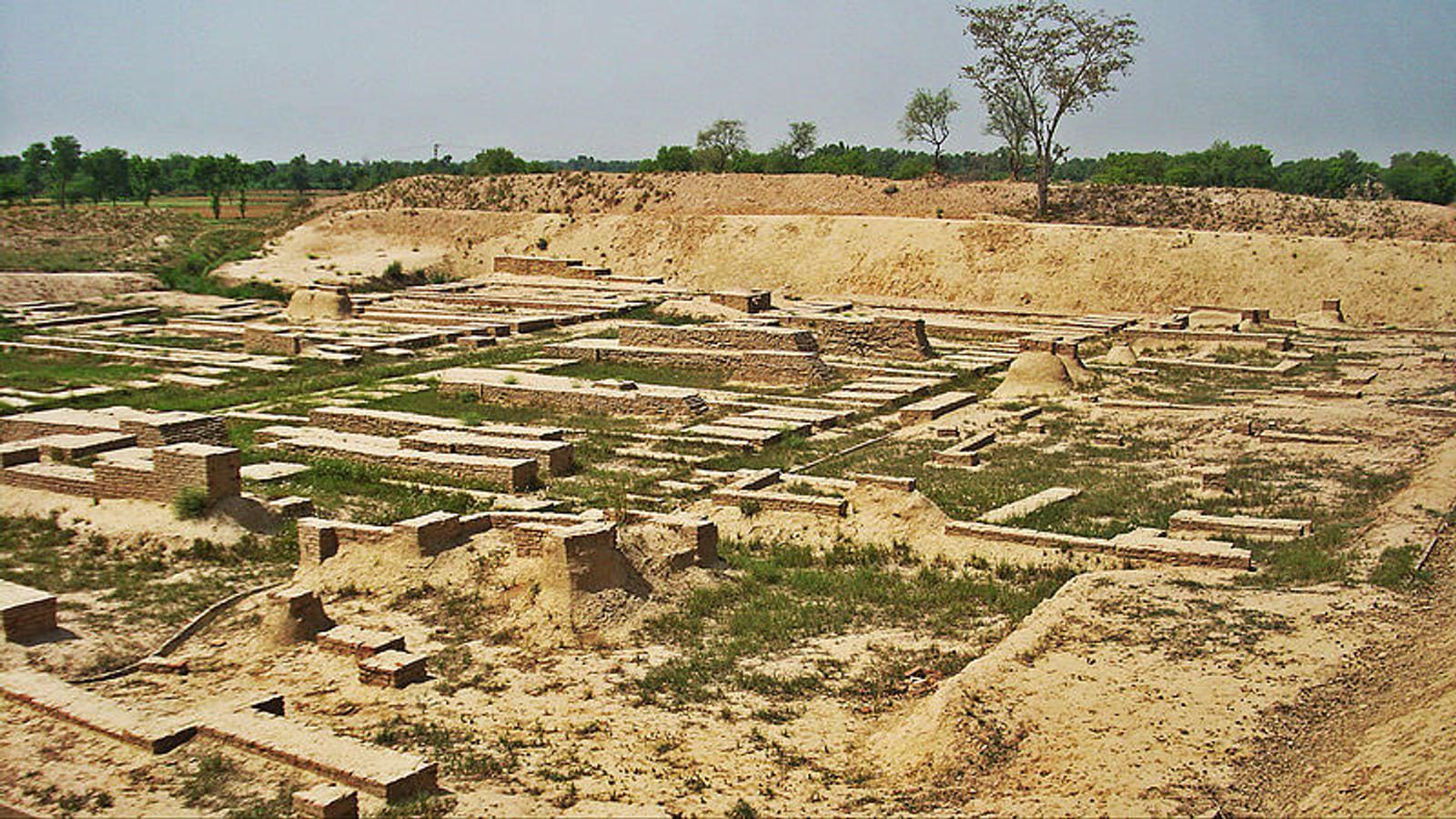
One of the two great cities of the Indus Valley Civilisation, a Bronze Age urban culture that at its height was probably the most populous civilisation on earth, organised around a level of urban planning sophistication — standardised brick dimensions, grid streets, elaborate drainage systems — that remains remarkable even in comparison with much later achievements, and whose undeciphered script represents one of the outstanding unsolved problems of ancient linguistics.