
Lothal
Lothal
Site Description
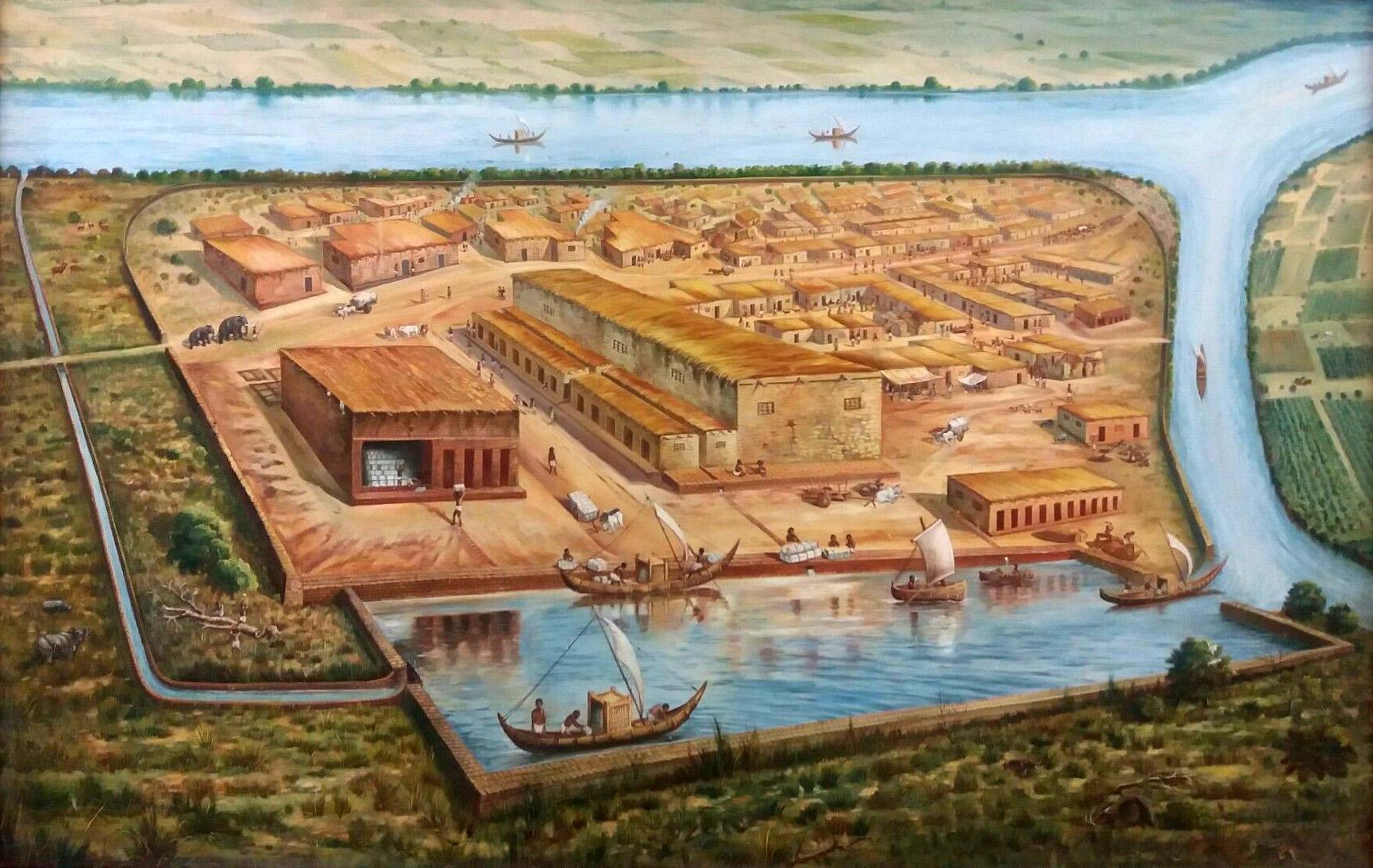
Lothal is the southernmost major site of the Indus Valley Civilisation, a port city on the Gulf of Khambhat in what is now Gujarat, India, and it contains what is widely considered to be the world's oldest known artificial dock — a structure that demonstrates the maritime capabilities of the Indus civilisation and the sophistication of its long-distance trade network at least four thousand years ago.
The site is modest in scale compared to Harappa and Mohenjo-daro, covering approximately 4.8 hectares of excavated remains within a larger area of archaeological significance. What it lacks in size it compensates for in specificity: Lothal is the most completely excavated Indus site, providing an unusually clear picture of the organisation of a smaller Indus town with a specific economic function as a centre of maritime trade and industrial production. A large basin adjoining the eastern wall of the city, measuring approximately 218 by 37 metres and lined with kiln-fired bricks, is interpreted as a tidal dock into which ships could enter at high tide to load and unload cargo, their departure controlled by a spillway that maintained water level in the basin as the tide receded.
The workshop areas of Lothal have produced extensive evidence of craft production, including bead making in carnelian, jasper, steatite, and faience, copper working, and shell ornament production. The range and quality of the craft products found at the site, and the evidence of their export in the form of Lothal-type beads found at Gulf and Mesopotamian sites, situates the town within a trade network of extraordinary reach for its period.
Historical Significance
Lothal matters for what it reveals about the economic and maritime dimensions of the Indus Valley Civilisation, aspects of the civilisation that are less visible at the major inland sites. The dock, if the interpretation is correct, is evidence of a level of hydraulic engineering capability and maritime commercial organisation that was not previously associated with a civilisation of this period, and it situates the Indus world within the broader Bronze Age trading networks of the Arabian Sea and Persian Gulf in a concrete and specific way.
The site also provides the best available evidence for the organisation of Indus craft production, with workshop areas that allow the sequence of production processes to be reconstructed from the spatial distribution of raw materials, production debris, and finished objects. This evidence contributes to the broader picture of how the Indus civilisation organised its economy — a question that remains central to understanding how a civilisation of this scale operated without the evidence of centralised political authority that characterises other Bronze Age states.
Lothal is additionally significant as a site of early fire ritual, with evidence of fire altars that anticipates the fire worship traditions of later Vedic religion.
Threats and Risk Assessment
Flooding and Coastal Risk
Lothal's coastal location, which made it an ideal Bronze Age port, makes it vulnerable to the flooding and coastal erosion that climate change is intensifying in the Gulf of Khambhat region. The site lies in a low-lying area where monsoon flooding is a recurring event, and the increasing intensity of extreme rainfall events projected for Gujarat increases the risk to unexcavated deposits and to the exposed brick structures of the excavated site. Sea level rise over the coming century poses a longer-term but potentially more severe threat to a site positioned at the interface of land and sea.
Agricultural and Urban Encroachment
The growth of the surrounding agricultural and residential landscape creates pressure on the boundaries of the protected archaeological zone. The fertility of the Gujarat plains and the expansion of agricultural activity into areas adjacent to the site threaten the integrity of unexcavated deposits outside the formally protected area.
Conservation of Exposed Structures
The exposed brick structures of the excavated site require sustained conservation maintenance to prevent deterioration from weathering, biological growth, and the effects of seasonal temperature and humidity variation. The resources available for this maintenance are not always adequate to the scale of the need.
Research and Scholarly Context
Research at Lothal has continued since S.R. Rao's foundational excavations, with particular focus on the reanalysis of existing collections using improved analytical techniques and on the contextualisation of Lothal within the broader maritime trade networks of the Bronze Age Arabian Sea. The application of residue analysis to pottery from the site, isotopic analysis of craft materials to trace their sources, and the comparison of Lothal assemblages with those from Gulf and Mesopotamian sites has produced a considerably more detailed picture of the civilisation's trading relationships than was available from the original excavation.
The debate about the dock interpretation has generated productive research into the site's hydrology and the hydraulic capabilities of the Indus people, and the evidence from Lothal has been situated within a broader emerging understanding of Indus maritime activity that includes the identification of other possible harbour sites along the Gujarat coast.
If Nothing Changes
Lothal's vulnerability is primarily environmental and institutional rather than dramatic. The site faces the slow attrition of inadequate conservation resources, the cumulative impact of agricultural encroachment on its unprotected margins, and the growing climate risk associated with its coastal location.
The proposed heritage complex development offers an opportunity to provide Lothal with the infrastructure and institutional attention it deserves, but development projects at archaeological sites carry their own risks, and the relationship between the new complex and the integrity of the buried deposits requires the kind of careful management that has not always characterised large infrastructure projects at Indian heritage sites.
Lothal is where the Indus world met the sea, and the evidence it contains for Bronze Age maritime commerce is irreplaceable. Its protection is an investment in understanding one of the most sophisticated and most mysterious civilisations of the ancient world.
Historical Timeline
Foundation
Lothal is established as a planned settlement, with evidence of a single founding episode rather than the gradual accumulation of earlier phases visible at other Indus sites. The dock basin is constructed as part of the original plan, suggesting that Lothal was established specifically as a trading port by people who understood exactly what they were doing and where.
The Active Port
For approximately five hundred years, Lothal functions as an active maritime trade centre, producing and exporting craft goods and serving as a point of exchange between the Indus heartland to the north and the maritime trade routes of the Arabian Sea. Evidence of trade connections with Mesopotamia, the Persian Gulf, Oman, and the Red Sea region is found both at Lothal itself and at the distant sites where Lothal-type products appear.
Flood and Decline
Lothal shows evidence of a catastrophic flood event around 1900 BCE that causes substantial damage and may have disrupted the dock basin's function. The timing coincides with the broader decline of the Indus Civilisation associated with climate change and monsoon weakening. The site is partially reoccupied and rebuilt after the flood, but is eventually abandoned as the broader urban system of the Indus world contracts.
Excavation by the Archaeological Survey of India
S.R. Rao of the Archaeological Survey of India leads the excavation of Lothal over nine seasons, uncovering the dock, the workshop areas, the residential quarters, and the evidence of craft production that defines the site's known archaeology. The site museum established at Lothal houses the finds from the excavation.
Conservation and the New Museum Project
The site is maintained by the Archaeological Survey of India but faces chronic underfunding and environmental pressure. The Indian government has announced plans for a major new National Maritime Heritage Complex at Lothal, whose relationship to the archaeological remains on the site requires careful management to avoid creating the development pressure that has damaged other heritage sites.
Related Heritage Sites
Adam's Peak (Sri Pada)
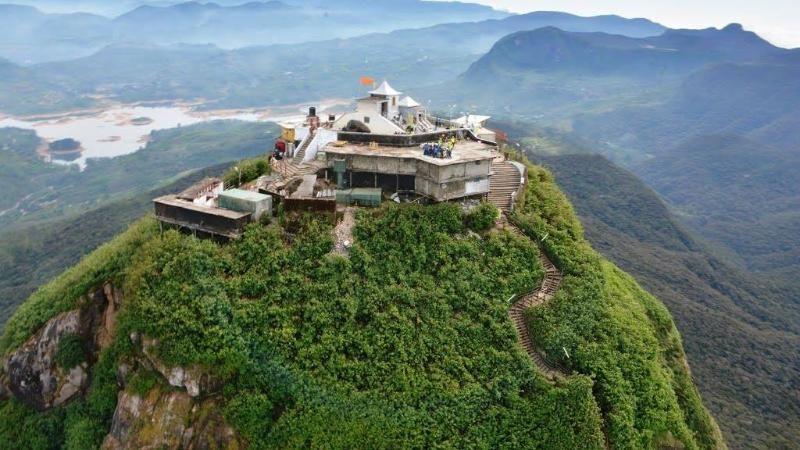
Adam's Peak — Sri Pada, the Sacred Footprint — is a 2,243-metre conical mountain in the Sri Lankan highlands whose summit rock formation is venerated as a sacred footprint by four of the world's major religions simultaneously. For over a thousand years, pilgrims of all these faiths have climbed 5,500 steps through the night to reach the same summit at the same dawn, making it one of the oldest continuously shared sacred sites in the world. The mountain's surrounding cloud forest is a biodiversity hotspot containing over 150 endemic plant species found nowhere else on earth.
Attirampakkam
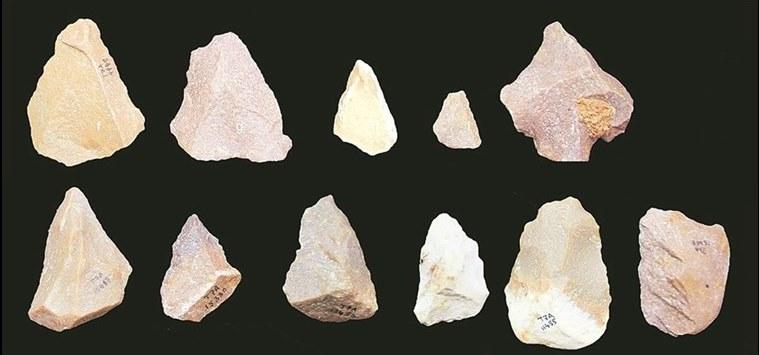
A stratified sequence of stone tool assemblages spanning approximately 1.5 million years, from the earliest known Acheulean handaxe technology in peninsular India through a transition to Middle Palaeolithic technology that appears — according to radiometric dating published in 2018 — significantly earlier than the same transition in Africa and Europe, potentially before the dispersal of anatomically modern humans out of Africa and challenging fundamental assumptions about the cognitive and demographic history of early humans in South Asia.

Hampi
A 26-square-kilometre open landscape of approximately 550 monuments distributed across an extraordinary terrain of stacked granite boulders along the Tungabhadra River — once the capital of the Vijayanagara Empire, one of the wealthiest and most populous cities on earth in the fifteenth and sixteenth centuries. Temples, bazaars, royal pavilions, elephant stables, and sacred tanks appear across ridgelines and around corners in a landscape that feels less like a heritage site and more like a civilisation that forgot to fully disappear. Large sections remain in active religious use, as they have been for over a thousand years.