
Harappa
Interactive 3D Scan
Explore 3D Model
Click to load interactive scan
Harappa
Site Description
Harappa is one of the two great cities of the Indus Valley Civilisation, the Bronze Age urban culture that flourished across what is now Pakistan and northwestern India between approximately 2600 and 1900 BCE and at its height was probably the most populous civilisation on earth. At a time when Mesopotamia and Egypt were already famous, at least to their own inhabitants, the Indus Valley supported a network of cities, towns, and villages across an area larger than either of those civilisations, organised around a level of urban planning sophistication that remains remarkable even in comparison with much later achievements.
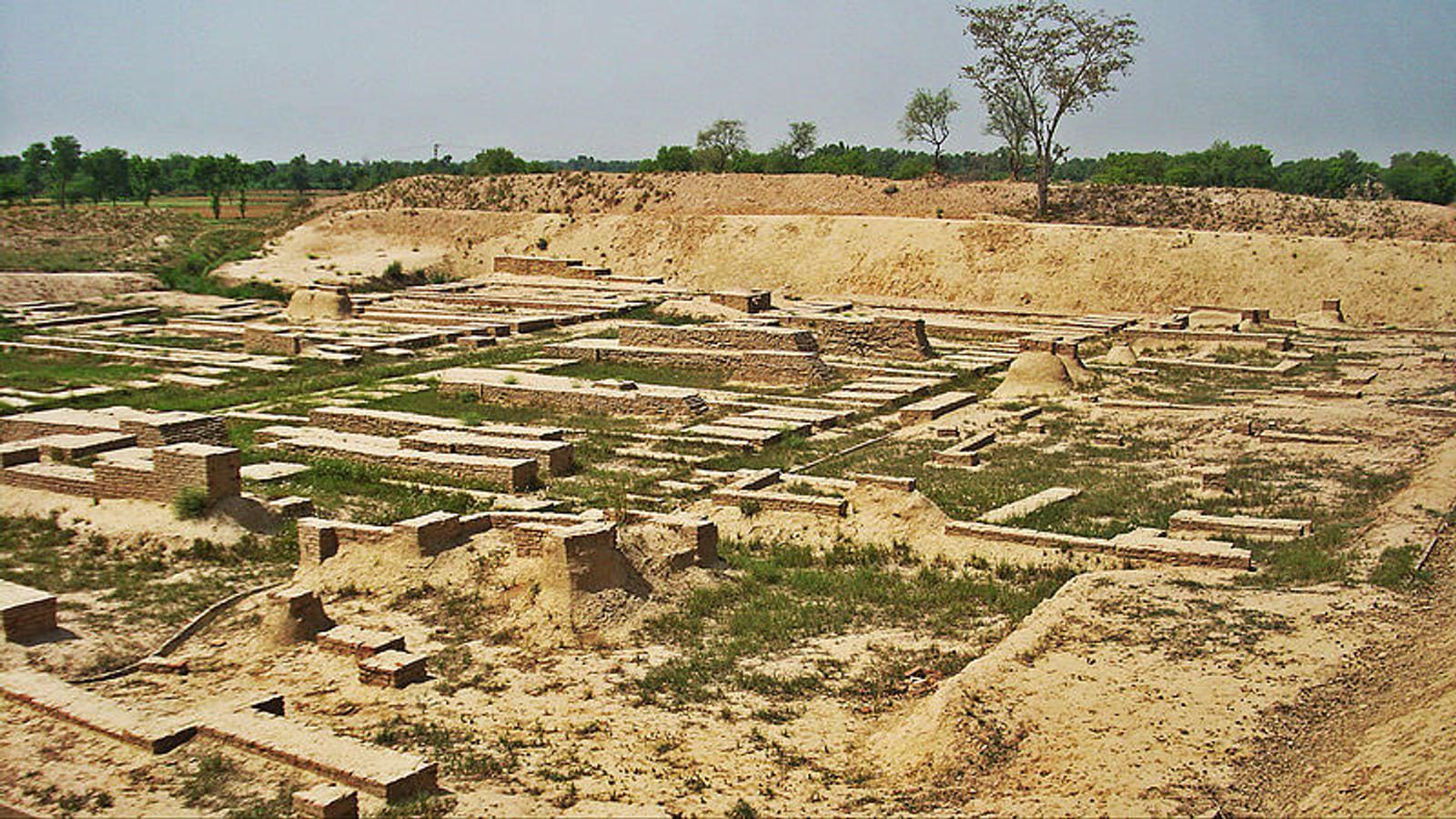
The site at Harappa covers approximately 150 hectares, though only a fraction of this has been systematically excavated. What has been uncovered reveals a city of considerable organisation: a raised citadel area separated from a lower residential town, streets laid out on a roughly grid pattern oriented to the cardinal directions, standardised burnt-brick construction using a consistent module of brick dimensions that is maintained across the Indus civilisation from Harappa in the north to Mohenjo-daro 600 kilometres to the south, elaborate drainage systems running beneath the streets, granary structures of substantial scale, and evidence of craft specialisation in pottery, bead making, bronze working, and shell ornament production.
The physical condition of the site is less intact than its significance warrants. The construction of the Lahore-Multan railway in the 1850s used bricks from the Harappa mounds as ballast over a significant stretch of track, removing a substantial portion of the site's brick architecture before any archaeological investigation had begun.
Historical Significance
The Indus Valley Civilisation is the great enigma of ancient world history. It was approximately contemporaneous with the Old Kingdom of Egypt and the Early Dynastic period of Mesopotamia, it was larger than either of them by area and possibly by population, it produced sophisticated urban planning, standardised systems of weights and measures, a script that has not been deciphered, and evidence of long-distance trade networks reaching Mesopotamia and the Persian Gulf. And then, around 1900 BCE, it declined and disappeared from the archaeological record with a speed and completeness that has generated debate among archaeologists for a century without producing consensus.
The civilisation challenges the standard model of ancient complexity in multiple ways. It has no monumental royal tombs of the Egyptian type, no massive temple complexes of the Mesopotamian type, and no evidence of the warfare, conquest, and centralised political authority that characterise the other great Bronze Age civilisations. What that kind of authority looked like in practice is one of the most interesting questions in ancient history and one that Harappa, as one of the civilisation's largest and most extensively studied urban centres, is uniquely positioned to help answer.
The undeciphered Indus script, found on thousands of seals, pottery sherds, and other objects from Harappa and other sites, is one of the outstanding unsolved problems of ancient linguistics. Deciphering it would transform understanding of the civilisation, providing access to the Indus people's own account of their world. The effort continues without resolution.
Threats and Risk Assessment
Agricultural Encroachment and Urban Expansion
The site exists within a densely cultivated agricultural landscape, and the boundaries of protected archaeological deposits are not adequately enforced against agricultural intrusion. The expansion of the city of Harappa around the archaeological zone creates development pressure that brings construction activity close to and sometimes within the limits of the protected site. Uncontrolled digging for brick, continuing a practice with roots in the railway construction of the 1850s, remains a problem in some areas of the site periphery.
Flooding and Climate Stress
The Ravi River, on whose bank Harappa stands, has shifted its course significantly since the Bronze Age, and the current hydrological regime creates periodic flood risk for parts of the site. Climate projections for Pakistan, one of the countries most severely exposed to climate change impacts, suggest increasing frequency of extreme rainfall events and more severe monsoon flooding.
Institutional Capacity and Funding
Pakistan's cultural heritage institutions are systematically underfunded relative to the scale and significance of the country's archaeological heritage, and Harappa competes for resources with dozens of other significant sites.
Looting and Illicit Trade
The international antiquities market creates demand for Indus Valley artefacts that incentivises illicit excavation at Harappa and other Indus sites. The characteristic Indus seals, with their undeciphered script and distinctive animal imagery, are particularly sought after. Objects removed from context without documentation lose much of their scientific value.
Research and Scholarly Context
Research at Harappa has been central to the development of Indus Valley Civilisation studies as a field. The long-running American-Pakistani collaboration led by Richard Meadow of Harvard and Jonathan Mark Kenoyer has been particularly significant in establishing the chronological framework and the evidence for craft specialisation and social organisation that contemporary understanding of the civilisation is built on.
The question of the decline of the Indus Civilisation, and specifically the role of climate change in that decline, has been one of the most actively researched topics in South Asian archaeology in recent years. Analysis of monsoon proxies including stalagmite records, lake sediments, and river geomorphology has provided increasingly precise evidence for the drought period associated with the civilisation's decline.
The ongoing effort to decipher the Indus script involves scholars across linguistics, computational analysis, and comparative script studies, and has generated substantial research without producing a widely accepted decipherment. The script's decipherment, if it is ever achieved, would be one of the most transformative events in the history of ancient world studies.
If Nothing Changes
Harappa is a site that has already lost more than it should have before its significance was understood, and the rate of loss, while slower than in the railway construction period, has not stopped. Agricultural encroachment, construction activity, and the cumulative effects of climate stress on unprotected deposits continue to reduce the information available to future researchers.
The undeciphered script means that the full story of Harappa and the civilisation it represents cannot yet be told. A significant part of the evidence that might eventually help tell that story lies in the unexcavated deposits of the site, and every episode of uncontrolled disturbance reduces the quality and completeness of that archive.
Harappa is where one of humanity's first experiments in urban life reached its most ambitious expression, and it is where the evidence for that experiment still lies, partially, in the ground. Its protection is an investment in the possibility of understanding a chapter of human history that is not yet written.
Historical Timeline
Early Settlement
The earliest occupation at Harappa predates the great urban phase of the Indus Civilisation, with evidence of small agricultural communities at the site. These early settlers are part of a broader regional culture, the Ravi phase, that anticipates but does not yet express the full urban complexity of the mature Harappan period.
The Urban Harappan Phase
The site expands dramatically to become one of the major urban centres of the Indus Civilisation, with a population estimated at anywhere between 23,000 and 80,000 people. The city's raised citadel, lower town, and standardised brick construction reflect a level of urban planning that implies either strong centralised authority or deeply embedded cultural conventions governing urban form across the civilisation.
Decline and Transformation
The mature urban phase of Harappa ends, as does the Indus Civilisation more broadly. The decline is not sudden collapse but gradual dispersal, with the urban population moving toward smaller settlements in more reliably watered areas. Current research points to a prolonged drought associated with a weakening of the South Asian monsoon as a significant contributing factor.
First European Record
Charles Masson, a British deserter travelling through the Punjab under a false identity, describes the mounds at Harappa and their brick ruins in his account of his travels. His account is the first European record of the site and predates systematic archaeological investigation by nearly a century.
The Railway and the Brick Robbery
The construction of the Lahore-Multan railway uses bricks from the Harappa mounds as track ballast over a significant stretch of track. The quantity of brick removed is substantial and the damage to the site's archaeological integrity is irreversible. It becomes one of the most commonly cited examples of heritage destruction through ignorance in the history of South Asian archaeology.
Discovery and First Excavation
Daya Ram Sahni of the Archaeological Survey of India conducts the first systematic excavations at Harappa, recovering seals with an unknown script. His findings, combined with contemporaneous discoveries at Mohenjo-daro, establish the existence of the Indus Valley Civilisation as a major prehistoric urban culture. The announcement in 1924 is one of the landmark moments in the history of South Asian archaeology.
Partition and Its Consequences
The partition of British India creates Pakistan and India as separate states, and Harappa, located in what becomes Pakistan, is separated from the administrative infrastructure of the Archaeological Survey of India. The partition period is one of disruption for heritage management across the subcontinent, and Harappa's conservation suffers during the transition.
The Harappa Archaeological Research Project
An American-Pakistani research collaboration establishes a long-running systematic research programme at Harappa using contemporary archaeological methods. The project produces comprehensive stratigraphic sequences, refined chronologies, and detailed evidence of craft production, trade, and social organisation that significantly advances understanding of the site and the civilisation it represents.
Related Heritage Sites
Adam's Peak (Sri Pada)
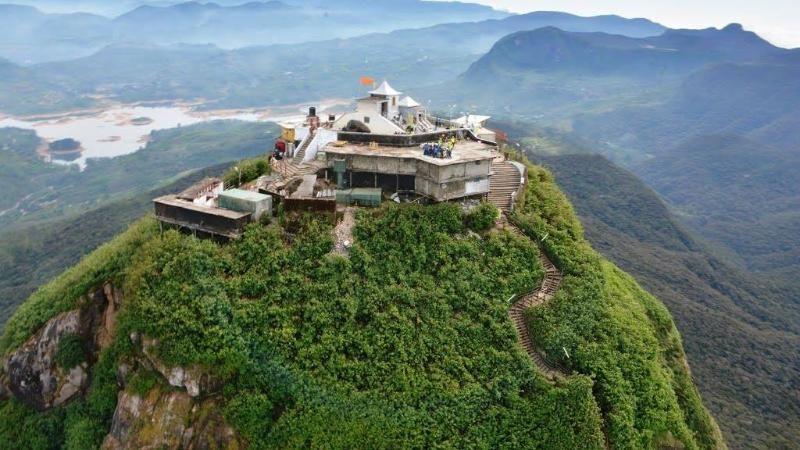
Adam's Peak — Sri Pada, the Sacred Footprint — is a 2,243-metre conical mountain in the Sri Lankan highlands whose summit rock formation is venerated as a sacred footprint by four of the world's major religions simultaneously. For over a thousand years, pilgrims of all these faiths have climbed 5,500 steps through the night to reach the same summit at the same dawn, making it one of the oldest continuously shared sacred sites in the world. The mountain's surrounding cloud forest is a biodiversity hotspot containing over 150 endemic plant species found nowhere else on earth.
Attirampakkam
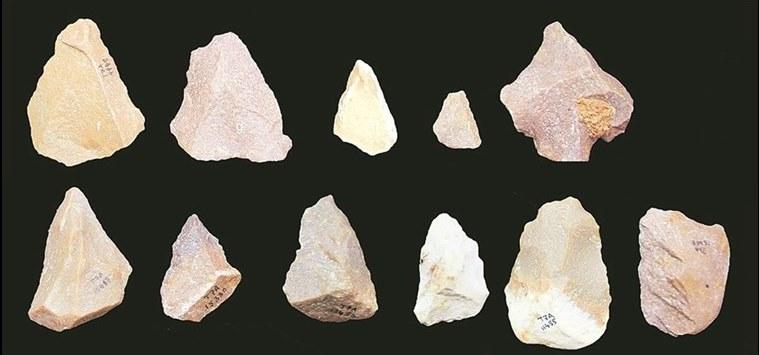
A stratified sequence of stone tool assemblages spanning approximately 1.5 million years, from the earliest known Acheulean handaxe technology in peninsular India through a transition to Middle Palaeolithic technology that appears — according to radiometric dating published in 2018 — significantly earlier than the same transition in Africa and Europe, potentially before the dispersal of anatomically modern humans out of Africa and challenging fundamental assumptions about the cognitive and demographic history of early humans in South Asia.

Hampi
A 26-square-kilometre open landscape of approximately 550 monuments distributed across an extraordinary terrain of stacked granite boulders along the Tungabhadra River — once the capital of the Vijayanagara Empire, one of the wealthiest and most populous cities on earth in the fifteenth and sixteenth centuries. Temples, bazaars, royal pavilions, elephant stables, and sacred tanks appear across ridgelines and around corners in a landscape that feels less like a heritage site and more like a civilisation that forgot to fully disappear. Large sections remain in active religious use, as they have been for over a thousand years.