
Rock Shelters of Bhimbetka
Documentary Video
Rock Shelters of Bhimbetka
Madhya Pradesh, India · c. 30,000 Years BP to Early Historical Period · Prehistoric Rock Art Risk Level: At-Risk
Site at a Glance
Location: Raisen District, Madhya Pradesh, India Coordinates: 22.9333° N, 77.6167° E Type: Built Heritage (Archaeological) Sub-types: Rock Art, Archaeological Site, Prehistoric Cultural Landscape, Palaeolithic Evidence Period: Paintings from approximately 30,000 years BP; habitation evidence from approximately 100,000 years BP; UNESCO inscribed 2003 Risk Level: At-Risk UNESCO Status: Inscribed 2003
3D Documentation
The Archaeological Survey of India (ASI) maintains documentation of Bhimbetka under its Central Archaeological Authority. The ASI has conducted photographic documentation of all painted surfaces, available through its regional office. The National Institute of Advanced Studies in Bangalore has produced research documentation of the rock art. Researcher V.S. Wakankar, who discovered and first systematically documented Bhimbetka in 1957, produced the primary archival documentation. A photogrammetric scan of representative shelters is available on Sketchfab. The Getty Conservation Institute has contributed to rock art conservation methodology applicable to the site.
- Archaeological Survey of India: https://asi.nic.in/
- UNESCO dossier: https://whc.unesco.org/en/list/925
- Getty Conservation Institute — Rock Art Conservation: https://www.getty.edu/conservation/
- National Institute of Advanced Studies: https://www.nias.res.in/
Site Description
The Bhimbetka shelters are formed by wind and water erosion of Vindhyan sandstone, the same geological process that produces the characteristic boulder landscapes of the Deccan plateau. The shelters are natural alcoves, overhangs, and deep recesses formed by differential erosion of the layered sandstone, and they provided ready-made shelter for the human communities who lived here across tens of thousands of years. The painted surfaces are the interior walls and ceilings of these natural formations.
The most immediately striking quality of the paintings is the continuous overpainting: in many shelters, multiple layers of paintings overlap, with figures from different periods superimposed on each other. A scene of hunting animals in dark red ochre from the Mesolithic may be partially overlaid by a scene of cattle herders in green mineral paint from the Chalcolithic; this in turn may be overlaid by a historical-period domestic scene. Each layer is a distinct cultural moment. The sequence of layers, where it can be read, is a stratigraphic record of cultural change as legible as the geological strata in a canyon wall.
The Zoo Rock is the most visited and most documented individual shelter, named for its extraordinary density of animal figures: bison, deer, elephants, tigers, rhinos, crocodiles, and horses painted across centuries in figures ranging from a few centimetres to over a metre in length. The largest single figure, a bison, has been dated to the Mesolithic period and is executed with a confident, economic line that suggests a tradition of practiced observation.
Historical Significance
Bhimbetka was formally discovered in 1957 by the archaeologist V.S. Wakankar, who recognised the painted surfaces while travelling by train through the region and investigated on foot. Before Wakankar's discovery, the shelters were known locally — the name Bhimbetka is associated with the Mahabharata hero Bhima, and local tradition had connected the site to the epic for centuries — but their archaeological significance was unknown to the formal research community.
The paintings establish that the Indian subcontinent has been continuously inhabited for at least 30,000 years, with demonstrable cultural continuity across the full span of the paintings. They also establish that the artistic impulse, the desire to represent the visible world on a surface, was present in the human communities of central India at the same time as it was present in the cave painters of France and Spain. The stylistic similarities between some Bhimbetka figures and European Upper Palaeolithic art are not evidence of connection but of the universality of certain representational impulses in early human cultures.
The Story
c. 100,000 BCE — Lower Palaeolithic Habitation Archaeological evidence from the soil below the shelters documents Lower Palaeolithic stone tool use at Bhimbetka, establishing human presence in the region approximately 100,000 years ago.
c. 30,000 BCE — Earliest Paintings The earliest paintings at Bhimbetka, executed in red ochre, are dated to approximately 30,000 years ago. They depict animals — bison, deer, elephants — in a style consistent with Upper Palaeolithic rock art traditions in other regions.
c. 8000–5000 BCE — Mesolithic Elaboration The Mesolithic period produces the richest and most diverse layer of Bhimbetka paintings: scenes of hunting, communal dancing, rituals, and a wider range of animal species. Green mineral paints supplement the red ochre. Compositions become more complex, with multiple figures interacting in narrative scenes.
c. 3000–1000 BCE — Chalcolithic and Early Bronze Age Domestic cattle, horses, and humans with weapons and tools appear in the paintings, reflecting the transition to agricultural and pastoralist lifestyles. The visual record begins to resemble the world that historical sources will later describe.
1957 — Wakankar's Discovery V.S. Wakankar identifies and documents the painted shelters, bringing them to the attention of the formal archaeological community.
2003 — UNESCO Inscription The Rock Shelters of Bhimbetka are inscribed on UNESCO's World Heritage List.
Threats and Risk Assessment
Visitor Vandalism Despite the site's UNESCO status and the presence of ASI guards, visitor vandalism remains a documented problem. Names and dates scratched into painted rock surfaces, mineral pigment scraped away by touching, and graffiti have been recorded. The sheer number of shelters across the five clusters makes comprehensive supervision difficult with current staffing levels.
Industrial Pollution Nearby quarrying and mining operations contribute airborne particulate matter and chemical pollutants to the shelter environment. The rock surfaces that have survived 30,000 years of natural exposure are being subjected to chemical stress from industrial emissions that have no natural analogue in the site's history. The pollution is visibly staining some surfaces and chemically degrading the mineral pigments.
Moisture Dynamics The microclimate within each shelter — the balance of temperature, humidity, and air circulation that has preserved the painted surfaces — is delicate and vulnerable to disturbance. Increased visitor numbers alter the CO2 concentration and humidity of enclosed shelters. Climate change is altering the rainfall and seepage patterns that feed groundwater movement through the rock.
Research and Scholarly Context
V.S. Wakankar's foundational documentation remains the primary archival resource. The ASI maintains ongoing monitoring and management. Erwin Neumayer's comparative studies of Indian rock art place Bhimbetka in its continental context. The Getty Conservation Institute's methodological work on rock art conservation provides applicable technical frameworks. The UNESCO inscription dossier provides the most recent comprehensive official assessment.
If Nothing Changes
The paintings at Bhimbetka have survived 30,000 years because the geology of the shelters created a microenvironment stable enough to preserve mineral pigments in stone. That stability is being disturbed by a combination of factors that did not exist for most of the paintings' history: industrial pollution, tourist breath, scratching hands, and rainfall patterns altered by a climate that the Mesolithic painters could not have imagined. The deterioration is not dramatic or sudden. It is slow, cumulative, and largely irreversible. A figure painted 30,000 years ago cannot be repainted once the pigment is gone. The rock surface that held it will remain. The image will not. Bhimbetka is the oldest art gallery in India and one of the oldest in the world. The question of how long it will remain legible depends on decisions being made right now about visitor management, industrial regulation, and conservation investment that have nothing dramatic or urgent about them individually, and that collectively determine whether the next thirty thousand years of visitors will see the same things the current generation sees.
Screening Room

Prehistoric India: The Cave Paintings of Bhimbetka
Historical Timeline
Lower Palaeolithic Habitation
Stone tool evidence documents human presence at Bhimbetka approximately 100,000 years ago.
Earliest Paintings
The earliest red ochre animal paintings are dated to approximately 30,000 years ago.
Mesolithic Elaboration
The richest layer of paintings is produced: hunting scenes, communal dancing, and narrative compositions in multiple colours.
Chalcolithic Period
Domestic cattle and horses appear, reflecting the transition to agricultural lifestyles.
Wakankar Discovery
V.S. Wakankar identifies and documents the painted shelters, bringing them to formal archaeological attention.
UNESCO Inscription
The Rock Shelters of Bhimbetka are inscribed on UNESCO's World Heritage List.
Quick Facts
Location
Raisen District, Madhya Pradesh, India
Country
India
Region
South Asia
Period
Rock paintings from approximately 30,000 years BP through the early historical period; evidence of human habitation from the Lower Palaeolithic (approximately 100,000 years BP); UNESCO inscribed 2003
Type
Built Heritage
Risk Level
At Risk
Related Heritage Sites
Adam's Peak (Sri Pada)
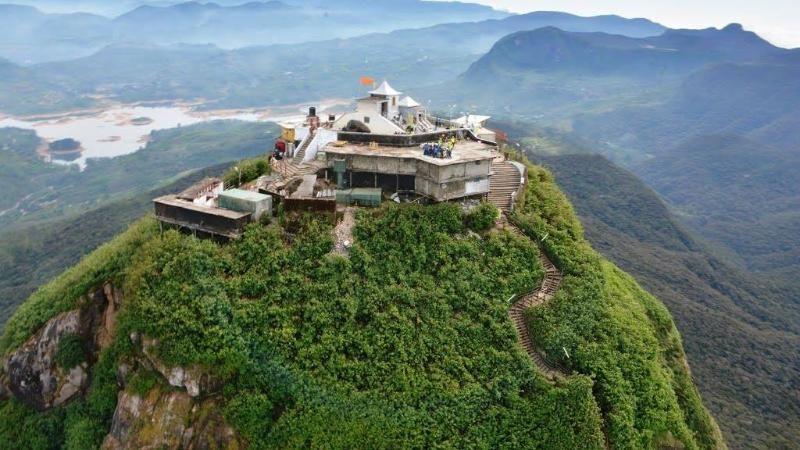
Adam's Peak — Sri Pada, the Sacred Footprint — is a 2,243-metre conical mountain in the Sri Lankan highlands whose summit rock formation is venerated as a sacred footprint by four of the world's major religions simultaneously. For over a thousand years, pilgrims of all these faiths have climbed 5,500 steps through the night to reach the same summit at the same dawn, making it one of the oldest continuously shared sacred sites in the world. The mountain's surrounding cloud forest is a biodiversity hotspot containing over 150 endemic plant species found nowhere else on earth.
Attirampakkam
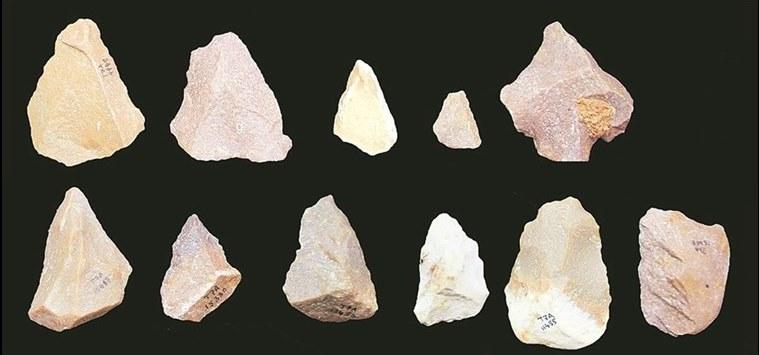
A stratified sequence of stone tool assemblages spanning approximately 1.5 million years, from the earliest known Acheulean handaxe technology in peninsular India through a transition to Middle Palaeolithic technology that appears — according to radiometric dating published in 2018 — significantly earlier than the same transition in Africa and Europe, potentially before the dispersal of anatomically modern humans out of Africa and challenging fundamental assumptions about the cognitive and demographic history of early humans in South Asia.

Hampi
A 26-square-kilometre open landscape of approximately 550 monuments distributed across an extraordinary terrain of stacked granite boulders along the Tungabhadra River — once the capital of the Vijayanagara Empire, one of the wealthiest and most populous cities on earth in the fifteenth and sixteenth centuries. Temples, bazaars, royal pavilions, elephant stables, and sacred tanks appear across ridgelines and around corners in a landscape that feels less like a heritage site and more like a civilisation that forgot to fully disappear. Large sections remain in active religious use, as they have been for over a thousand years.