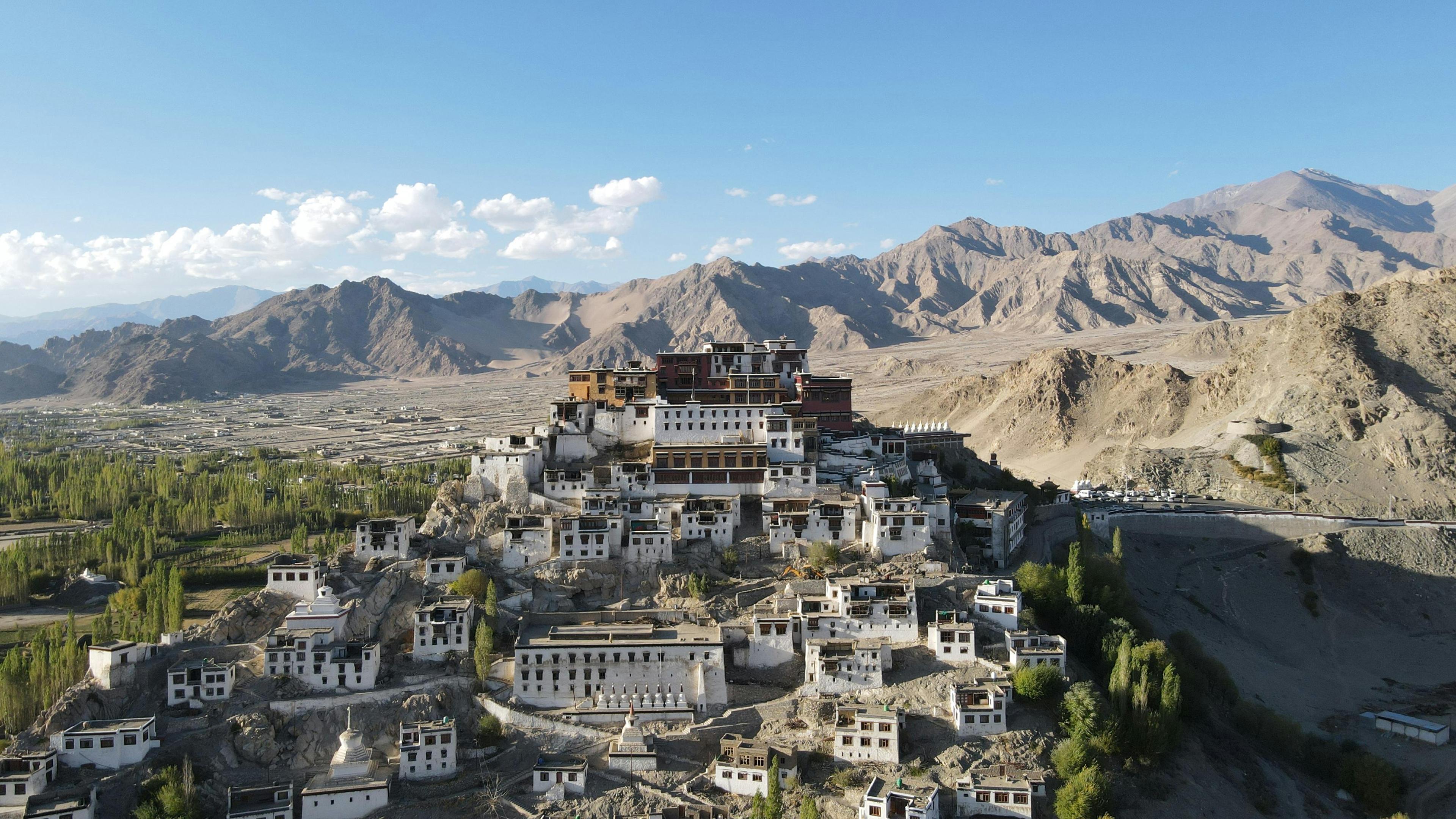
Ladakh, India (Hemis, Thiksey, Diskit, Alchi); Tibet Autonomous Region, China (Potala Palace, Tashilhunpo); broader Himalayan belt, India
The monastic settlements of the Ladakh and Tibetan Himalaya represent over a thousand years of Buddhist architectural and cultural achievement built into and onto some of the most dramatic mountain landscapes on earth. From the Alchi monastery complex, which contains some of the finest Kashmiri-influenced Buddhist murals in existence dating from the 11th century, to the fortress-monasteries of Thiksey and Hemis perched on ridges above the Indus valley, to the Potala Palace in Lhasa rising 300 metres above the Tibetan plateau, these settlements are simultaneously architectural monuments, living religious institutions, repositories of Himalayan Buddhist art, and the cultural heartland of Tibetan Buddhist civilisation.
Alchi monastery complex 11th century CE; major monastic development across the Himalayan belt from the 10th to 17th centuries CE; Potala Palace as current structure 17th century CE; Lhasa UNESCO inscribed 1994; living institutions to present