
Heritage in Central Asia
Explore heritage sites and cultural practices from Central Asia.
Sites in this Region
Showing 2 documented sites

Samarkand
Samarkand is one of the oldest continuously inhabited cities in Central Asia and the world, occupied for at least 2,750 years, and the most magnificent surviving expression of Timurid architectural achievement — the 14th–15th century Islamic civilisation that produced some of the most extraordinary buildings in human history. The city's monumental core includes the Registan (a central square enclosed by three madrassas with turquoise and ultramarine tile facades), the Bibi-Khanym Mosque (built by Timur in 1399–1404 to be the largest mosque in the Islamic world), the Shah-i-Zinda necropolis (a street of mausoleums whose tile work represents the apex of Timurid ceramic art), and the Gur-e-Amir mausoleum (Timur's own tomb, its ribbed turquoise dome a defining image of Central Asian architecture). The Registan in particular — three madrassas facing each other across a vast courtyard, their facades covered in geometric tilework of extraordinary complexity and colour — is considered by many architectural historians to be the most beautiful public square in the world.
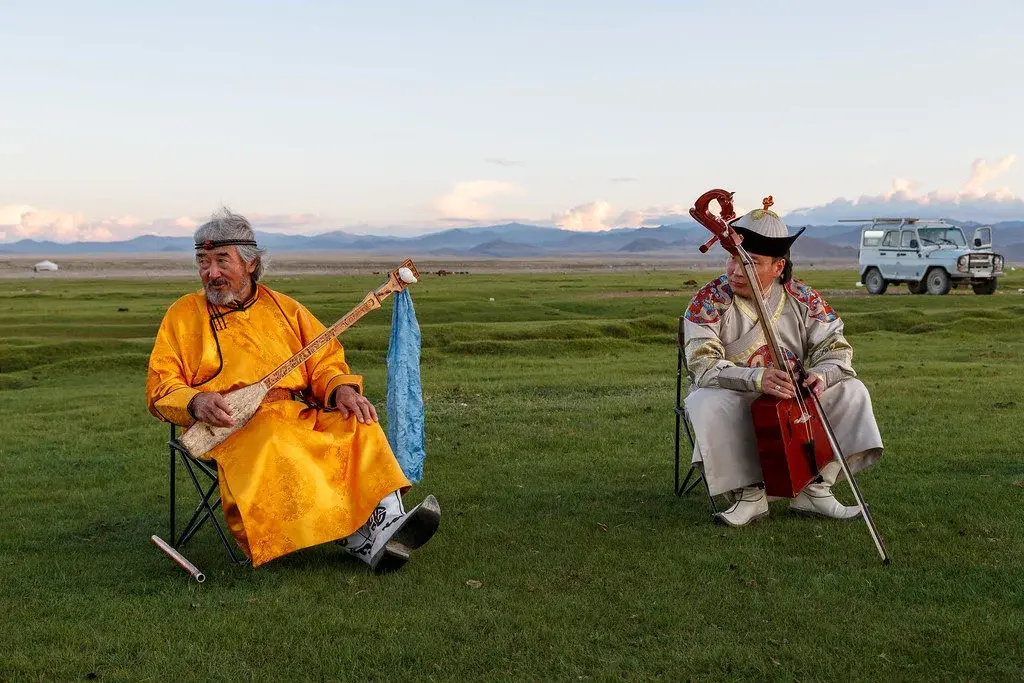
Mongolian Khoomei
An ancient form of overtone singing where a single performer produces multiple distinct pitches simultaneously, deeply connected to the animistic beliefs of nomadic herders.