
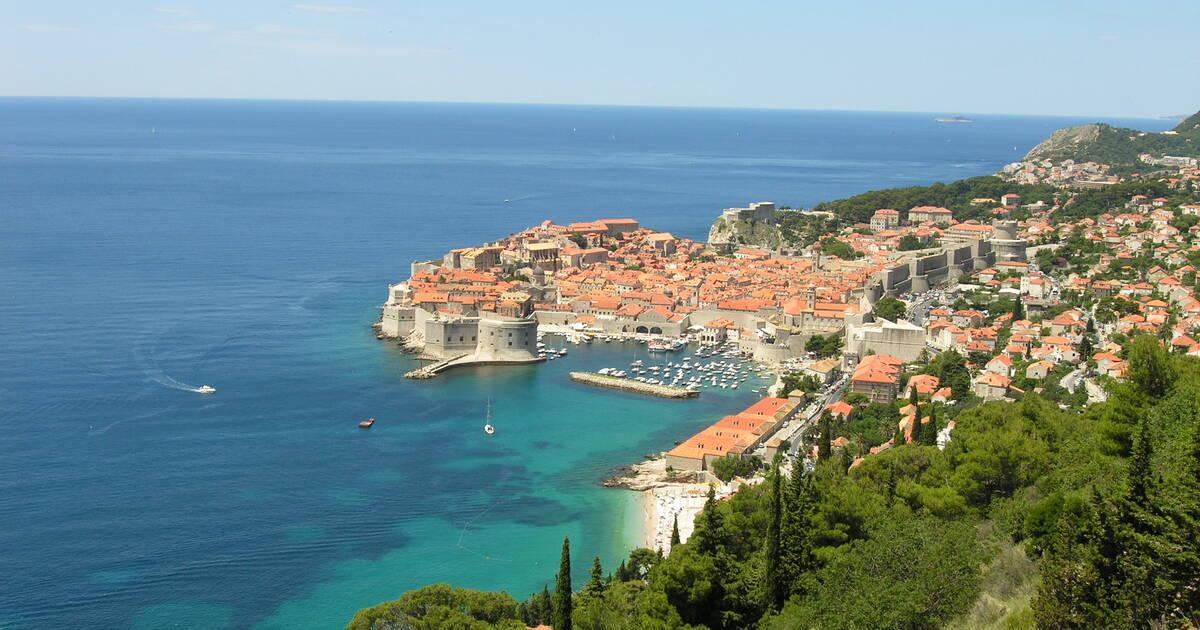
Old City of Dubrovnik
Interactive 3D Scan
Explore 3D Model
Click to load interactive scan
OLD CITY OF DUBROVNIK Dalmatian Coast, Croatia · Founded 7th century CE · Republic of Ragusa / Baroque AT-RISK
SITE AT A GLANCE Location: Dubrovnik, Dalmatian Coast, Croatia Country: Croatia Region: Southern Europe / Adriatic Coordinates: 42.6507° N, 18.0944° E Type: Built Heritage Sub-types: Planned City, Military Architecture, Baroque Urban Fabric Period: Founded 7th century CE; Republic of Ragusa 1358–1808; current Baroque fabric largely post-1667 earthquake Risk Level: At-Risk Risks: Overtourism, Cruise ship day-visitors, Depopulation, Short-term rental conversion, Earthquake vulnerability, Sea-level rise UNESCO Status: Inscribed 1979; on Endangered List 1991–1998
3D DOCUMENTATION A high-resolution city model of the old city (3 million polygons, 8K texture) produced by antekatavic82 is available on Sketchfab, providing a detailed geometric record of the roofscape, walls, and major buildings. A photogrammetric scan of the Minceta Fortress (ADRIJO, free access) is also available on Sketchfab. ICOMOS published detailed war damage assessment reports following the 1991 shelling. Europeana hosts digitised Republic of Ragusa historical records including documents, maps, and artworks. Sketchfab — Dubrovnik city model (3M polygons, 8K texture): https://sketchfab.com/3d-models/dubrovnik3millionspolys8ktexture-85f7c1c573894708b8bd09af8bf5bfcb Sketchfab — Minceta Fortress photogrammetry (ADRIJO, free): https://sketchfab.com/3d-models/minceta-fortress-dubrovnik-3336cc079bcb4cdda13de27a52e3272f ICOMOS war damage reports: https://www.icomos.org/en/ UNESCO dossier: https://whc.unesco.org/en/list/95
SITE DESCRIPTION The old city occupies a limestone headland enclosed by walls — bastions, curtain walls, and Fort St Elmo at the tip — all built from the warm honey-coloured local limestone and rising directly from the Adriatic. The Stradun, a marble-paved promenade, runs straight from the Pile Gate to the Ploče Gate as the central axis of the city. Off it run narrow lanes descending to the harbour and rising to the walls. The Rector's Palace, the Dominican and Franciscan monasteries, the Cathedral, the Sponza Palace, and over a dozen churches occupy the 55-hectare peninsula. Lord Byron called it the Pearl of the Adriatic. George Bernard Shaw said those who seek paradise on earth should come to Dubrovnik. Neither was exaggerating. From the walls, looking down onto the orange terracotta rooftops and the blue Adriatic beyond, the description feels earned. The city very nearly did not survive to receive these compliments.
HISTORICAL SIGNIFICANCE The Republic of Ragusa was governed by a constitution of unusual sophistication: a Great Council of all male nobles, a Minor Council of eleven, a Senate of forty-five, and a Rector serving one-month terms so short as to prevent the accumulation of personal power. This institutionalised caution, this deliberate dispersal of authority, produced a republic unusually resistant to tyranny and unusually effective at commerce. The Republic's civic achievements were remarkable for their time and place. The quarantine system of 1377 — requiring travellers from plague-affected areas to wait thirty days before entering the city — was the first institutionalised public health measure of its kind in Europe, a direct ancestor of the quarantine systems that eventually brought plague under control. The abolition of slavery in 1416 predated most European abolitions by more than three centuries. The orphanage founded in 1432 represented an institutionalised response to social need that was not standard practice. The formal diplomatic corps established in the 15th century allowed the Republic to maintain simultaneous tributary relationships with the Ottoman Empire, the Habsburgs, and Venice without committing militarily to any of them — a diplomatic tightrope sustained for centuries.
THE STORY OF THE SITE
7th Century CE: Foundation A settlement is established on the rocky headland, traditionally attributed to refugees from the Roman city of Epidaurum fleeing Avar and Slav raids. The settlement develops through the early medieval period, gradually consolidating as a commercial centre on the Adriatic coast.
1272: The Statute of Ragusa The Republic codifies its laws in the Statute of Ragusa — one of the most comprehensive municipal law codes of medieval Europe, establishing the legal framework within which the Republic's civic culture will develop.
1377 to 1432: The Civic Firsts The quarantine system is established in 1377. Slavery is abolished in 1416. The orphanage is founded in 1432. Each of these represents a civic achievement that is not a natural consequence of commercial wealth but a deliberate political choice about what kind of city Ragusa wants to be.
1358 to 1808: The Republic Ragusa obtains full independence from Venice through the Treaty of Zadar in 1358, beginning 450 years as an independent republic. It maintains this independence through commercial acumen, legal sophistication, and diplomatic genius until Napoleon dissolves it in 1808 and incorporates it into the Illyrian Provinces.
1667: The Great Earthquake An earthquake of estimated magnitude 6.9 strikes the Dalmatian coast on 6 April 1667. The Rector's Palace, the Cathedral, most major churches, and thousands of private buildings collapse. Approximately 5,000 people die — a third of the city's population. The subsequent Baroque rebuilding, conducted with remarkable civic discipline over several decades, produces the city that exists today. The historic Dubrovnik that visitors come to see is largely a reconstruction — a fact that says something important about the resilience that built it.
1991: The Shelling In October 1991, Yugoslav National Army and Montenegrin forces besiege and shell Dubrovnik — a city of no military significance whatsoever, defended by approximately 300 lightly armed police. The shelling is widely understood as an act of cultural terrorism, an attack on a UNESCO World Heritage Site to maximise international outrage. Two thousand shells fall over six weeks. Eight hundred and twenty-four buildings are damaged. Nine people are killed. International footage of shells exploding over the orange rooftops galvanises NATO involvement in the Yugoslav conflict in ways that diplomatic protest had not.
1992 to 1998: Recovery Dubrovnik's residents, many of them skilled craftspeople trained in traditional stone construction, begin restoration immediately. By 1998, UNESCO removes the city from its list of endangered World Heritage Sites. The speed and fidelity of the restoration is remarkable. It is also a demonstration of what communities with deep knowledge of their own built heritage can accomplish when the resources are available.
1998 to Present: The Overtourism Crisis Four million annual visitors for 1,300 permanent residents. The mathematics of this ratio define the city's current condition. Cruise ships deliver thousands of day-visitors whose economic contribution to the local economy is minimal and whose physical impact on the historic fabric is significant. The resident population falls every year. Short-term rental income exceeds what any resident can afford to pay for accommodation. Traditional trades disappear. The city's mayor has introduced cruise ship limits and discussed visitor caps for the walls. The Stradun empties of locals and fills with tourists.
THREATS AND RISK ASSESSMENT The Depopulation Crisis Dubrovnik's most urgent conservation challenge is the same as Valletta's and Venice's: depopulation of the historic core. A city without residents is a theatrical set. The 1,300 people who live in the old city are outnumbered by tourists every day of the peak season by a ratio that makes the historic fabric essentially uninhabitable as a neighbourhood. When the last resident leaves, the last pharmacy closes, the last hardware shop converts to a souvenir stall, what remains will be perfectly preserved and entirely dead.
Physical Threats The city walls and fortifications, built from local limestone, require sustained maintenance against the erosion of the Adriatic climate and the physical wear of tourist footfall on the walls themselves. The 1667 earthquake is a reminder that the seismic risk that destroyed the original medieval city has not diminished. Sea-level rise over the coming century threatens the lowest levels of the coastal fortifications.
RESEARCH AND SCHOLARLY CONTEXT The 3-million-polygon city model on Sketchfab provides a detailed geometric record of the old city that is valuable for architectural research and for establishing a baseline against which future change can be measured. The ICOMOS war damage assessment reports from 1991 to 1998 constitute an extraordinary document of both the damage and the recovery process. Europeana's digitised Republic of Ragusa records provide primary source material for the city's independent history. The academic literature on the 1991 shelling and the subsequent restoration is extensive and increasingly available in English as well as Croatian.
IF NOTHING CHANGES Dubrovnik will be perfectly preserved and perfectly uninhabited in its historic core within a generation. The buildings will be maintained. The walls will be walked by tourists. The Cathedral will be visited. The Stradun will be photographed. And on quiet evenings in October, when the cruise ships have gone and the tour groups have returned to their hotels, there will be nobody there who lives in the city, because nobody can afford to, and nobody has the services they need to do so, and the short-term rental economics have converted every available apartment to a use that serves visitors rather than residents. This is not a physical emergency. It is a social emergency that will eventually become a physical one when there is nobody left who knows how to maintain the stone in the traditional way, because the craftspeople left with the residents.
Knowledge Vault
Screening Room

Dubrovnik: The Pearl of the Adriatic
Historical Timeline
Foundation
A settlement is established on the limestone headland, attributed to refugees from Roman Epidaurum.
Statute of Ragusa
The Republic codifies its laws — one of the most comprehensive medieval municipal law codes in Europe.
First Quarantine System
The world's first institutionalised quarantine for travellers from plague-affected areas is established.
Slavery Abolished
The Republic abolishes slavery — the first European state to do so, over three centuries before most others.
Great Earthquake
Magnitude 6.9 earthquake kills ~5,000 people; the subsequent Baroque rebuilding creates the city visitors see today.
Republic Ends
Napoleon dissolves the Republic of Ragusa, ending 450 years of independence.
Yugoslav Wars Shelling
2,000 shells fall on the UNESCO site over six weeks. International outrage follows.
Removed from Endangered List
UNESCO removes Dubrovnik after rapid and faithful restoration by local craftspeople.