
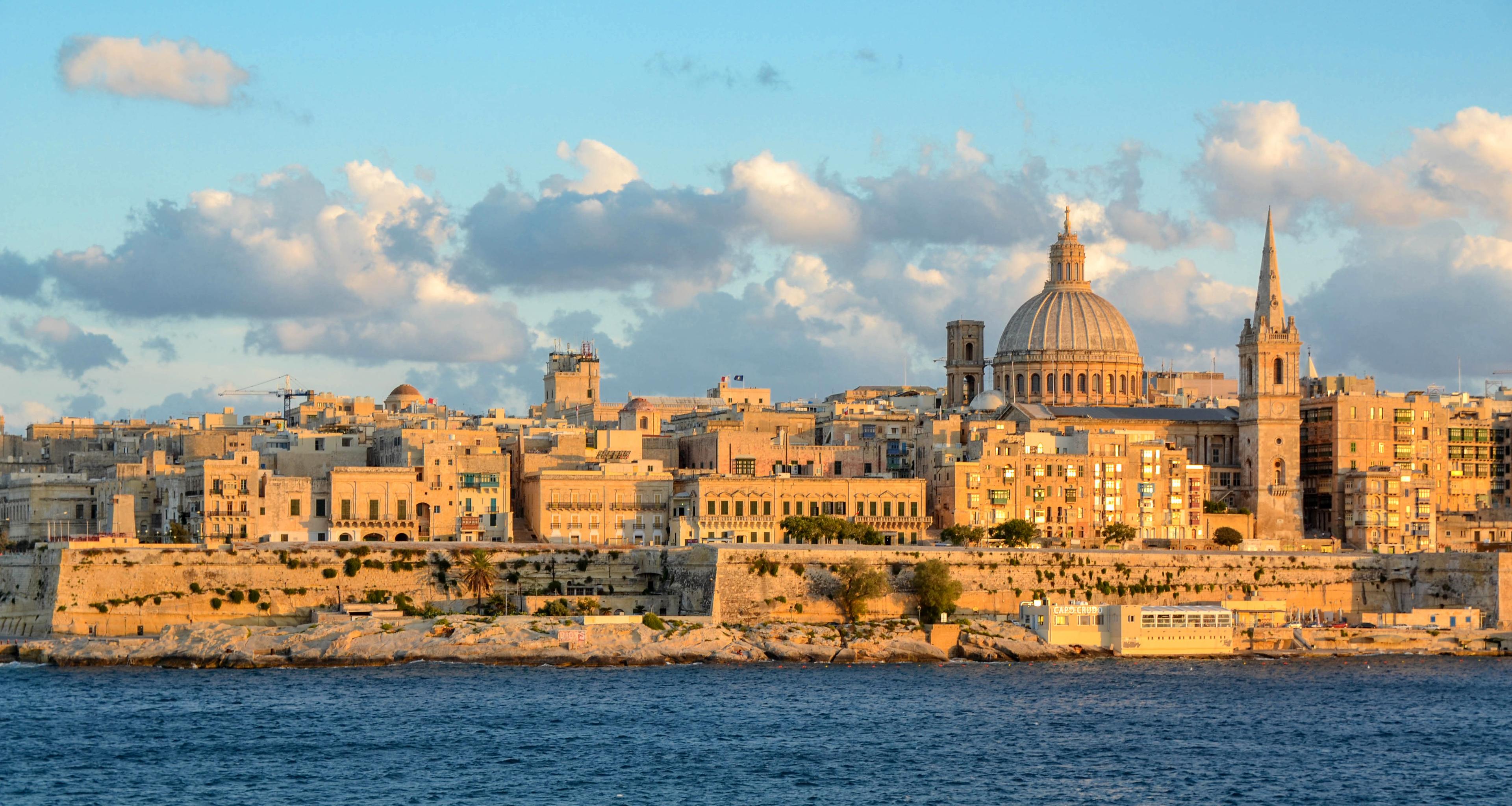
City of Valletta
Interactive 3D Scan
Explore 3D Model
Click to load interactive scan
CITY OF VALLETTA Malta · Founded 1566 · Knights of St John / Baroque VULNERABLE
SITE AT A GLANCE Location: Valletta, Malta Country: Malta Region: Southern Europe / Mediterranean Coordinates: 35.8997° N, 14.5148° E Type: Built Heritage Sub-types: Planned City, Military Architecture, Baroque Art and Architecture Period: Founded 1566; built 1566–1571; continuously inhabited to present Risk Level: Vulnerable Risks: Depopulation, Mass tourism, Inappropriate development, Sea-level rise, Salt air corrosion, Climate change UNESCO Status: Inscribed 1980
3D DOCUMENTATION A 3D scan of the historic Valletta city model on display in the Grand Master's Palace Armoury — the model used by the Knights to plan the city's fortifications — is available on Sketchfab (created by davehitz, free access). Heritage Malta publishes an official 3D artefact collection on Sketchfab including objects from Valletta's palaces and museums. The Planning Authority Malta maintains a Listed Buildings Database at pa.org.mt. Europeana hosts digitised Knights of St John cultural records including maps, documents, and artworks from the Valletta period. Sketchfab — Valletta city model scan: https://sketchfab.com/3d-models/valletta-city-model-af7388bbed9c4f6cabd914d0b6f7494c Heritage Malta official Sketchfab collection: https://sketchfab.com/heritagemalta Planning Authority Malta Listed Buildings: https://www.pa.org.mt/en/page/heritage UNESCO dossier: https://whc.unesco.org/en/list/132
SITE DESCRIPTION Valletta covers 55 hectares on the Mount Sciberras limestone peninsula — the smallest EU capital city, the southernmost EU capital, and by UNESCO's own assessment one of the most concentrated historic areas in the world. Its 320-plus listed monuments include the Grand Master's Palace, the Auberges of the Knightly Langues, St John's Co-Cathedral, and a complete surviving system of Baroque military fortifications: bastions, curtain walls, cavaliers, and Fort St Elmo at the peninsula's tip. All are built from globigerina limestone, the warm honey-coloured local stone that weathers to gold and gives Valletta its characteristic amber skyline. The city was built in seven years, which is extraordinary for a project of this ambition. Grand Master Jean Parisot de Valette laid the first stone in 1566 and died in 1568, before it was finished. The Knights who lived in it afterwards inherited a city that had been designed to be impregnable, magnificent, and eternal.
HISTORICAL SIGNIFICANCE In 1565, 40,000 Ottoman soldiers besieged Malta. Against them stood approximately 6,000 Knights and Maltese militia. The siege lasted four months. When it ended, 5,000 Christians and 25,000 Ottomans were dead, and the Knights had held. Within a year, construction had begun on Valletta. The Knights Hospitaller of St John were simultaneously a military order, a banking institution, a naval power, and a cultural patron of extraordinary sophistication. Their wealth, drawn from estates across Catholic Europe, funded a city that is effectively a single unified artistic project: every major building designed by or under the supervision of Knights' engineers and artists, producing a stylistic coherence unusual for a city of any size. St John's Co-Cathedral's interior — every surface covered with carved, gilded, or painted decoration, the floor a composition of 375 inlaid marble tombstones of Knights — is one of the finest expressions of Baroque decorative art in existence. Caravaggio's Beheading of Saint John the Baptist, which hangs there, is the only painting he ever signed, and is considered one of the masterpieces of Western painting.
THE STORY OF THE SITE
1565: The Great Siege An Ottoman force of 40,000 besieges Malta for four months. Grand Master Jean Parisot de Valette, 71 years old, conducts the defence personally. When the siege ends, de Valette immediately begins planning a new capital to replace the existing fortified town of Birgu. He will not live to see it finished.
1566 to 1571: The Construction Francesco Laparelli, a military engineer who had worked with Michelangelo, designs the city on a strict orthogonal grid — one of the earliest planned capitals in Europe. The main fabric of Valletta is complete in approximately seven years, a rate of construction that remains remarkable. The Knights move their headquarters from Birgu to the new city.
1573 to 1578: St John's Co-Cathedral The Co-Cathedral is built and subsequently enriched over two centuries into one of the finest Baroque interiors in the world. The floor, consisting of 375 inlaid marble tombstones of Knights, is a composition of extraordinary ambition. Caravaggio arrives in Malta in 1607 and is commissioned to paint the Beheading of Saint John the Baptist and Saint Jerome Writing. He joins the Order as a Knight in 1608, is expelled within months for a violent assault, and flees. His paintings remain.
1798 to 1964: French, British, and Independence Napoleon seizes Malta briefly in 1798. The British take control in 1800, beginning 150 years of administration that leave their own architectural layer in the city. Malta receives the George Cross collectively in 1942 — the only time the award has been given to a people — for the island's resistance to intensive Axis bombing. Independence comes in 1964. Valletta becomes the capital of an independent republic with a resident population that begins to decline almost immediately as people move to the quieter suburban sprawl developing around it.
1960 to Present: The Depopulation The resident population falls from approximately 20,000 in 1960 to around 5,800 today. Historic buildings are converted from residences into hotels, restaurants, and offices. Traditional trades disappear. In 2018, Valletta serves as European Capital of Culture, bringing investment and international visibility. The population continues to decline.
THREATS AND RISK ASSESSMENT Depopulation Valletta's most urgent conservation challenge is demographic, not structural. A city is not only its buildings. It is the people who live in them, the trades they sustain, the daily life that gives architecture its meaning. Valletta is becoming a museum city in the way that Venice has become a museum city: its architecture exquisitely preserved, its community life evacuated. The pharmacists, cobblers, grocers, and craftspeople who gave the city its living character are gone or going. The Maltese government has introduced resident return incentive programmes with mixed results. The problem is that short-term tourism rental income exceeds what residents can afford to pay, and the market does not correct this unless there is regulatory intervention.
Physical Deterioration Globigerina limestone, for all its visual warmth, is relatively soft and subject to salt air corrosion from the Mediterranean. The fortification walls along both harbours show ongoing erosion that requires sustained maintenance. Sea-level rise threatens the lowest levels of the coastal fortifications over the coming century.
RESEARCH AND SCHOLARLY CONTEXT The 3D scan of the Grand Master's Palace city model on Sketchfab provides a remarkable resource: the actual physical model used by the Knights to plan the city's defences, digitised and accessible worldwide. Heritage Malta's official Sketchfab collection extends this to artefacts from Valletta's palaces and museums. The Planning Authority Malta's Listed Buildings Database is the definitive register of protected structures within the historic core. Europeana's digitised Knights of St John records provide primary source material for the city's founding and early history.
IF NOTHING CHANGES Valletta will not crumble. It is too well-built and too well-maintained for that. What will happen, if current trends continue, is that it will empty. The limestone will be cleaned and conserved and lit attractively. The tourists will come and photograph St John's and walk the Stradun and eat in the restaurants that have replaced the hardware stores and the pharmacists and the families. And on quiet evenings there will be nobody there who actually lives in the city, because nobody can afford to, and nobody has a reason to. A city without residents is a theatrical set. Valletta was built to outlast empires. The question is whether it can outlast tourism.
Knowledge Vault
Screening Room

Valletta: Europe's Smallest Capital
Historical Timeline
The Great Siege
40,000 Ottoman troops besiege Malta for four months. The Knights hold. De Valette immediately begins planning the new capital.
Foundation
Grand Master de Valette lays the foundation stone on the Mount Sciberras peninsula.
City Completed
The main fabric of Valletta is complete in approximately seven years. The Knights move from Birgu.
Caravaggio in Malta
Caravaggio paints the Beheading of Saint John the Baptist — the only work he ever signed — and Saint Jerome Writing for the Co-Cathedral.
The George Cross
Malta receives the George Cross collectively — the only time the award has been given to a people.
UNESCO Inscription
Valletta is inscribed on UNESCO's World Heritage List.
European Capital of Culture
Valletta serves as European Capital of Culture while its resident population continues to decline.
