
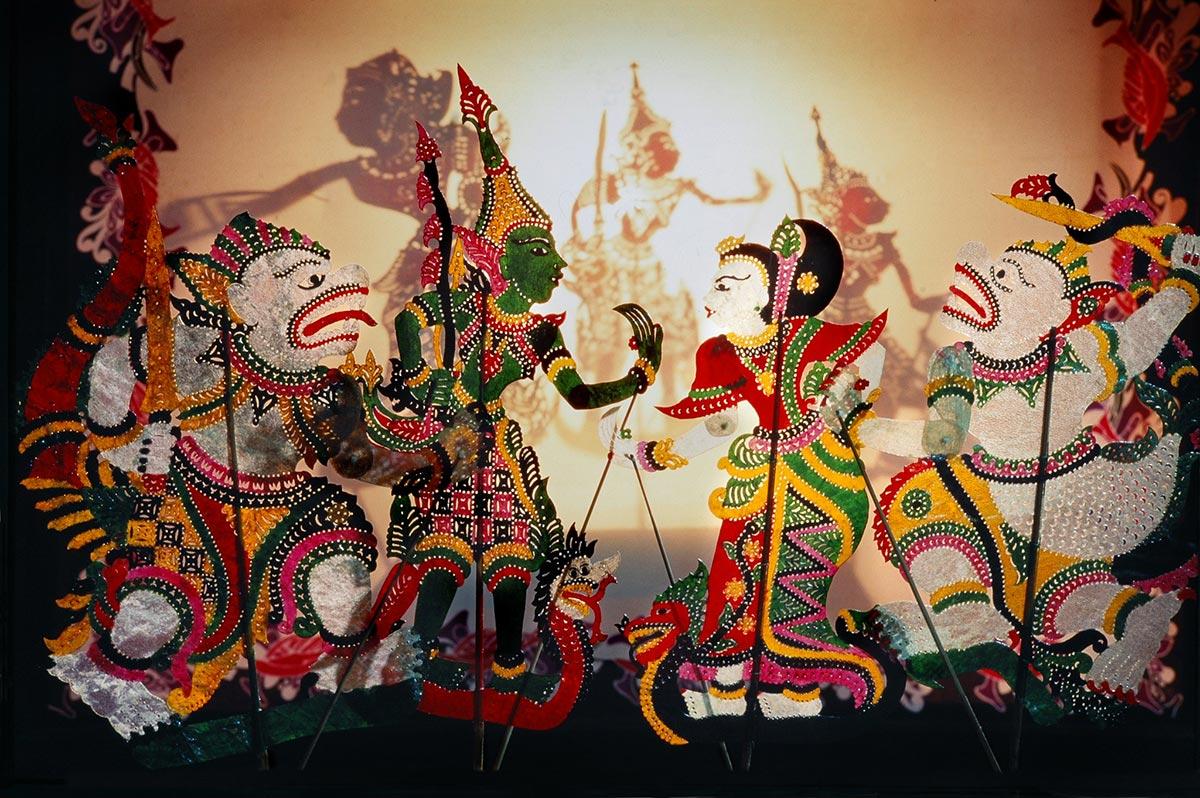
Wayang Kulit
Shadows of the Gods
Wayang Kulit is the ancient and profoundly complex art of shadow puppetry native to the Indonesian islands of Java and Bali. "Wayang" means shadow or imagination, and "Kulit" means skin or leather, referring to the intricately carved and painted water buffalo hide puppets used in the performances.
Recognized by UNESCO as a Masterpiece of Oral and Intangible Heritage of Humanity, Wayang Kulit is far more than mere entertainment. It is a synthesis of visual art, music, literature, spiritual ritual, moral philosophy, and trenchant political satire. A traditional performance is an all-night communal event, typically lasting from 8:00 PM until dawn, serving as a mesmerizing focal point for community life.
The Architecture of the Shadow World
A Wayang Kulit performance is a highly structured, symbolic universe overseen by a single, unimaginably skilled individual: the Dalang.
The Dalang: Master of Shadows
The Dalang is the puppet master, the conductor, the storyteller, the priest, and the comedian all rolled into one. Over the course of a nine-hour, non-stop performance, the dalang:
- Manipulates hundreds of puppets, sometimes controlling multiple figures in complex battle scenes with startling dexterity.
- Provides the voices for dozens of characters, ranging from terrifying demons with booming voices to delicate princesses to nasally, rapid-fire clowns.
- Sings ancient, archaic poetry (suluk) to set the mood of a scene.
- Conducts the accompanying gamelan orchestra using subtle taps of a wooden mallet (cempala) held between his toes against the puppet box (kotak).
- Improvises dialogue and social commentary, seamlessly weaving current local politics or village gossip into ancient epic narratives.
Becoming a Dalang requires decades of grueling apprenticeship, mastering vast repertoires of stories, philosophical concepts, languages, and physical endurance. They are highly respected figures in Javanese society, often viewed as spiritual intermediaries.
"The screen is the world, the puppets are humans, the lamp is the sun, and the Dalang is the creator giving light and life to the shadows." — Traditional Javanese proverb.
The Screen and the Light
The performance takes place behind a large, tightly stretched white cotton screen (kelir). Above the dalang's head hangs a lamp (blencong)—traditionally a bronze oil lamp, though halogen bulbs are now common. The flickering, golden light of the oil lamp casts vibrant, slightly blurred shadows onto the screen, giving the puppets a mysterious, breathing life.
Interestingly, the audience can choose their experience. They can sit in front of the screen to watch the ethereal shadows, or they can sit behind the screen (on the dalang's side) to watch the intricate colors of the puppets, the furious skill of the dalang, and the musicians of the gamelan. Both views are considered equally valid and significant.
The Gamelan
A Wayang performance is inextricably linked to the gamelan, a traditional Indonesian orchestra composed primarily of tuned bronze percussive instruments—metallophones, gongs, chimes, and xylophones—along with a two-headed drum (kendhang) that dictates the tempo. The gamelan provides the atmospheric soundtrack, heightening the emotional tension of battles, the sorrow of tragedies, and the slapstick rhythm of the clowns.
The Epics: Gods, Demons, and Clowns
The narrative repertoire of Wayang Kulit is vast, primarily drawing upon uniquely Javanese adaptations of the great Indian Hindu epics: the Mahabharata and the Ramayana.
However, the Javanese did not merely copy these texts; they localized them, seamlessly integrating them with indigenous Javanese animistic beliefs and Islamic mysticism (Sufism).
The Punokawan: The Heart of the Wayang
The most vital and uniquely Indonesian addition to the Indian epics are the Punokawan—the clown servants. The primary Punokawan consists of Semar and his three sons: Gareng, Petruk, and Bagong.
Semar is a paradox. Visually, he is grotesque: exceedingly fat, neither male nor female, always weeping and laughing simultaneously. Yet, in Javanese mythology, Semar is actually the older brother of Shiva, the supreme god, who chose to descend to earth in the form of an ugly servant to guide and protect humanity.
When the Punokawan appear on screen (usually around midnight, halfway through the performance), the rigid, formal archaic language of the serious characters is dropped. The Dalang uses the clowns to speak in harsh, contemporary vernacular, offering hilarious slapstick comedy, crude jokes, and piercing, uncensored critiques of modern politicians, village leaders, and societal hypocrisies. They are the voice of the common people challenging authority.
The Struggle for Survival
Despite its immense historical and cultural significance, Wayang Kulit faces profound existential threats in the 21st century.
1. Changing Demographics and Attention Spans
The most pressing threat is the rapid modernization and urbanization of Indonesia. An agrarian society could accommodate an all-night performance; people could sleep during the heat of the following day. A modern, 9-to-5 urban workforce simply cannot stay awake all night watching a complex, archaic drama.
Furthermore, the rise of smartphones, internet streaming, and fast-paced globalized media presents fierce competition for the attention of the younger generation, for whom the slow, deliberate pacing of Wayang Kulit can feel incomprehensible.
2. The Language Barrier
The serious characters in Wayang Kulit speak in Kawi (Old Javanese) and High Javanese, deeply complex hierarchical languages that are increasingly poorly understood by modern Indonesian youth, who largely communicate in the national language, Bahasa Indonesia. If the audience cannot understand the philosophy or poetry of the dialogue, the performance loses its profound resonance.
3. Economic Pressures
Commissioning a full Wayang Kulit performance is enormously expensive. It requires paying a master Dalang, a gamelan orchestra of 15-20 musicians, and female singers (pesindhen), plus feeding the community. Traditionally funded by wealthy individuals for weddings, circumcisions, or village purification rituals, these sponsorships are declining in favor of cheaper, modern entertainment like pop concerts or DJs.
Adaptation and Resilience
Dalangs are not surrendering to obsolescence. They are actively innovating to ensure the survival of the art form:
- Wayang Padat (Compact Wayang): Creating condensed, 2-to-3 hour performances specifically designed for modern attention spans and export to international arts festivals.
- Language Shifting: Increasingly using Bahasa Indonesia during the performance to ensure the plot and philosophical messages are understood by younger audiences.
- Pop Culture Integration: Introducing modern musical instruments into the gamelan or creating entirely new puppet designs (like motorcycles or contemporary politicians) to keep the medium highly relevant.
Wayang Kulit has survived empires, colonialism, and religious shifts over a thousand years. Its ability to absorb and satirize new cultural inputs is its greatest strength. Its survival now depends on how successfully it can cast its ancient shadows onto the screens of a digital, hyper-connected world.