Māori Haka
What Haka Is — and Is Not
Haka is not a war dance. This is perhaps the most persistent and damaging misrepresentation of the tradition.
Haka is a posture dance — a performed communication in which the entire body, voice, and breath are deployed to project meaning, emotion, and spiritual presence. It is performed by men, by women, and by mixed groups, across a wide range of social functions:
- Pōwhiri — the welcoming of visitors to a marae (meeting ground)
- Peruperu / Ngeri — challenge dances historically associated with pre-battle preparation
- Haka taparahi — ceremonial haka performed without weapons, the most common contemporary form
- Manawa wera — haka performed at tangihanga (funerals) to honour the dead
- Haka of celebration — performed to mark achievement, birth, graduation, and triumph
"Ko te haka, he whakaatu i ngā kare-ā-roto o te tangata — Haka is the expression of the innermost feelings of the people." — Māori proverb
The Structure of Haka
A haka is not improvised. It is a composed work with:
- Te reo — the words, which are a specific authored text with named composer and historical context
- Ngā kōrero — the meanings embedded in the text, including genealogical references, historical allusions, and philosophical statements
- Ngā kūkū — the physical movements, choreographed to correspond to and amplify the meaning of the words
- Te manawa — the breath and energy that animate the performance
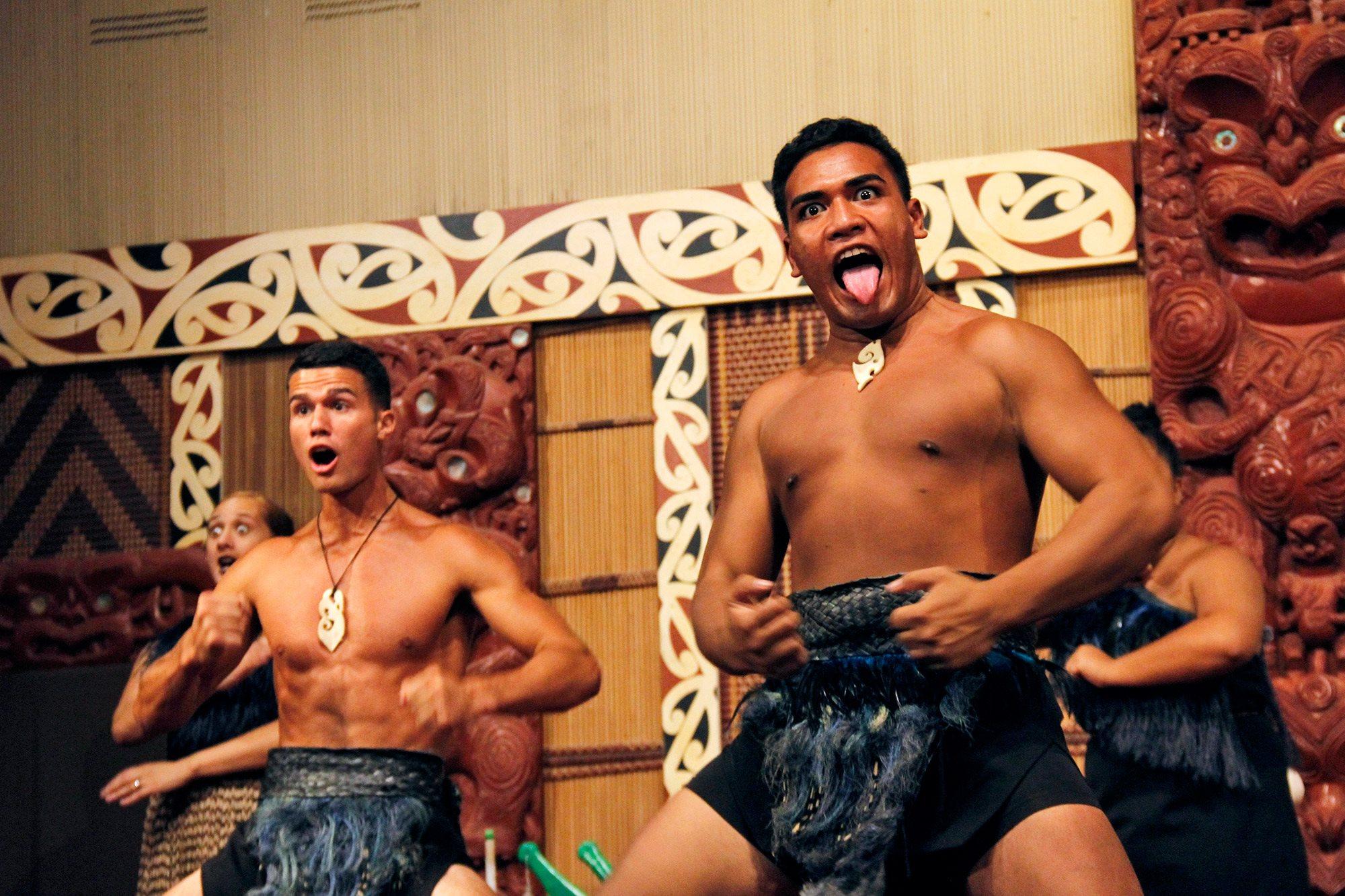
The famous expressions of haka — the pūkana (wide-eyed stare), whetero (extended tongue), ngākau (chest beating) — are not decorative flourishes. Each is a specific communicative gesture with its own meaning and its own appropriate contexts.
Ka Mate: The World's Most Performed Haka
The haka most associated with the All Blacks rugby team is Ka Mate, composed by the Ngāti Toa chief Te Rauparaha in the early 19th century following his escape from enemies by hiding in a kumara pit.
Ka mate, ka mate! Ka ora, ka ora! Tis death! Tis death! Tis life! Tis life!
The text encodes Te Rauparaha's specific biographical experience, his gratitude for survival, and his celebration of life over death. Performed by thousands of international audiences who understand none of this, Ka Mate continues to be a vehicle for Māori historical memory — even when that memory is invisible to its global audience.
In 2009, New Zealand law formally recognised Ngāti Toa's ownership of Ka Mate, requiring acknowledgement of the iwi's connection to the haka in official contexts.
Kapa Haka: The Living Competition
Kapa haka — the competitive performance of Māori performing arts — is one of the most significant developments in the tradition's contemporary life. The Te Matatini national kapa haka competition, held every two years, draws teams from across New Zealand and Aotearoa's diaspora communities to compete in a programme that includes:
- Haka (posture dance)
- Waiata-ā-ringa (action song)
- Poi (ball-on-string performance)
- Waiata (traditional song)
Te Matatini is a major national event — culturally significant, intensely competitive, and a primary engine for the composition of new haka that speak to contemporary Māori experience.
The Appropriation Problem
The global use of haka by non-Māori ranges across a wide spectrum:
Respectful homage — sports teams performing haka in tribute to Māori players or culture, with acknowledgement and sometimes Māori guidance.
Ignorant imitation — individuals or groups performing haka movements at events, parties, or promotions without understanding of meaning, context, or protocol.
Commercial extraction — companies using haka imagery, sounds, and movements in advertising campaigns without Māori consent, attribution, or compensation.
The challenge is that existing intellectual property frameworks, designed around individual authorship and commercial products, struggle to accommodate the concept of collective cultural ownership of living performed traditions. Māori communities have advocated for legislative and international treaty frameworks that would provide more effective protection, but progress has been limited.