
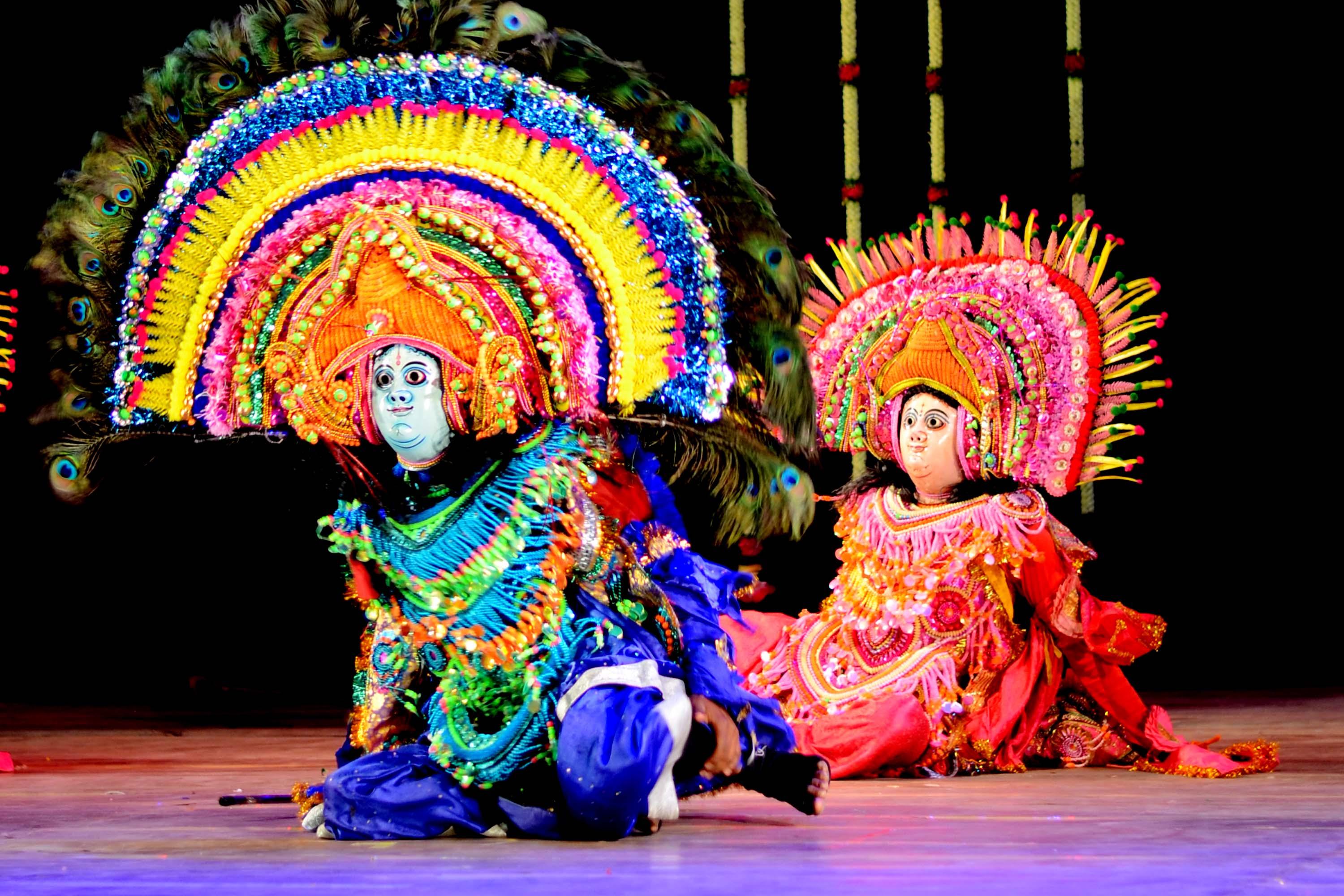
Chhau Dance
Overview
Chhau is performed across three distinct regional styles — Seraikella (Jharkhand), Purulia (West Bengal), and Mayurbhanj (Odisha) — each carrying its own performance vocabulary, costuming tradition, and relationship to hereditary mask-making. The dance is associated with the spring festival of Chaitra Parva and draws on the narratives of the Ramayana, Mahabharata, and Puranic mythology.
"In Chhau, the body speaks what the face conceals. The mask is not a disguise — it is a covenant between the dancer and the divine." — Guru Sudhendra Nath Ganguly, Purulia Chhau master
The Three Styles
Seraikella Chhau
Practised under royal patronage of the Seraikella royal family, this style is known for its lyrical grace and refined mask tradition. The masks are small, covering only the face, and are painted with nuanced expressions that the dancer must amplify through bodily movement alone.
Purulia Chhau
The most visually dramatic style, featuring large, boldly coloured masks with exaggerated features. Purulia Chhau is performed by communities in the Jangalmahal region and maintains the strongest connection to tribal folk roots. Performances often last through the night.
Mayurbhanj Chhau
Unique in using no masks, this style demands complete integration of facial and gestural expression with the martial movement vocabulary. It is the style most closely aligned with classical Indian dance technique.
Martial Roots
All three styles draw from paika — the indigenous martial art of warrior communities across eastern India. Movements include:
- High jumps and spinning leaps (ulfa)
- Mock combat sequences with invisible weapons
- Rapid percussive footwork in complex rhythmic cycles
- Weight-bearing poses drawn from combat stances
Mask-Making as Sacred Craft
The Seraikella and Purulia mask-making traditions are hereditary crafts practised by specific artisan families. Masks are produced from:
- Layered cloth (papad) coated with clay and tamarind seed paste
- Natural mineral pigments for colour
- Final lacquer finish for durability
The craft is inseparable from the dance — a Purulia performance without its masks would be as incomplete as a thangka painted without lapis lazuli.
Transmission and Training
Training begins in childhood under a guru and spans 8–12 years before a dancer is considered performance-ready. The curriculum includes:
- Foundation footwork and body conditioning
- Introduction to the mythological repertoire
- Mask-work and character embodiment
- Full performance sequences and ensemble coordination
Conservation Status
UNESCO inscribed Chhau on the Representative List of Intangible Cultural Heritage of Humanity in 2010, covering all three regional styles. The Sangeet Natak Akademi of India provides institutional recognition and some funding support. However, implementation of preservation measures remains uneven across the three communities.